

I’ve had a lifelong habit, some in my family would say, obsession, of checking where things are made. I have been laughed at for looking for dates of manufacture, or cranking my head upward to look for the year when a building was built. I am simply curious about such things.
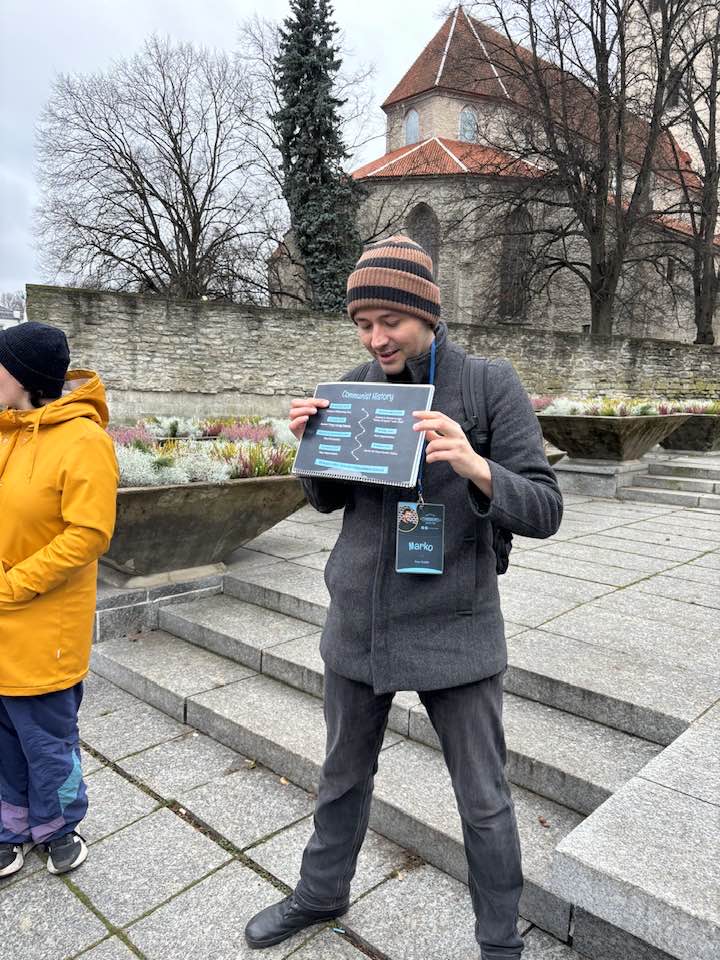
Just the other day here in Tallinn, Estonia, we scheduled ourselves for a local tour, as we often do when visiting a new city. For The Communist History of Tallinn, we were greeted by young Marko, an outgoing local, half-Jewish Estonian, half-Bulgarian, he was quick to tell us. We are already curious. As he begins the tour he displays a single blue card about the size of a sheet of paper covered in plastic. It contains a series of dates, flowing like a river, depicting key events that took place here during WWII. It became the focal point for 10-minutes of jaw-dropping history. Marko had ignited our curiosity.
Back in Latvia, I am working on a project with local English teachers. They’re interested in improving their teaching effectiveness in the areas of Critical-Thinking and Reading. Disconcertingly, reading amongst younger students, we discuss, is a waning skill. How can adults, parents and teachers, stimulate reading curiosity in their students?
A Youtube video reel flashes across my computer screen. It quickly describes 6-Japanese Productivity techniques, one of which is called Shoshin. Originating in the 13th Century, Shoshin is a Zen Buddhist concept based on the principle of approaching every activity with the same curiosity as a wide-eyed beginner-engaging with childlike wonderment.
Fear it appears, discourages curiosity. What one might find around the corner, or under that cover, might be too scary for comfort. And for those reluctant to step out of their Comfort Zones, curiosity, is best left for cats.
But I’ll continue to indulge my curiosity-checking labels to see where my clothes are made. Heck, I even check the occasional fire hydrant or manhole cover to see where they are manufactured. Perhaps not surprisingly, many these days come from foundries in India. I wonder, just how many cats have been killed by being too curious?
 Short Talks Through a Wide World
I was curious the minute Marko introduced himself and the tour only got better. I will remain curious about life. I have to in order to keep up with you. What a gift.
LikeLike
Pingback: American in Budapest