Definition: Everyday carry…a collection of useful items that are consistently carried on a person every day.
No, not random crap. But rather, everyday carries.
Is it a statement of preparedness, nostalgia, practicality, or yet another kind of subculture? In a brave new world of intense connectivity, where many people understandably seek privacy and anonymity, I thought this concept might offer a platform for gentle revelation.
I want to recognize our tendency to over-idealize things. Mitch Albom, from Tuesdays With Morrie fame, noted “We are too involved in materialistic things, and they don’t satisfy us. The loving relationships we have, the universe around us, we take these things for granted.”
In contrast, I’d like to allow for the occasion that treasured items might actually provide a carpet ride to another more revelatory place. Design as Art author Bruno Munari said, “When the objects we use every day and the surroundings we live in have become in themselves a work of art, then we shall be able to say that we have achieved a balanced life.”
I used to regularly carry a funny looking titanium utensil called a spork that attached to a carabiner. At varying times it functioned as a screwdriver, a fork, a spoon, and even as a wrench. It became a favorite carry of mine. Is that really different, other in magnitude, from the bloke who preens over his Bentley SUV?
A spork, an old everyday carry of mine
If a face can launch a thousand ships, then a favorite item can spark a revealing conversation. Then there’s the My Essentials Series, 10-Things I Can’t Live Without. Comedian Jerry Seinfeld, for example, shares why yellow legal pads and Bic pens are important tools in his life. I love that simple items can be a platform for self-disclosure and revelation–the magical interlude when someone brings enthusiastic candor and transparency to the moment. In effect saying, “I’d like to tell you a little bit about who I am as a person.”
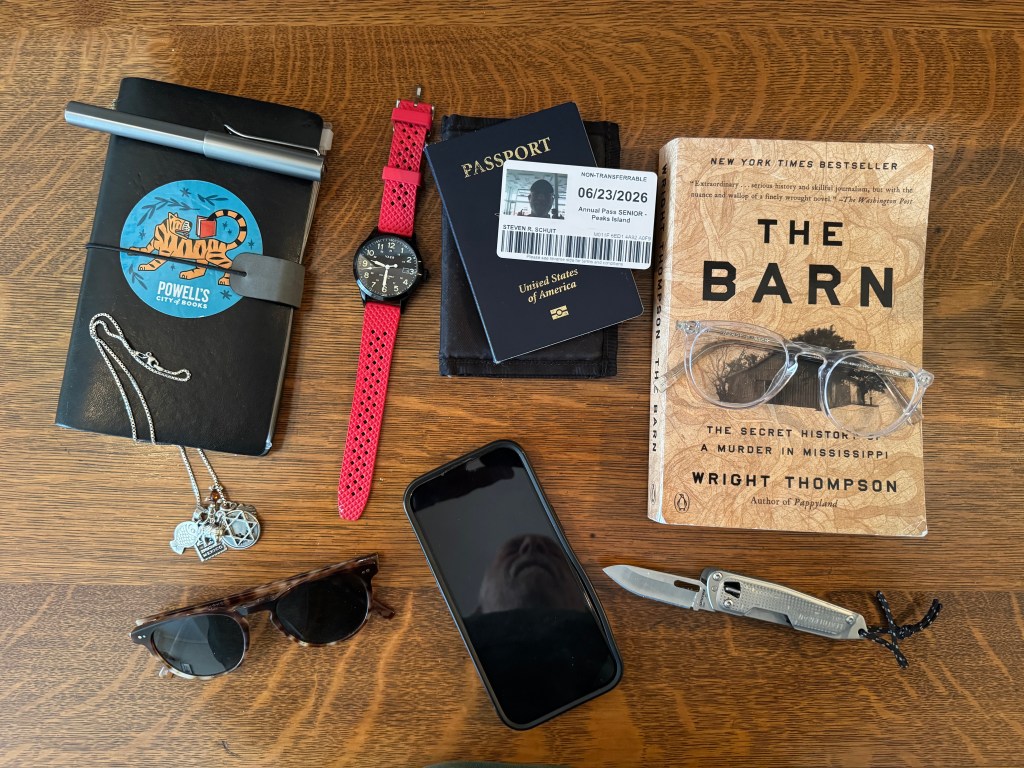
My current everyday carry…
My everyday carry includes from top left…A notebook and roller ball pen for fun writing when on the run, my favorite old-school analog watch from a California company, Vaer, my wallet with key documents including my passport and Peaks Island annual ferry pass, a good read I can tuck into my backpack–in this instance, The Barn, a non-fiction work about the 1955 murder of Emmett Till in Mississippi, glasses from Warby Parker, a pocket knife with practical blades and tools, my iPhone, Warby Parker shades and finally, my necklace with silver charms from different countries I have visited.
This batch of everyday carry reflects, I think, my love of traveling, of staying off the couch, of leaning in toward old-school, of valuing simplicity.
Now it’s your turn. What does your everyday carry say about you? I’d like to know.
My DNA is forever paired with water. Schuit, my surname, literally is a small Dutch boat. I suspect that when Napoleon invaded Holland and required all families to “modernize” by having both first and family names, my ancestors took the name Schuit because their livelihood was inextricably woven with the sea–the sea that both empowered and regularly flooded that small country.
I’ve always lived within a stone’s throw of water. I was born and raised in New York City’s waterfront neighborhoods of Bay Ridge and Bensonhurst in Brooklyn. Later, we moved to Merrick on Long Island where several of my friends lived on the water and as teenagers had their own boats. Today, we call Peaks Island in Maine our home. We’re one of several hundred families that take a ferry to and from the mainland on a regular basis, our fortunes tied directly to the tides and prevailing winds.
So, it wasn’t especially unusual when, as we walked the Camino de Santiago across northern Spain in 2017, a fellow pilgrim mentioned Lake Balaton. Csabi (Chubby) asked about a knee sleeve I had wrapped around one of my legs and my tendency to stop every hour or two to ice my knee. I told him I was about to undergo knee surgery once I completed the Camino and hoped to make a successful transition from jogging to biking as my go-to exercise regimen.
“Ever hear of Lake Balaton in Hungary?” he asked. Though I prided myself on my knowledge of geography, I had to admit that I hadn’t. This Hungarian native insisted that a big, beautiful lake in central Hungary awaited me when my knee was healed. And to add to the serendipity that often finds its way to travelers, shortly after I received an offer to teach English in, of all places, Budapest, Hungary.
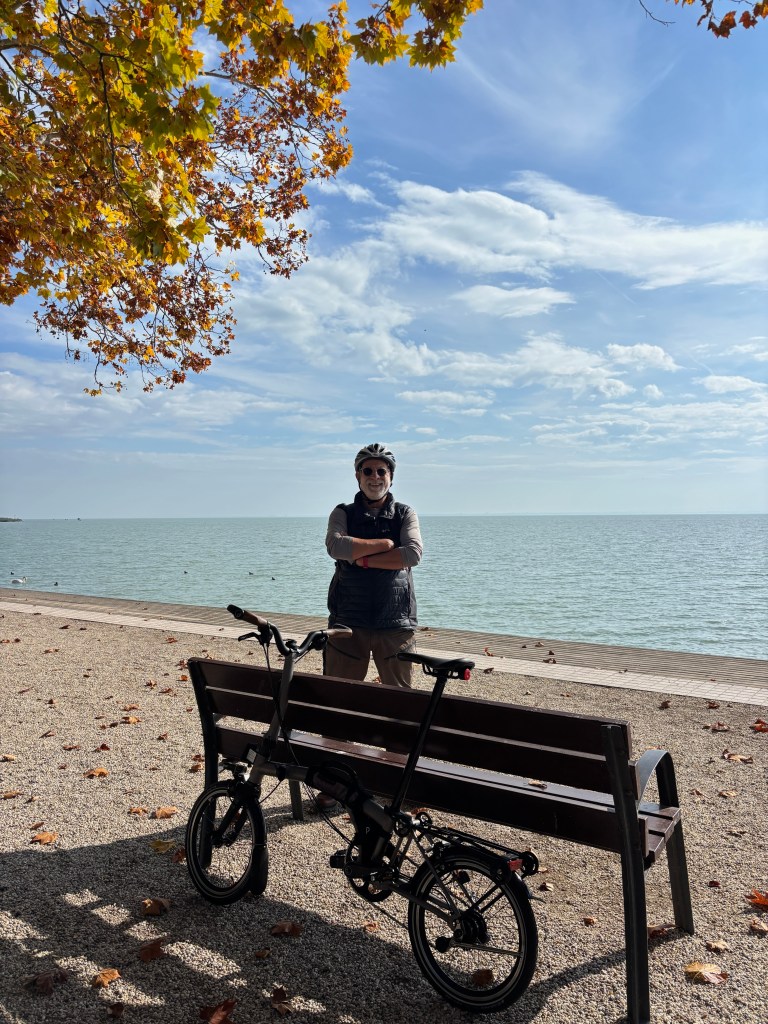
The author with his folding bike in the popular tourist town of Balatonfured on Lake Balaton in Hungary.
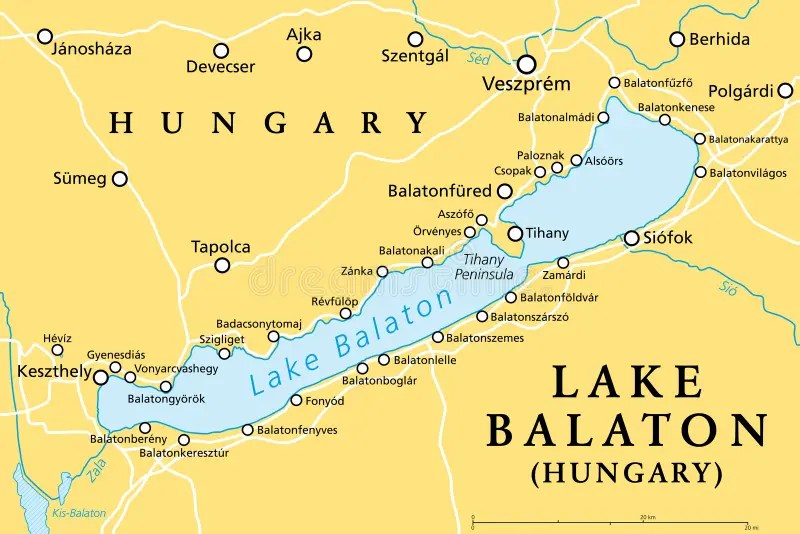
I have since biked around Lake Balaton three times on one of my Bromptons–a British folding bike. A folding bike sacrifices little in terms of efficiency and comfort and, at the same time, allows for easy traveling given that it folds up to roughly one-third its size and can be transported in a hard case almost anywhere in the world. One can enjoyably bike around the 150-mile circumference of the lake at one’s own pace traveling through wine country, past small Hungarian villages and wildlife refuges along the shores of a beautiful pastel-blue lake–all while being caressed by a well-maintained bike lane. It makes for some of the most enjoyable biking I have had the pleasure to experience.
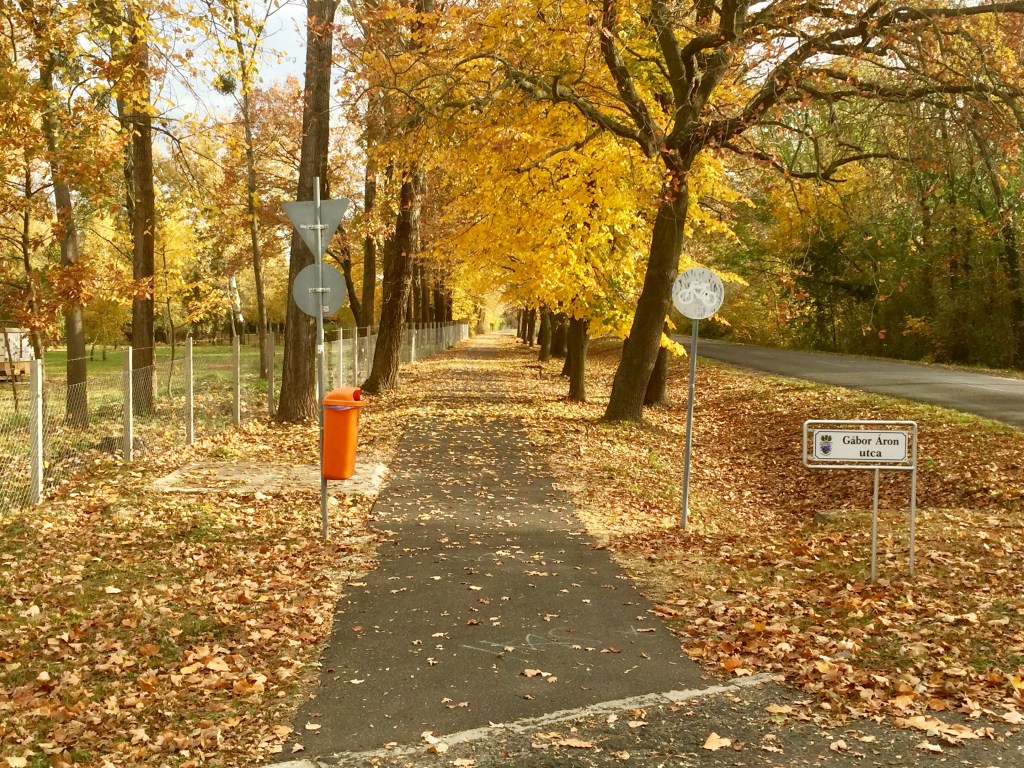
A “golden” bike lane along Lake Balaton. This photo taken along the southwestern corner of the lake.
So it hit me. Where else in the world can I find such natural generosity? Two other lakes came to mind–both the largest lakes in their respective countries: Lake Biwa in Japan, and Lake Chapala in Mexico. So, let’s consider these biking opportunities and how they compare to biking Lake Balaton, Central Europe’s largest lake.
Feature/Lake
BIWA (Japan)
CHAPALA (Mexico)
BALATON (Hungary)
Area
260 sq. miles
420 sq. miles
229 sq. miles
Age
4-million years old
38,000 years old
16,000 years old
Shore Length
146 miles
166 miles
150 miles
Maximum Depth
341 feet
34 feet
40 feet
Easily Circumnavigated by Bike?
Yes
No*
Yes
Water Condition
Clean. Drinking water for the city of Kyoto.
Polluted.
Fairly Clean
*The north shore of Lake Chapala has a bike path which runs parallel to the lake. It runs from the town of Jocotepec on the northwestern end of the lake, through Ajijic, and continues to the city of Chapala on the north central shore of Lake Chapala.
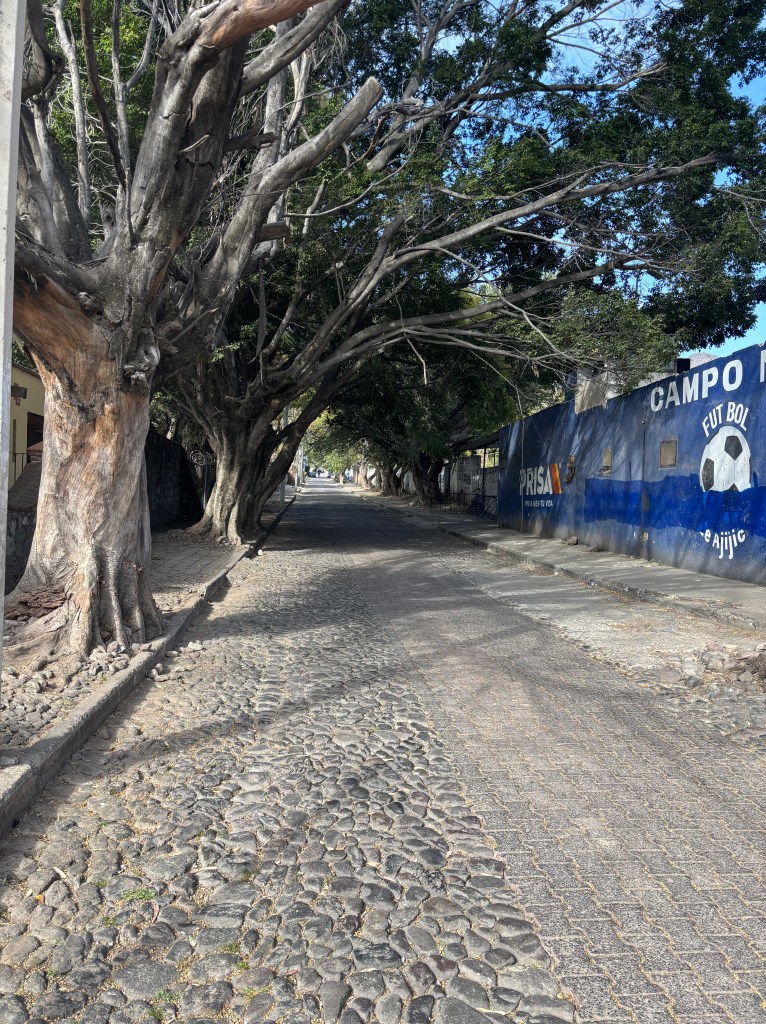
Most of the streets around Lake Chapala are made of cobblestones making casual biking a bit challenging.
A fairly new bike path runs across about half the length of the north shore of Lake Chapala in Mexico. The nearly constant sun glistens off the surface of the beautiful lake. White Pelicans along with other varieties of ducks and birds can be seen everywhere here. Sadly however, the lake is polluted by chemicals from agricultural runoff and a dirty river flowing down from Guadalajara. Once you find a way to navigate the countless cobblestone streets and get yourself to the bike path running from Jocotepec in the northwest to the city of Chapala, the biking is smoother and safer. Chapala has a wonderful waterfront malecon filled with vendors, visitors and locals. But biking around the rest of the lake is currently problematic as Mexico generally is not bike-friendly.
The bike lane along Lake Chapala, here running through the town of Ajijic.
Lake Biwa, Japan’s largest lake, is an older and much deeper body of water than either Lake Balaton or Chapala. It provides drinking water to the Kyoto area, that city having been Japan’s capital until 1861. While all three lakes have a surprisingly similar circumference of about 150-miles, Lake Biwa seems to be especially bike friendly. Vlogger, Jitensha Adventures, describes her 4-day circumnavigation of Biwa, presenting maps of their 4-day trip featuring stays in guest houses and stops in restaurants along the way. While I can’t speak personally about biking Lake Biwa, I have visited Japan many times over the years both as a tourist and as a trekker. I am attracted to Japan’s respect for nature and well-orchestrated rituals of efficiency, organization and cleanliness. I once walked the streets of Kyoto looking for one stray cigarette butt and was unable to find any.
Johnny Z. Lee, another biking vlogger, offers his perspective on biking Biwa, describing the quality of the bike lanes he encountered on his swing through Biwa. His biking is faster and more aggressive than that of Jitensha and her biking partner.
My personal approach to biking is more akin to the turtle in the old fable of the hare vs. the tortoise. I average about 30-40 miles a day, making frequent stops whenever a view, old square, or coffee shop calls out my name.I usually book my stay in advance and scout out nearby eating places that would likely reward my day’s biking efforts. I smile as bikers in lycra whiz past me striving to bike around Lake Balaton in one-day. I take 3 1/2 days as I savor the details of nooks and crannies and the insights I can glean from conversations with locals.
Balaton, Chapala and Biwa are the largest lakes in their respective countries. Interestingly, they are similar in size. But they are more different than they are similar. Balaton and Biwa offer significantly more bike-friendly experiences. They are also cleaner bodies of water. Balaton’s north shore features wine vineyards, while Biwa offers shrines and temples for contemplative interludes.
Perhaps these lakes call out to you too. My Dutch DNA and folding bikes are always at the ready. I can go only so long without having a plan to bike a brilliant body of water. Lakes Balaton, Biwa and Chapala all await. Biwa seems to be calling me next. I’m an easy sell.
Our Leaders’ Lack of Empathy and Contact With the Real World is Contributing to the Failure of American Politics
In the popular 3rd Downton Abbey movie, “The Grand Finale,” Lord Grantham and his wife tour a London apartment. Contemplating the indignity of downsizing and leaving his luxurious Abbey, he turns to his wife and says, “So this is how the world ends.”
“Let them eat cake!,” a quote famously attributed to Marie Antoinette, is likely, according to many historians, not something she actually uttered. It more often can be considered a journalistic cliche. But it has, undeniably, become a slogan suggesting just how callous and out of touch leaders can be. More likely, Antoinette, was part of an aristocratic class unwilling to relinquish their financial privileges, including gambling and garish spending on jewelry and furnishings. We might be intrigued to know of the rumors that she plastered the walls of her chateau with gold and diamonds. Rumors aside, our current White House resident, one Donald Trump, has unabashedly adorned the walls of his residence with assorted gold fixtures and accessories-all while support for children’s food programs and health-care go unfunded.
Trump has literally gilded the White House in gold.
I, for one, want my representatives to know not only what the inside of a grocery store looks like, but more importantly, what it means to struggle with the highest ground beef and coffee prices in decades. I demand that politicians know what it’s like to have worked for a minimum wage, mopped the floors in a restaurant, and to have ridden on public transportation. These experiences would, by necessity, help these folks understand the challenges that most Americans face day-to-day. And they might help them develop the empathy, humility and understanding essential when developing policies and advocating for their constituents.
Say what you will about Bronx-born U.S. Congresswoman Alexandria Ocasio-Cortez, but after graduating from Boston University, she worked as a waitress and bartender. Recently elected New York City mayor, Zohran Mamdani worked, not too long ago, as foreclosure prevention and housing counselor. In that job he helped lower-income immigrant homeowners in Queens with eviction notices and efforts to prevent them from being evicted from their homes. He claimed that “the experience motivated him to run for office to address the housing and affordability crisis.”
While we may not be able to require candidates running for office to have had such real-life experiences, I suggest supporting those who have worked in the real world. It’s humility, empathy and an understanding of the experience of average Americans that’s dangerously lacking from Trump and just about everyone in his administration. Just this week, he vetoed a bill that would have ensured clean drinking water for 50,000 people living in southeastern Colorado. His water, I suppose, likely flows from golden spigots whenever he’s thirsty.
This past week we learned of the passing of Tatiana Schlossberg, 35, granddaughter of former President John F. Kennedy. While struggling with leukemia, she spent many of her final months confined to the hospital. After receiving a stem cell transplant, her hair fell out. In a show of solidarity and compassion, her younger brother, Jack, shaved his head. And to prove that empathy knows no age, her young son wore a scarf to cover his head when visiting the hospital, as his mother needed to do.
At nearly the exact same time, Trump was making light of the murders of Rob Reiner and his wife, Michele. After a lifetime of racist theatrics, including preventing Black New Yorkers from renting apartments in his father’s apartment kingdom, and demanding the death penalty for 5-young Black men who were unfairly accused of beating and raping a jogger in Central Park, Trump now focuses his racism on America’s Somali population, amongst other groups.
Familiarity doesn’t necessarily breed contempt as the old proverb says, but in actuality, it encourages empathy and humility. We must demand representatives who know and value both. And while Marie Antoinette may never have uttered those exact words, “Let them eat cake,” Trump’s gilding of the White House and destruction of the East Wing-all while many American’s wonder how they will financially survive 2026, is much more dangerous than just words.
And, as if icing on an already obscene cake, Trump has announced the building of a Triumphal Arch, modeled after the famous French Arch, and already nicknamed the Arc de Trump. It symbolically portends the end of compassion and justice in our political system-the end of the political world as we know it.
One can be both privileged and compassionate, affluent and empathetic, famous and yet humble. We must demand more from our political leaders.
“We’re goin’ up, up, up, it’s our moment You know together we’re glowin’ Gonna be, gonna be golden Oh-oh-oh, up, up, up with our voices Gonna be, gonna be golden.”Lyrics from Golden, K-Pop Demon Hunters
Unfamiliar cold mornings that I couldn’t quite square. I was in a training program for new Peace Corps Volunteers in a smoky, gritty, South Korean city trying to figure out how I might fit in…
I left the inn where I was staying searching for something to eat before the day’s first session. In a tiny wooden restaurant across from the tired hotel where our orientation was being held I discovered a breakfast nook with only a small unbalanced table and two stools. It’s here I ordered my first-ever bowl of ramen noodles. The kind woman with calloused hands preparing my noodle dish was probably in her mid-30’s-though she looked over 50. On that cold morning nothing could have tasted more delicious.
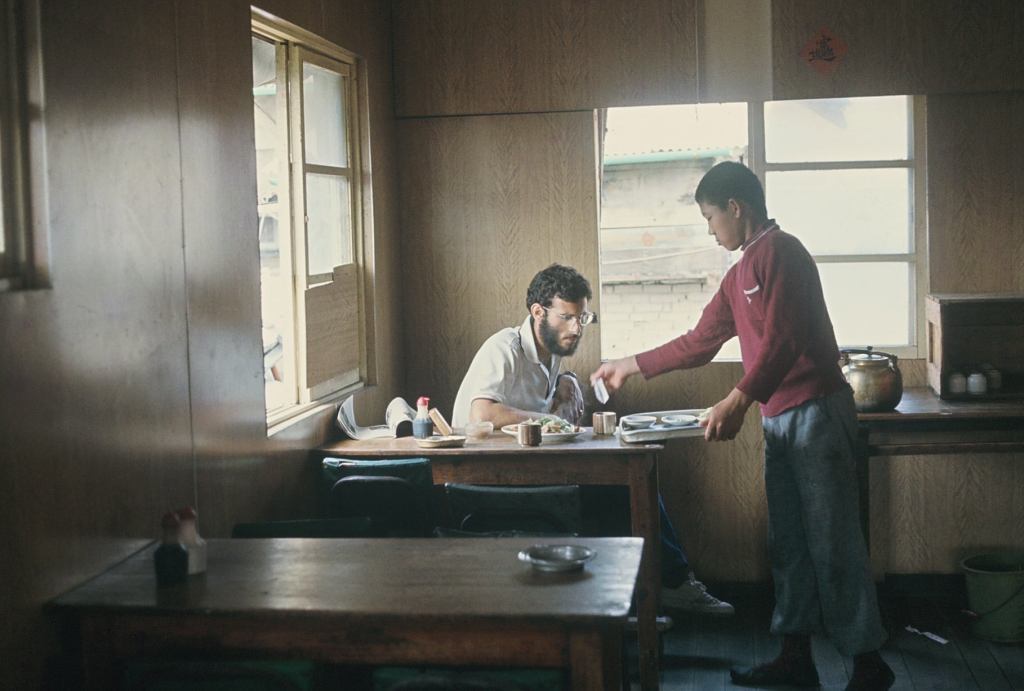
Typical Korean restaurant circa 1974.
This was the Korea I discovered tucked in time between the pervasively destructive Korean War of the early 1950’s and Korea’s ascendancy to its modern democracy and eventually, to its place as the 12th largest economy in the world. On that winter morning in 1973 North and South Korea had roughly the same per capita GDP. North Korea’s leaders chose to stick with its authoritarian model, a closed ruthless society. South Korea, on the other hand, was soon to host the 1988 Summer Olympics in Seoul and never look back.
“Oh-oh-oh, I’m done hidin’, now I’m shinin’ like I’m born to be Oh, our time, no fears, no lies That’s who we’re born to be.”
Remarkably, South Korea is roughly only the size of Indiana. It’s impossible to ignore its outsized influence on the rest of the world. In the U.S. today it’s hard to find a home without a Korean appliance. Think Samsung and LG. The world’s streets are filled with Korean cars. Consider Hyundai, Kia or Genesis. Korea is the darling of global entertainment. I was in Korea for my second teaching stint there from 2012-2017 when the song Gangnam Stylelit the world. Then it was BTS, and now, K-Pop Demon Hunters, the most watched Netflix show of all time. The #1 song in the world today? Golden, from the aforementioned video and sung by 3-young Korean-American women.
And Korean ramen was just the beginning. Kimchi, gochujang, and a banquet of Korean foods have flooded every nook and cranny in the world. One can find excellent Korean food in Riga, Latvia’s capital city. New York famously has its own huge and highly popular Korea Town. You no doubt have viewed Korean drama on TV, taken in a Korean movie or cheered a Korean baseball player playing for Major League Baseball.
Korea has a way of seducing. Just when you think you’re about to sink yourself into something homegrown, it turns out there’s some gochujang sauce in the mix. I recently installed heat pumps in my Maine island home only to see the name Samsung splayed across the large cartons they were shipped in. I visit my grandkids here in Portland, Oregon, and my 2-year old granddaughter is dancing proudly and wildly to the soundtrack of K-Pop Demon Hunters. Today, the world’s most popular ramen is Korea’s Shin Ramen.
Pick of the season book in Portland, Oregon’s famous Powell’s Bookstore suggests Korea’s global culinary influence.
No different than any other country, South Korea has its problems. Its lowest-in-the-world birth rate, with its cascading consequences, is considered by some observers to be an existential threat to the country. But there’s little doubt that its vibrant democracy and almost unforgiving work ethic have sustained its economic success.
Seoul art depiction of Korea’s “hurry-hurry” work ethic-a young Korean rushing off with computer in hand.
Korea has long been nicknamed Land of the Morning Calm, and rightly so. And, while Golden may be symbolic of its current electrifying global influence, one needs to wonder where the country goes from here. From its enchanting morning calm to its golden afternoon in the sun, one wonders what evening has in store for South Korea.
“I’m done hidin’, now I’m shinin’ like I’m born to be We dreamin’ hard, we came so far, now I believe.”
Film and songs currently taking the world by storm.
There’s a kind of privilege to this circle. From a remote, little known community in Latvia, to a city on America’s west coast known for its roses and weirdness, I have followed the unlikely path of artist Mark Rothko.
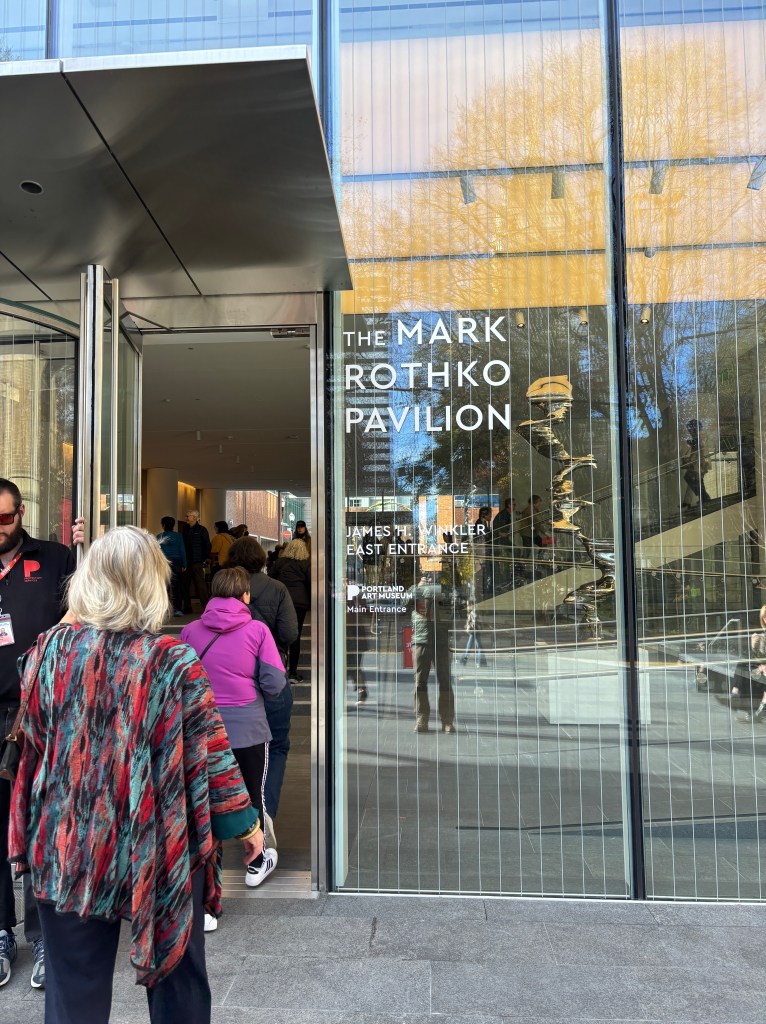
The opening of the new Mark Rothko Pavilion at the Portland Art Museum in Portland, Oregon
Part of the Russian Empire at the time of his birth, Daugavpils, Latvia, today is a quiet city only a few minutes from the Russian border, pot-marked by a surprising number of empty buildings. Riga Street, the local equivalent of Main Street, stretches for a half-dozen blocks from the university to the train station. Russian-style apartment buildings fill most of the side streets. But at the time of Rothko’s childhood, Daugavpils was a larger, more vibrant city, filled with many small, Jewish-owned businesses. One could find a Jewish synagogue on almost every block. And it was in this 1910 tableau of far western Russia that we find the family of Mark Rothko.
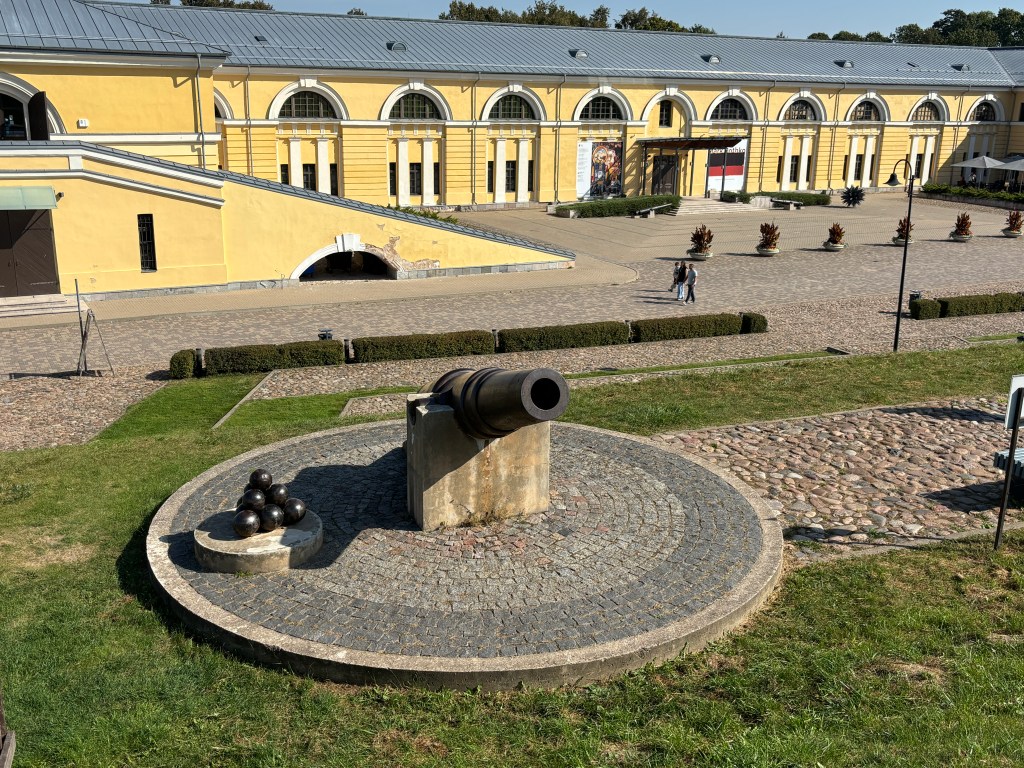
The Mark Rothko Art Center in Daugavpils, Latvia
When his father received notice that he was about to be drafted into the Russian army, he departed for the U.S. His oldest sons too, would be ripe picking for service in the Russian army. So Rothko’s father first departed in 1910 and the rest of the family followed shortly after. Train rides clear across the United States brought the family to Portland, Oregon. Rothko attended high school in Portland and later studied art at Yale University on the U.S. East coast in New Haven, Connecticut. Shortly after, he settled in nearby New York City, joining the spirited art community there.
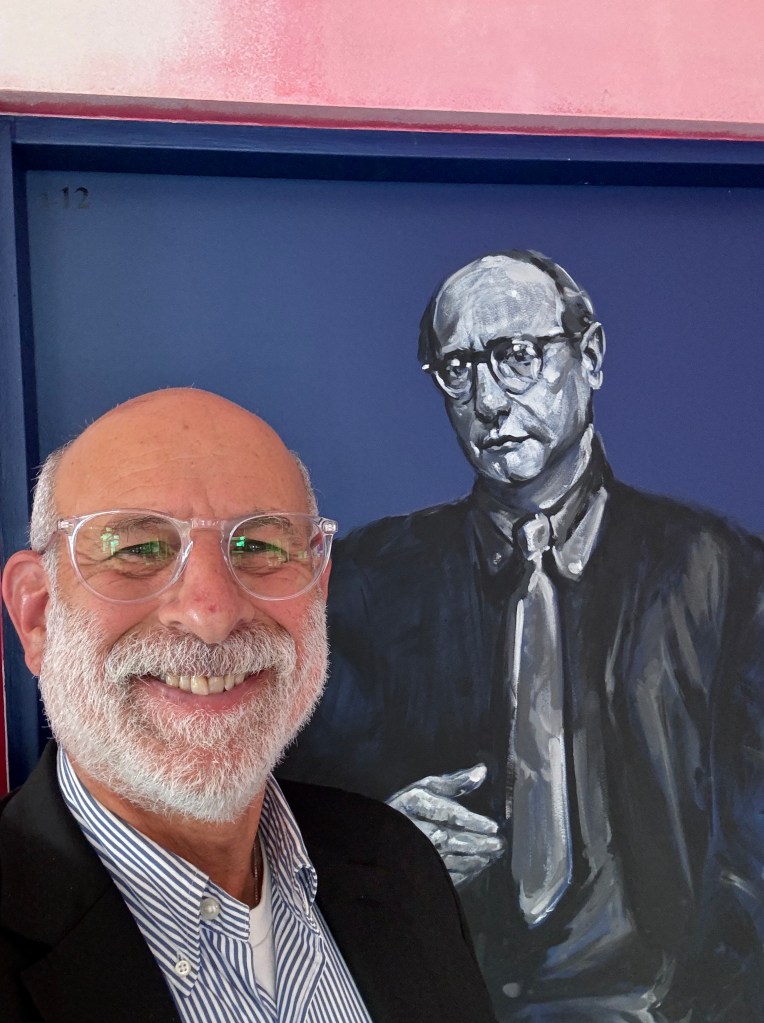
A likeness of Mark Rothko at the U.S. Information Center in downtown Daugavpils, Latvia. I gave a series of travel-themed public workshops in that venue to help support English language skills in the community.
Serendipity introduced us to Mark Rothko. This past year an assignment by the State Department took me to Daugavpils University as an English Language Fellow. Perhaps the most interesting stop in that city is the Mark Rothko Art Center which we visited every few weeks. Two or three Rothko pieces were displayed on rotation regularly, while local artists were featured in varying accompanying exhibits. We loved the museum, a relative oasis in an otherwise quiet city of 70,000.
According to Wikipedia, works by Rothko continue to regularly achieve prices at auction ranging as high as $80 million
Months later we are spending much of the winter here in Portland, Oregon, visiting our son and his young family. It’s here that we witness the opening of the new Mark Rothko Pavilion in that city’s Portland Art Museum. A number of his signature pieces are on display. His striking work draws viewers like magnets. We had prints of his work on the walls of our flat in Latvia and they do nothing less than pull you in to their box-like flashes of color.
At the November (2025) opening of the Mark Rothko Pavilion in Portland, Oregon
How does one view them? “Like a sunset,” is one interpretation I like. And like a sunset, there’s nothing much to explain. Just let yourself go and drift along amongst all the fascinating possibilities. Here’s a video that may provide some helpful scaffolding. Perhaps you’ll be introduced to this Mark Rothko for the first time.
U.S. President Donald Trump models himself after Hungary’s long time Prime Minister, Viktor Orban. He likes his tough, take-no-prisoners approach. He admires his control of the Hungarian judicial system and the press, and his authoritarian stands on immigration and homosexuality. Orban is the mafia boss Trump has always aspired to be.
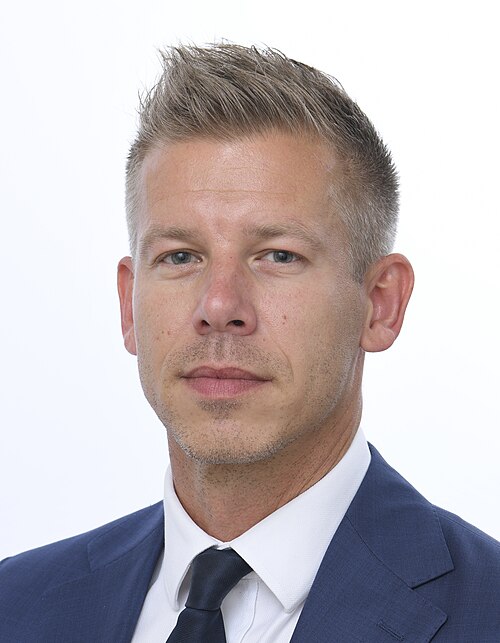
But my recent trip to Hungary revealed there’s a little fly in the ointment, a Tinkle Bell of sorts pulling pranks in the Hungarian firmament. He’s Peter Magyar, and his name literally translates to Peter Hungary. Mr. Magyar, intending to upset Orban in the national election next April, laced up his shoes and walked over 200-miles from Budapest to northwestern Romania, Hungary’s neighbor, on what he called the “One million steps for peace and national unity initiative.”
Peter Magyar, 44, of Hungary’s opposition party, TISZA (photo courtesy of Wikipedia)
According to Hungarians I spoke with, throughout his walk Magyar reached out to everyone he could, including traditional Orban supporters. He listened, answered questions, and was strikingly non-defensive. His approach was a significant departure from Orban’s defiant stands against the EU, non-traditional families, and immigrants. The average Hungarian increasingly wonders why their country is consistently near the bottom of European economic measures. They have witnessed for years now how successful Hungarian businesses have been squeezed out by Orban’s family and friends, the value of their enterprises finding its way into Orban’s coffers.
Viktor Orban, Prime Minister of Hungary. His leadership of Hungary’s economy is increasingly being questioned by many Hungarians (photo courtesy of Wikipedia)
Here in the States another political upstart, N.Y.C. mayoral candidate, Zohran Mamdani, a Democratic-Socialist, also decided to employ walking as a political strategy. Mamdani similarly walked the length of Manhattan meeting and greeting a diverse group of New Yorkers along the way. They apparently liked what they heard. He has walked and listened his way to victory, winning yesterday’s NYC mayoral election by a nearly 10-points.
Zohan Mamdani, 34, walked to victory as Mayor of the largest U.S. city (photo courtesy of Wikipedia)
So too, Magyar in Hungary. Polls show Magyar and his opposition party running ahead of the entrenched Orban. His task is not a simple one. But it perhaps shows that many Hungarians have had enough of Orban and his raping and pillaging of Hungary under the guise of nationalism.
Both performances, that of Magyar in Hungary and Mamdani in New York City, offer hope for us here in the U.S. as we painfully watch Trump fray our Democracy and ignore the Constitution. Ridding America of Trump and his Make America Great Again (MAGA) acolytes will require more than one or two newsworthy walks. Nevertheless, here’s hoping lovers of democracy everywhere can unite and force Trump, and like-minded thugs like Orban, masking as patriots, to take their own long walks along some very short piers.
A 150-mile, surprisingly easy biking adventure welcomes newcomers in Central Hungary. If you like wine, nearly empty bike lanes, and friendly locals, I invite you to bike around Lake Balaton outside the busy summer season.
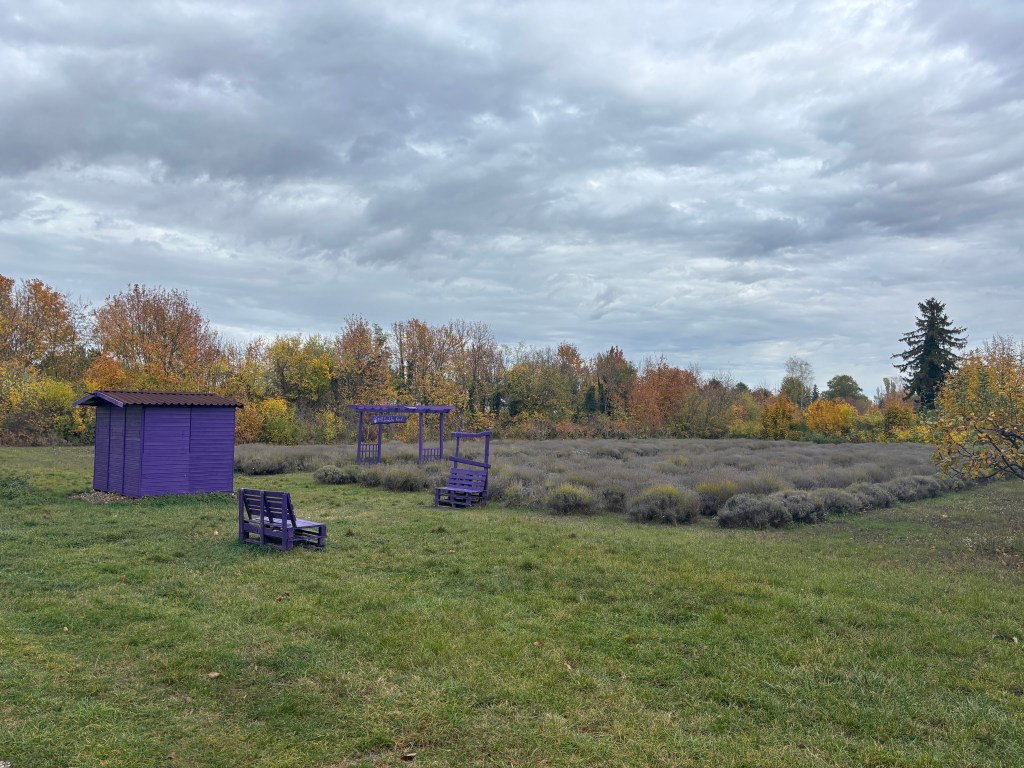
I started out in the tony little town of Balatonfured. Heading west (counterclockwise), I passed through wine and lavender country. Keszthely, on the lake’s far western shore, welcomed me after the 1st day of biking.A lavender field along the lake.
To be honest, I am not a serious biker. I don’t clip-in, or wear nifty tights. I don’t do 100-mile days. I bike with only 6 or 12-speeds. And of particular note, I look rather quirky riding on the 16” wheels of my Brompton folding bike. All that said, you will rarely see me on my bike without a mile-wide smile.
But I do enjoy biking and I ride everywhere I can. We don’t own a car. Living on a Maine island as we do, borrowing and lending things is a way of life. A neighbor lends us his old hybrid Toyota during the summer months (thanks Jeff!). That’s for transportation needs while on the island. Other friends lend us their cars in Portland. Surprisingly often, my bike and a 30-liter bike bag become my in-town vehicle for shopping, hardware runs, and for just finding fun rides in the area. Lighthouses, coffee houses and nature preserves are amongst my favorite destinations.
But you don’t need biking tights, 21-speeds or clip-ons to bike Lake Balaton in Hungary. A few things might help: an appreciation for paprika and goulash, a love of good local wines, a willingness to “put -up” with Budapest (that said tongue-in-cheek), having about 9-10 days available to let go, decompress and enjoy keeping a beautiful lake on your immediate left.
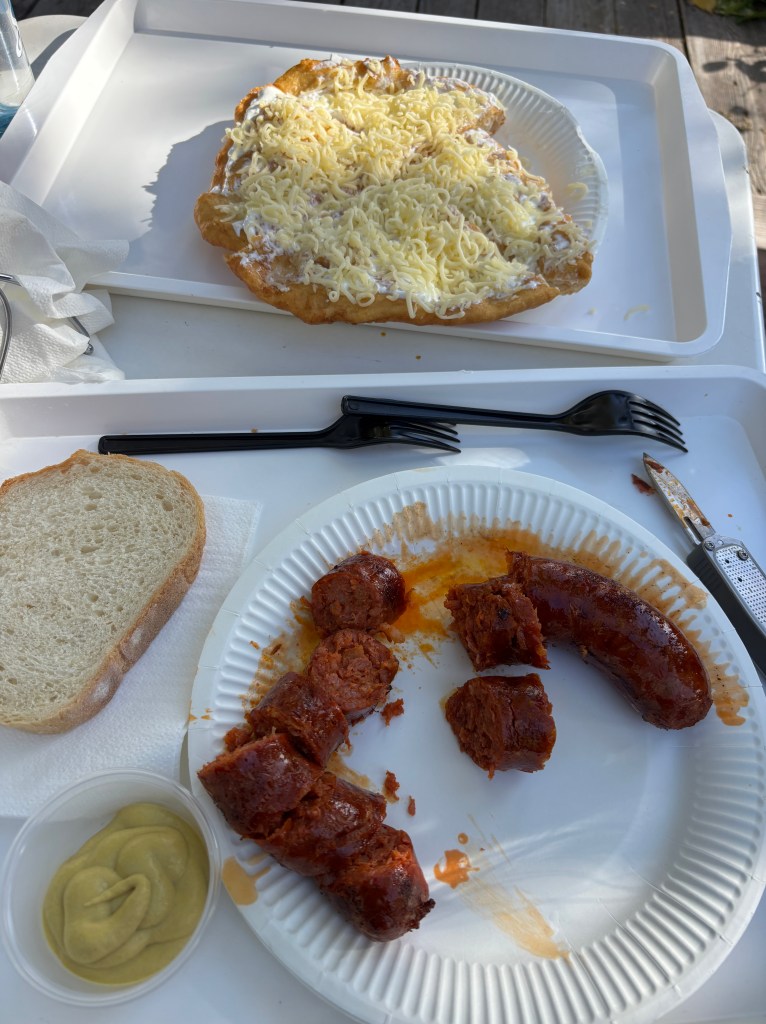
Biking Balaton, I bike roughly 25-40 miles a day starting out about 9AM. I usually roll into my destination sometime in the late afternoon. High points of a typical day? Miles of golden autumnal bike lanes. A lunch perhaps featuring Langos, Hungary’s local pizza-like dough covered in sour cream, cheese and garlic. So good, they can easily become a habit. Delicious local red and white wines that are shockingly inexpensive. And countless lakeside village scenes featuring swans, lapping water and magical vistas.
Langos (above) and local Hungarian sausage.
I first biked Balaton in the fall of 2018. Taking advantage of a national holiday, I was able to turn-off my high school English teacher role in Hungary for a few days. There is an easy train connection from Budapest right to the lake. It’s only a several hour train ride to Balatonfured, or other fascinating lakeside towns that can easily remind you of a New England village in the fall. This most recent circumnavigation was my third around Balaton.
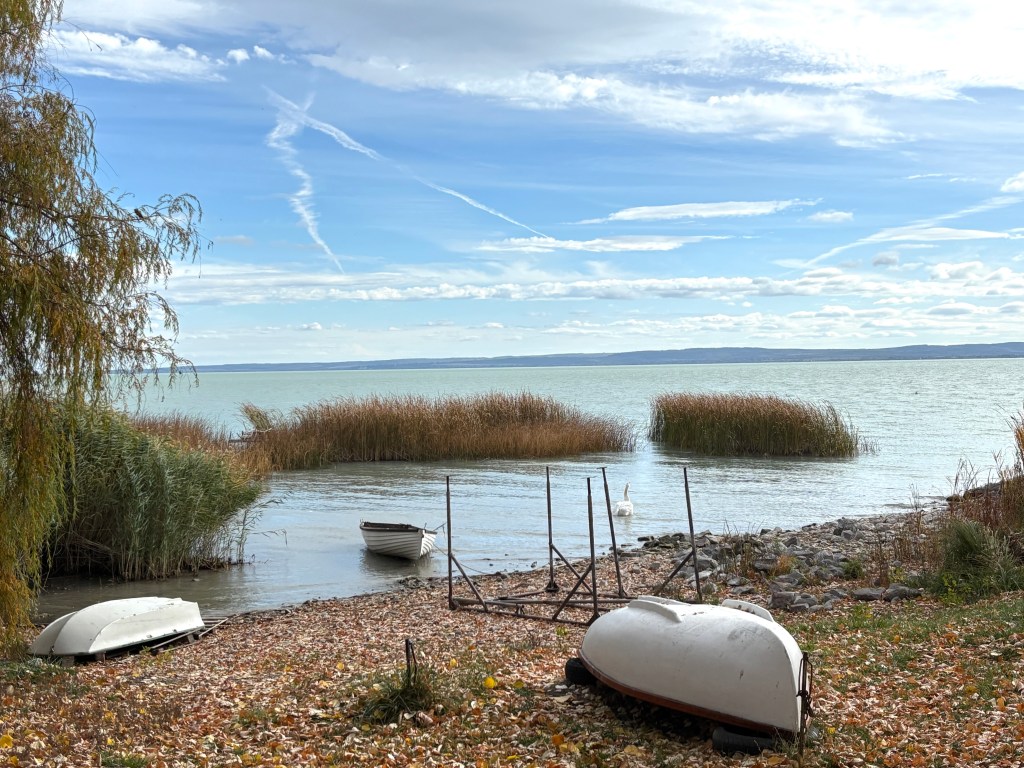
Balaton offers quiet coves, and countless other magical places to stop and ponder life.
I typically bike Lake Balaton over 4-days, riding counter-clockwise around the azure-hued lake. The north shore is filled with vineyards and small hills that melt down to the water. Its southern shore is more densely populated with summer communities playing the role of escape-valve for Hungarians who live in busy Budapest. Everyone seems to have a family place on Lake Balaton, or has a family member or friend who does.
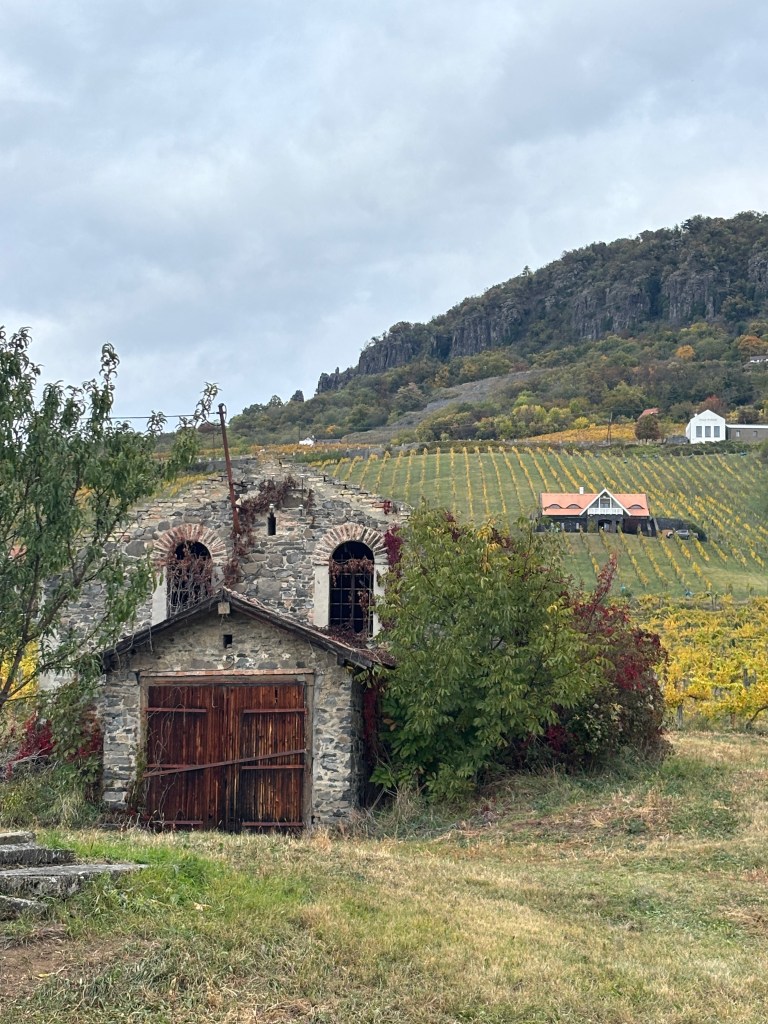
A vineyard along Balaton’s north shore.
But during the Spring or Fall (my favorite time), Balaton is yours for the taking. Its bike lanes are quiet. It’s easy to find a place to stay (I often stay at AirBnB or similar apartments), and the lakeside nooks and crannies reveal their secrets. I can leave the annoying state of American politics behind and somehow ignore the wild politics of Hungary. In many ways, Balaton is a kind of oasis.
And I’ve yet to address the exciting bonus. Before and after biking Balaton you get to spend some time in the country’s capital, Budapest. For me, Budapest is a magical city–the beautiful Danube meandering its way between hilly, voluptuous Buda, and its exciting and gritty partner, Pest. There’s entirely too much to do. But if you are smart enough to decide to bike Balaton, you’re no doubt up to the task of deciding how to joyfully spend your time in Budapest.
The author in Balatonfured before starting out on his most recent circumnavigation of Lake Balaton.
Who will bend this ancient hatred, will the killing to an end? Who will swallow long injustice, take the devil for a country man? Who will say “this far no further, oh lord, if I die today?” Send no weapons no more money. Send no vengeance across the seas Just the blessing of forgiveness for my new countryman and me Missing brothers, martyred fellows, silent children in the ground Could we but hear them could they not tell us “Time to lay God’s rifle down.” Who will say, “this far, no further,” oh Lord, if I die today?
Belfast to Boston, James Taylor, from the album, October Road
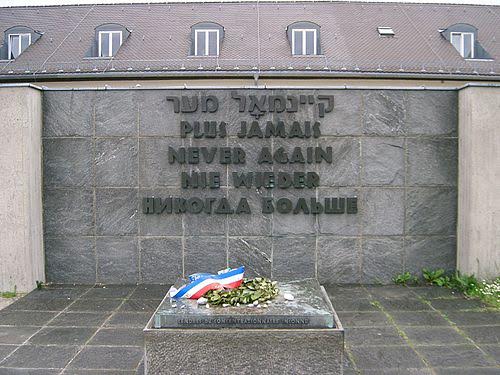
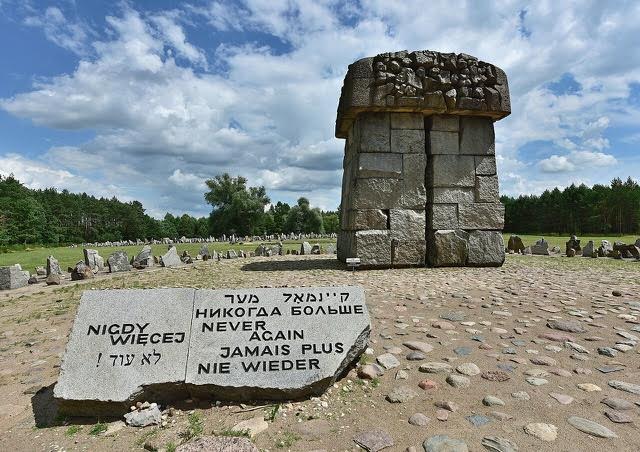
“Never Again” in 5-languages
“Never Again” was an expression we heard over and over again as children-even in my non-religious household. They were words on the wind in Hebrew Schools, during religious holidays, even along the non-sectarian stretches between holidays. We should never forget, could never forget, the Holocaust, but even more, we committed ourselves to never allow such a horrific tragedy to take place again.
An unparalleled tragedy it was. Having lived in both Hungary, and Latvia, I have come to appreciate the relatively recent dark-era of Jewry in Europe that occurred during the 1st half of the 20th century. During the last 4-months of WWII, 600,000 Hungarian Jews were rounded up and hurried off to Nazi death camps. Daugavpils, the 2nd largest city in Latvia, was almost 60% Jewish, as recently as the 1920’s. At one time, the city had more than 50-synagogues. Many Jews were taken prisoners by the Nazis and shot in the surrounding forests and dumped into mass graves. Today, there is one remaining synagogue and a Jewish population in the hundreds. This was the angst of the holocaust. We said, “Never again.”
Yet, we watch a genocide underway in Gaza. The State of Israel, following the lead of Netanyahu and his Right-wing government, is destroying the Palestinian State, its society and its people. Israel, long heralded as the only democracy in the Middle East, is rolling out the unthinkable, a never ending death carpet of bombing, destruction, killing and assassination.
“Never Again.”
Defenders of Israel say any criticism is antisemitic. If you criticize Israel, they claim, you are standing against Israel and the Israeli people. But this is problematic to the core. What if one believes that the destruction of Gaza and its people is against the best interests of Israel? What if a reasonable person believes that the destruction of Gaza ensures generations of hatred against Israel? This perspective sees Israel through the eyes of young Palestinian youths who are witnessing the incessant destruction of the world as they know it. How could this possibly be good for Israel’s future?
Never again is happening again. But this time, Jews are not the object of the hate and death, this time, the Israeli establishment is the subject. They are the exterminators.
This truth in no way justifies the actions of Hamas on that horrible day, October 7, 2023. That day, resulted in the deaths of 1,200 people and the taking of about 250 hostages. That day will live in infamy.
In Gaza, 61,722 Palestinians, mostly women and children, have been killed since that day in October, according to the Gaza Ministry of Health ( MoH). A joint World Bank and UN assessment estimates that around 70% of all the structures in Gaza have been damaged or destroyed as of August, 2025. Furthermore, they report that 81% of the roads have been destroyed or damaged, 68% of agricultural land has been damaged, 84% of health facilities have been damaged or destroyed. Finally, almost all the children of Gaza are out of school.
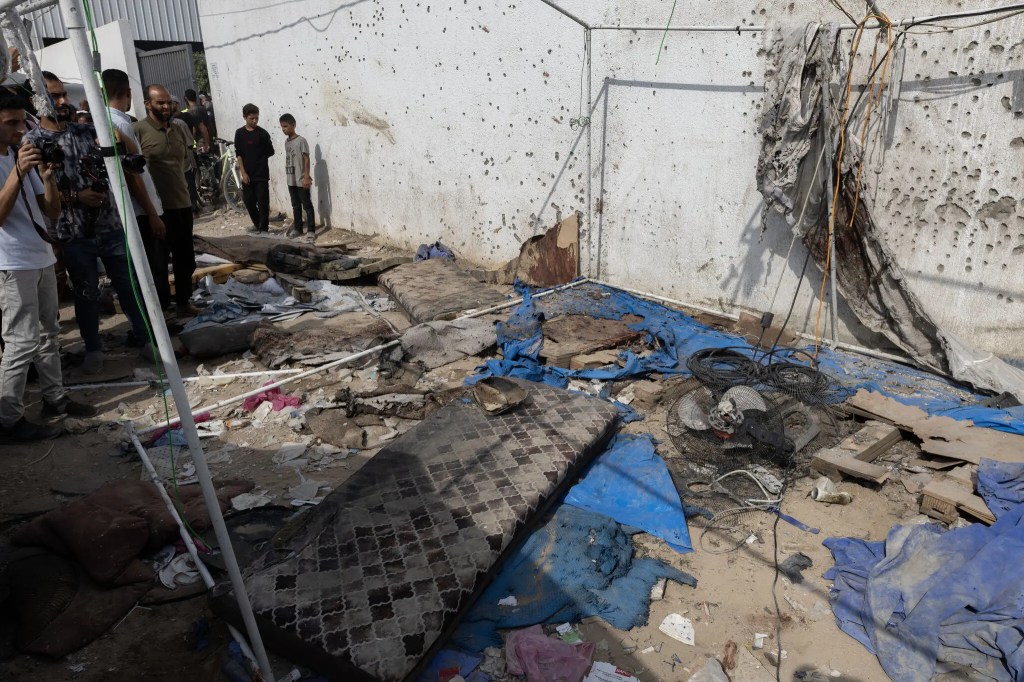
This was the scene recently where the Israeli army attacked 5-Palestinian journalists, claiming one worked for Hamas. They provided no evidence to back this claim. (Photo courtesy of the New York Times)
This is not a game of semantics. But let’s be clear. Genocide is “an act committed with intent to destroy, in whole or part, a national, ethical, racial or religious group.”
Never again. What they must have meant by “Never Again” all this time was never again to Jews. As the world is convulsing politically no one seemingly has the time or inclination to demand: This far, no further. Treating this racism, this genocide, as a typical or minor matter indicts us. We need a domino effect of clarity and courage to end this insanity. It’s way past time to lay God’s rifle down.
It sounds almost whimsical, if not straight-up naive. The U.S. State Department told us, in so many words, “As an English Language Fellow, living and teaching overseas, you’ll be engaging in ‘Soft Diplomacy’ on behalf of your country.”
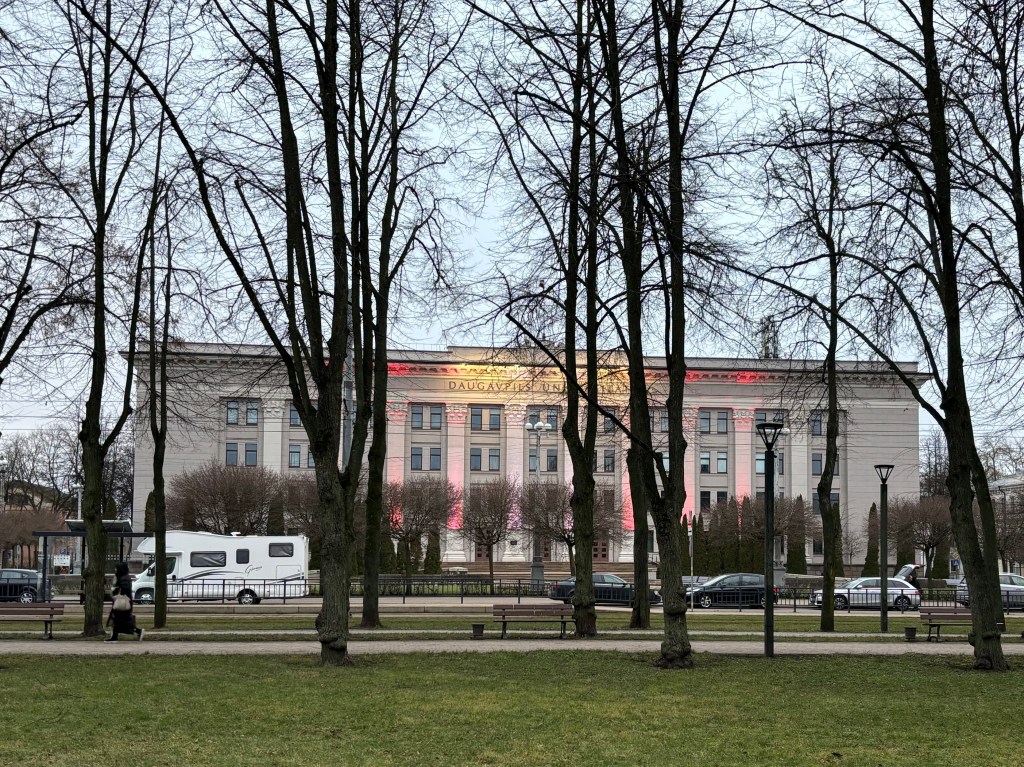
The “Old Building” on the campus of Daugavpils University
Yesterday, after a 10-month stint teaching at a university in a remote city, here in Latvia, I found myself walking through a park here in Riga at about dusk. I was in a reflective mood, leaving Latvia as I am, early tomorrow morning. Twilight, I find, is the time when taking photos is best–the light is perfect for clarity, for colors, and for capturing the “essence” of things. It feels like an apt metaphor for my year here–I was somehow able to capture and appreciate the essence of my relationships with students and colleagues. It was a year of relationships, rather than simply transactions. Latvians, I’ve come to learn, see themselves as a bit distant at first, slow to connect with others. But once they do, they really make those connections real.
The Economic Challenges Here
And, keeping it real, we should talk about the economy here. These days, Latvia’s economy seems stalled, taking a backseat to the other two Baltic States, Estonia and Lithuania. Yes, the capital, Riga, does feel upbeat and vibrant. But for the country overall, that’s a chimera. My home city here, Daugavpils, far to the east near the borders with both Belarus and Russia, is watching its population decline, and has been for years. The handsome city, while dignified and proud, is dotted with abandoned buildings. In 1993 when the Soviet Union withdrew, factories began closing. Many locals felt that the E.U. didn’t want the cheap competition that Latvian production offered, so rather than investing in a sustainable economy, they started sending Euros to largely pacify the locals. This did little to build a Latvian economy for the long run.
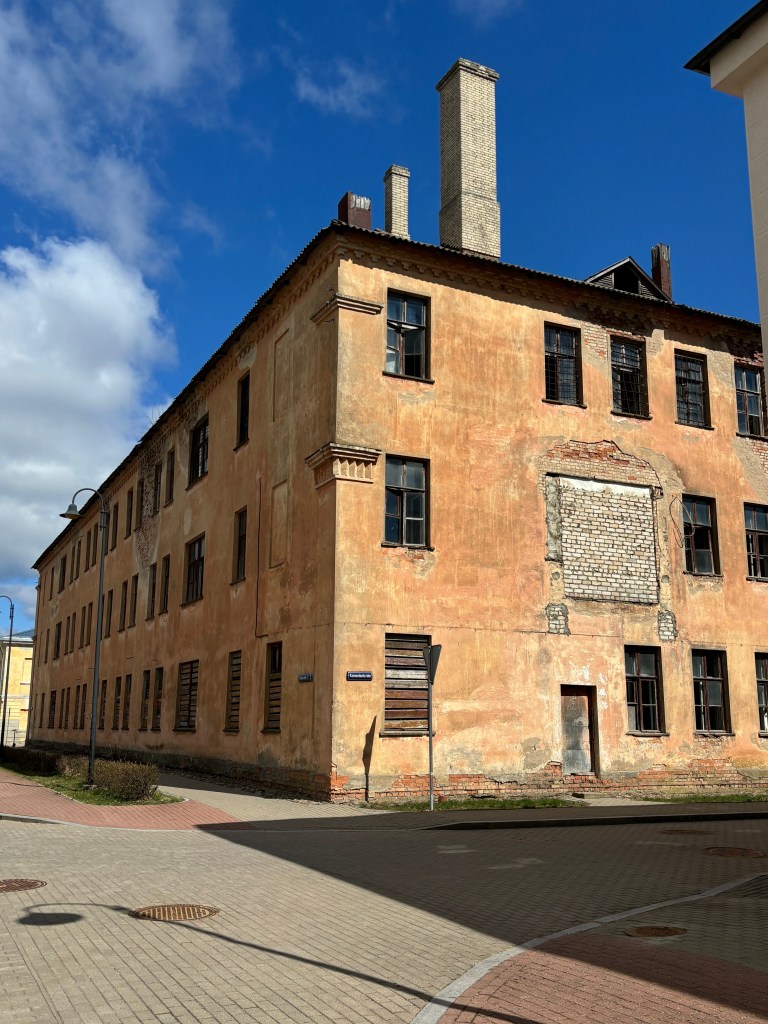
An abandoned building within the City’s historic Fortress. There are many throughout the city
Meanwhile, Estonia, just to the north, historically more aligned with Finland and the rest of Scandinavia, saw their economy take off. Lithuania, bordering on Latvia’s south, is currently, by most accounts , experiencing an economic renaissance. It’s vibrant capital city, Vilnius, was named “Europe’s Green City for 2025,” recognizing its progress along environmental criteria such as: increased miles of bike and pedestrian paths, hotels that have met strict environmental standards, and park expansions. Lithuanian “youth,” the group of citizens 30-years old and younger, have been rated as the “happiest” youth cohort in the world for the 2nd straight year, according to the World Happiness Reportpublished by the United Nations.
I’ve repeatedly queried my Latvian friends about these economic differences amongst Estonia, Lithuania and Latvia, natural bedfellows as they are. While their answers are nuanced, there is an unmistakable theme: in the end, the cultures and the people are quite different. While the Estonians have historically looked north toward Finland, and Lithuanians gazed west toward Germany and Poland, Latvia peered eastward toward Russia, and as a result, the culture has been largely influenced by that country. Well, what does that really mean? What are the consequences of having been more aligned with Russia and the Soviet Union all those years?
One answer came from one of my students this year–let’s call him Rich. Rich is a bit older and more experienced than my other undergraduate students who are mostly in their late teens and twenties. He had once lived in the Chicago area for 6-months. What struck him profoundly, he recalled, was what he observed taking place after snow storms. He noticed that municipal vehicles immediately came by to efficiently plow the snow from the streets, then shortly after the plowing, residents armed with shovels, diligently cleared their driveways and sidewalks. OK, I wondered, so what’s unusual about this? But Rich continued. You’d never see residents here grab their shovels and in civic-unison take care of removing snow from their homes and sidewalks. Instead, he said, they would be sitting around waiting, complaining and criticizing their government for lack of action. It was, he explained, more of a Russian-style approach to dealing with civic matters: watching, waiting for someone to come do something, and then complaining…
Not a few Latvians have criticized their own culture as the key obstacle to turning their economy around. The complaining and concomitant lack of action is one challenge, but so too is what they perceive as graft. E.U. funds, which come in massive amounts to support projects like train systems, highway modernization and other development initiatives, get siphoned into the pockets of politicians and cronies at every turn. This apparently is well-known by nearly everyone I spoke with. Moreover, many Latvians say, it is at epidemic levels in Latvia–far worse than in either Estonia and Lithuania where, they say, more of the money from the E.U. actually gets to the projects they were earmarked for.
Daugavpils, Latvia’s 2nd Largest City
You get a predictable reaction from many Latvians, most often one of subtle condescension, when you mention the city of Daugavpils. They seemingly judge the 80%, or so, of the area’s ethnic Russians, and Russian speakers, as “a problem.” In actuality, as bigotry often proves to be when “poked-at” a bit, the people of Daugavpils are almost always, in turn, welcoming, kind, curious and appreciative of having an American in their midst.
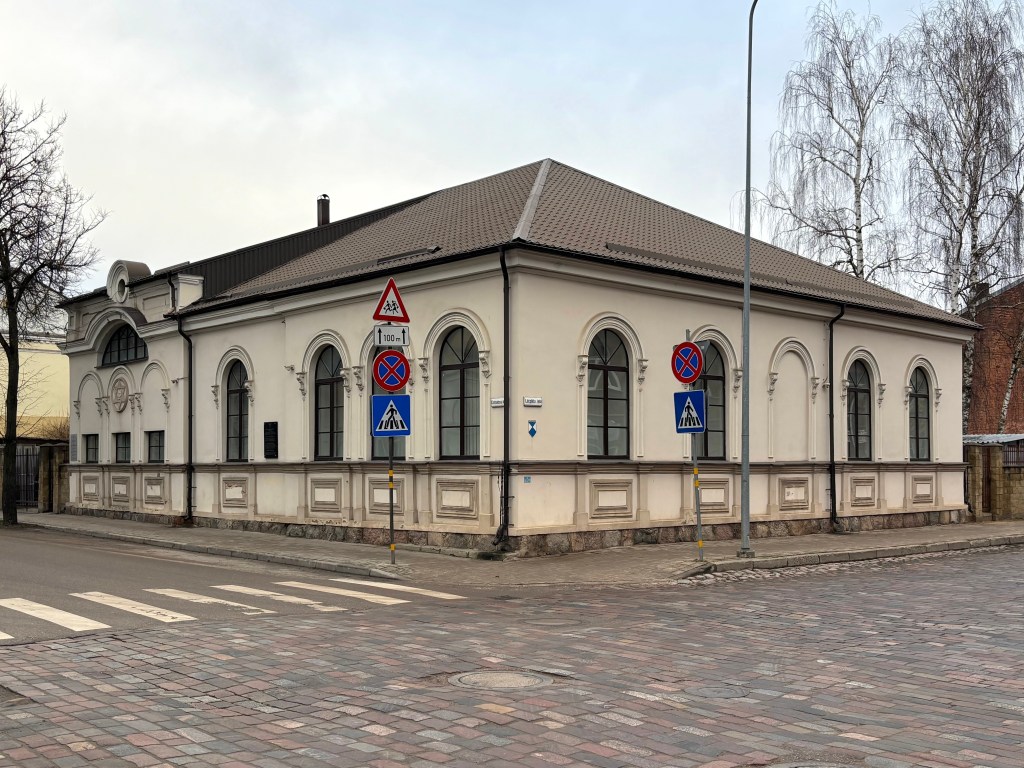
But there was one boundary that my understanding could never seem to cross. Whether it was cultural, existential, language-related, or a combination of factors, I’ll never know for certain. That is, how people really feel about the loss of their Jewish residents during the first half of the twentieth century. Jews, during that era, once comprised almost 60% of the local population. In fact, the city of Daugavpils boasted 55-synagogues of various sizes. There must have been at least one on every block. The main Street, Riga Street, was mostly comprised of Jewish-owned shops on both sides of its quarter-mile commercial stretch. But, that’s all a distant memory today and Jewish places of worship are now down to one solitary synagogue–sitting handsomely and proudly, as it does, on a quiet corner in the middle of the city.
The last remaining synagogue in Daugavpils
That somewhat tragic historical chasm aside, Daugavpils is a comfortable, almost seductive, place to live. The general kindness and support of the people there were not lost on me. Like the quiet trams that criss-cross the city, my comings and goings invariably went smoothly and without incident. Some of this social “seamlessness” was, no doubt, a reflection of my own approach and experience. Having previously spent extensive time living and teaching in South Korea and Hungary, and traveling through nearly 80-countries (but who’s counting?) has helped me avoid behaving like the “Ugly American.”
Final Reflections
The lion’s share of what made my time in Daugavpils so pleasurable and rewarding was, no doubt, due to the Latvians themselves–their kindness, consideration and pride–the latter being particularly unmistakable. Latvia is, in fact, a beautiful place, a country of hundreds of lakes and endless forests, of rich traditions and countless hopes, many of which. for Latvians, remain frustratingly unfulfilled.
“I found the method both creative and deeply meaningful, and it offered a refreshing perspective on how emotional values can be integrated into language teaching.” -Latvian English Teacher
“…unlike any traditional language teaching activity I had encountered before. Based on a conceptual art project, the session introduced the idea of using personal items that hold emotional value as a basis for classroom interaction. Students bring in meaningful objects, write emotional statements about them, and participate in an ‘auction’ by bidding with their own reflections. I found this approach fascinating as it blends reading, writing, speaking, and listening skills in a highly personal and emotionally engaging way. It encourages students to be vulnerable, empathetic, and expressive—qualities that are often underdeveloped in language classrooms.” -English Teacher in training from Turkey
“I was really inspired by your Emotional Values Auction idea…It was absolutely awesome! You were able to make me think about those aspects that have remained in the shadows to this day.” -Estonian English Teacher
“The Emotional Values Auction” was not just about giving away objects but it was about sharing pieces of the heart. That made it truly unforgettable. It showed me that emotional value can often outweigh material worth, and that the act of giving can be even more meaningful when it’s based on understanding and empathy.” – Undergraduate Education student from Turkey
Introduction
An Emotional Values Auction (EVA) is a new, unique, and innovative methodology for teaching English. Based on a conceptual art process originally conceived of by Portland, Maine (USA), artist Adriane Herman, it replicates the structure of an actual auction. The process incorporates student skill development in the areas of writing, listening, reading, speaking and presenting. The context is both cognitive and emotional, as the students consider items to submit to an in-class auction that represent their experience with, for example, the emotions of generosity, pride, happiness, or loss. Students present their items to the class and expand on their experiences by telling their stories. Other students “bid” on the items that they feel a connection to. “Bids” are made by writing about why they think they would be good stewards for receiving the items “up for auction.” The submitted “bids” are reviewed by the original student donating their item, and that person selects the final recipient. No money is exchanged. The “currency” is shared experience and learning. Students report positive levels of satisfaction with the process based on several factors.
From a Unique Art Concept to an ESL Teaching Methodology
During the summer of 2023 while a friend was visiting from out of town, he suggested we take-in an art show in Portland, Maine. We expected a typical art show, but instead, found we had entered an art experience called an “Emotional Value Auction.” In consisted of displayed items that people were “letting go of” that had emotional value to them. The items were accompanied by written statements from the owners about what the item meant to them, and why they felt it was time to “let it go.” It was fascinatingly eclectic, that is, it included items as varied as a grandmother’s old flannel shirt, an antique leather diary, even an unused B-B Gun rifle from the early 1980’s.
Displaying “generosity,” an English student enters her artwork into the auction.
Because it was an auction, you could “bid” on any item if you were somehow desirous of it. A visitor to this so-called Emotional Value Auction, could submit a “bid” on any item, or multiple items, by writing a statement about why they felt connected to it. The “bids” were collected during the several weeks the auction was underway and eventually they were given to the respective person who had originally submitted the item to the auction. That person would subsequently review all the “bids” placed on their item and select the one that “moved them,” or appealed to them, the most. The item was then awarded to that person.
Another English language student after her successful bid.
I thought that this process could effectively be adapted to an ESL teaching methodology, one that helped develop the skills of reading, writing, speaking, listening and even presenting. So, I designed an approach and piloted it last Fall in two of my English classes at Daugavpils University in Latvia. The results were amazing.
Follow-up evaluations indicated that students both valued and enjoyed the process more than other learning activities they had experienced while learning English. Furthermore, and to my surprise, students reported that the Emotional Values Auction process revealed aspects of classmates they had not known previously, for example, their interests, hobbies and skills. And as a result, many felt that the class had become a closer group of learners.
Since that semester, I have implemented the EMA is several additional Spring classes. The results have been similar, that is, students report enjoying the learning process, while at the same time, enhancing their English language skills, acquiring new related vocabulary, and reporting similar group development outcomes.
Recent Developments in the Baltic States English Teaching Community
A trio comprised of two U.S. State Department English Language Fellows (ELF’s), and a Specialist, developed a so-called “Road Show,” where we offered training for regional English educators hosted by area educational institutions. We dubbed these trainings, “mini-conferences,” as the participants were offered the opportunity to attend two-workshops on a Saturday or Friday morning. The Emotional Values Auction was one of these workshops, intended to introduce the methodology to teachers and to provide a Teacher’s Guide as follow-up to interested attendees. These workshops have been offered in Wroclaw in Poland, at the University of Tartu in Estonia, in Riga at the University of Latvia, and in Daugavpils. The reception to the methodology has been highly favorable as indicated by the representative comments quoted at the outset of this post.
Alfred Mercier, a noted early American playwright, novelist and philosopher, who spoke five-languages, said, “What we learn with pleasure we never forget.” The Emotional Values Auction process seeks to combine the cognitive aspects of language learning with a focus on emotions all while providing students with a fun and memorable learning experience.
If you are an educator, or have further interest in the Emotional Values Auction process, and would like a copy of the accompanying Teachers’ Guide, please contact Steven Schuit: Schuitstephen33@gmail.com




:max_bytes(150000):strip_icc():focal(749x0:751x2)/Donald-Trump-speaks-as-he-meets-with-Italian-Prime-Minister-Giorgia-Meloni-in-the-Oval-Office-042125-7c88560f5c1247ec9e0e84401a4cf3c3.jpg)











 Short Talks Through a Wide World