Heaven’s Fall

Note: This post was authored by one of my students, Aylin Aydogdu. Aylin is enrolled in two of my writing classes here at Daugavpils University in Latvia. She is from Kayseri, Turkey, and her English, she is proud to say, is self-taught. Aylin, 21, is an international student participating in Europe’s Erasmus Program, and is a full-time student at Erzincan Binali Yildirim University in Turkey.

Aylin Aydogdu

The ground beneath my feet had always been steady, like the promises of my parents to keep me safe. But that day, it betrayed us. The earth, which I thought was my friend, roared and shook so fiercely that I couldn’t stand. My sister screamed, and I tried to hold her hand, but we were yanked apart as everything fell apart around us. The last thing I remember was her small fingers slipping from mine as the ceiling came crushing down.

I woke up under a sky I didn’t recognize, gray with dust and shadows. I was surrounded by rubble, cold and sharp, pressing against my skin. I called for my sister, my mom, my dad…No one answered. Hours passed – or was it days? I don’t know. Time felt broken, like everything else.

When they finally found me, I was too tired to cry. The rescuers pulled me out, their hands rough, but warm. They told me I was lucky. I didn’t feel lucky. As they carried me away, I saw a man sitting in the rubble, holding a small, lifeless hand sticking out from beneath the concrete. His tears had frozen on his face from the cold, and he didn’t move. They told me later he had waited there for 3-days, refusing to let go of his daughter’s hand. I didn’t know her name, but I felt like I had lost her too.

They took me to a shelter where the air smelled like wet clothes and sadness. Everyone had the same hollow look, their faces pale and drawn. A woman sat rocking back and forth, clutching a shoe that belonged to her son. A boy about my age stared blankly at the floor, his arm in a sling. He didn’t speak, not even when I tried to talk to him. Maybe he had run out of words.

I don’t know if I’ll ever have words to describe what I felt. Unadulterated anger, sadness, fear – they all tangled up inside me, fighting to take over. I’d close my eyes and see my sister’s hand reaching for me. I’d hear my mom calling my name, my dad’s voice telling us to run. And, I’d be up shaking, the sound of collapsing buildings still echoing in my ears.

They tell me I have to move on, that life goes on. But how can life go on when everything that made it worth living is gone? I lost my family, my home, my school, my friends. Even the toys I used to play with, the ones that made me feel safe, are buried under the rubble. And every time I think about it, I feel like I’m buried there too.

Standard

An Open Letter to the Leaders of Europe: By Opposing Trump, You Can Make Us Great Again

Gary Markstein, Creators Syndicate, 2025

Dear Leaders of Europe,

Most historians, and people of a certain age, would agree that Americans saved Europe during WWII. Now it’s your turn to reciprocate–please help save the United States. We hope you, Europe’s leaders, have the courage and conviction that America’s politicians lack when it comes to confronting Trump and his minions. Their brash, egomaniacal, and moronic statements and demands are laughable. We Americans know it, you know it, and hopefully, you’ll confront the stooges head-on, unlike the countless, feckless lemmings back home in the U.S.

Trump’s anointed fools have already begun arriving on your shores. Vice-President, JD Vance, arrived in Paris this week and told an assemblage of leaders debating the future of artificial intelligence that America would dominate the industry, make the most advanced chips on American soil, write the software there and set the rules. Europe could either get on board or get out of the way (NYT). Remember, only recently, the same JD Vance told Americans, with a straight face, that immigrants in Ohio, his home state, were eating cats and dogs. Don’t believe anything that comes out of his mouth.

Bramhall, NYDN, 2025

Then Trump’s new Secretary of Defense, Pete Hegseth, told a meeting of allies in Brussels that Ukraine must give up its objective of recapturing all its lost territory in the war with Russia. It was revealed during his recent nomination hearings that he has well-documented drinking problems, has sexually abused women and was nominated because he was a popular weekend TV host on a program liked by Trump. Senate Armed Services Chair Roger Wicker (R-MS) called Hegseth’s comments, a “rookie mistake” (Heather Cox Richardson, Feb. 14) and pushed back today when Hegseth offered that the U.S. would not support Ukraine’s membership in the North Atlantic Treaty Organization (NATO). He said that it was “unrealistic” for Ukraine to demand a return to its borders before Russia invaded in 2014, essentially offering to let Russia keep Crimea. Senator Wicker, a member of Trump’s own party, said he was “puzzled” and “disturbed” by Hegseth’s comments and added: “I don’t know who wrote the speech—it is the kind of thing Tucker Carlson could have written, and Carlson is a fool.” Joe Gould and Jamie Dettmer of Politico identified Carlson as a “pro-Putin broadcaster.”

Then, dear European leaders, there is Mr. Trump himself, who again, according to the NYT, has began imposing tariffs on you before he has begun even cursory diplomatic negotiations, hurting you, our allies, and adversaries alike, and wiping out years of trade agreements. This is the same Donald Trump who has insisted we rename the Gulf of Mexico and Alaska’s Denali, the highest peak in North America, by executive order. In 2017, Trump pushed hard to make Americans accept that the crowds at his inauguration were bigger than those at President Barack Obama’s, an immediately disprovable lie that seemed unimportant at the time but was key to establishing the primacy of Trump’s vision over reality. This “acceptance” that led, eventually, to the Big Lie that Trump had won the 2020 presidential election and now, apparently, to the lie that Elon Musk is cutting “waste and fraud” from the government here when, in fact, he appears simply to be cutting programs he and Trump dislike (Heather Cox Richardson, Feb. 14).

Trump is a pathological liar. According to the Washington Post’s count, just during his first term as President, he lied well over 3500 times. Dr. Brandy Lee, a Psychiatrist and MD, and author of the book “The Dangerous Case of Donald Trump,” has established, along with 40 other leading psychiatrists, that Trump has Clinical Personality Disorder, a pathology which fuels on cruelty and destruction. This is evidenced by his current wanton destruction of the U.S. government and its myriad agencies.

America’s Republican leaders, who once led with patriotism and pride, have become sycophantic puppets and have completely lost their way. Our Democratic leaders are licking their wounds after losing the 2024 election and are currently useless. We look to you to save Europe from Trump’s pathology and in doing so, help contribute to his demise. The modern Europe which we helped to create, led by NATO and the EU, must not succumb to Trump and his Russian partner, Putin. We look to you, the leaders of Europe, to defend freedom and democracy which, for the moment, are being spirited away from our shores.


Standard

Rezekne, A Place in Between

Places like Rezekne remind us to see beauty and opportunity in the mundane moments of life, rather than constantly chasing after the next big thing. They remind us that there is value in slowing down and appreciating the journey. (Paraphrasing Jeff Goins, author of “The In-Between”)

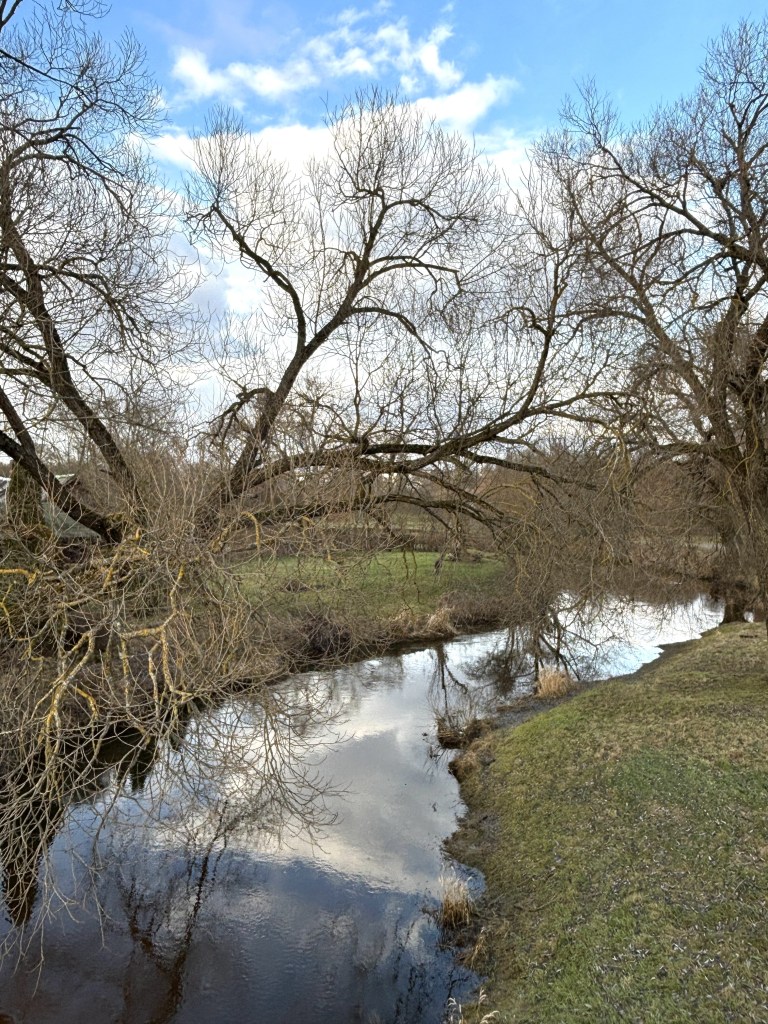
The Rēzekne River as it meanders through the downtown area of this small Latvian city of 26,000 people.

Well known cities like Seoul, Tokyo and London are immediately recognizable and bring iconic images to mind: man-made canyons of gleaming buildings, long steel bridges, and streets almost comically teeming with people. Then there are the places in-between, the oft-ignored stops along train lines, the towns with awkwardly paved streets, where the smell of homes still heating with wood or coal fills the air. Locals are apt to still speak an old dialect from centuries past, and to move with a patient gait knowing that whatever is around the next corner will inevitably wait.

Rezekne in Latvia’s eastern-most Latgale Region, built on 7-small hills, is such a place. An old city, lying only 39-miles from the Russian border, it was once part of the Pale of Settlement, the large area in western Russia where Jews were once permitted to live and prosper in relative peace. In the late 19th century the city was 60% Jewish, and as late as 1935, the population was a quarter Jewish.

On a recent overcast Friday, I took the bus from Daugavpils, where I teach English, and about 2-hours later arrived in Rezekne with a plan to meet Elina, the city’s Tourism Information Specialist. Speaking fluent English and well-versed in history, Elina met me outside the Green Synagogue located on Israel Street in the city’s Old Town. The Synagogue, she tells me, and the surrounding neighborhood, were miraculously spared from the intense bombing inflicted by the Russians during World War II. In fact, nearly 70% of the buildings in Rezekne were destroyed.

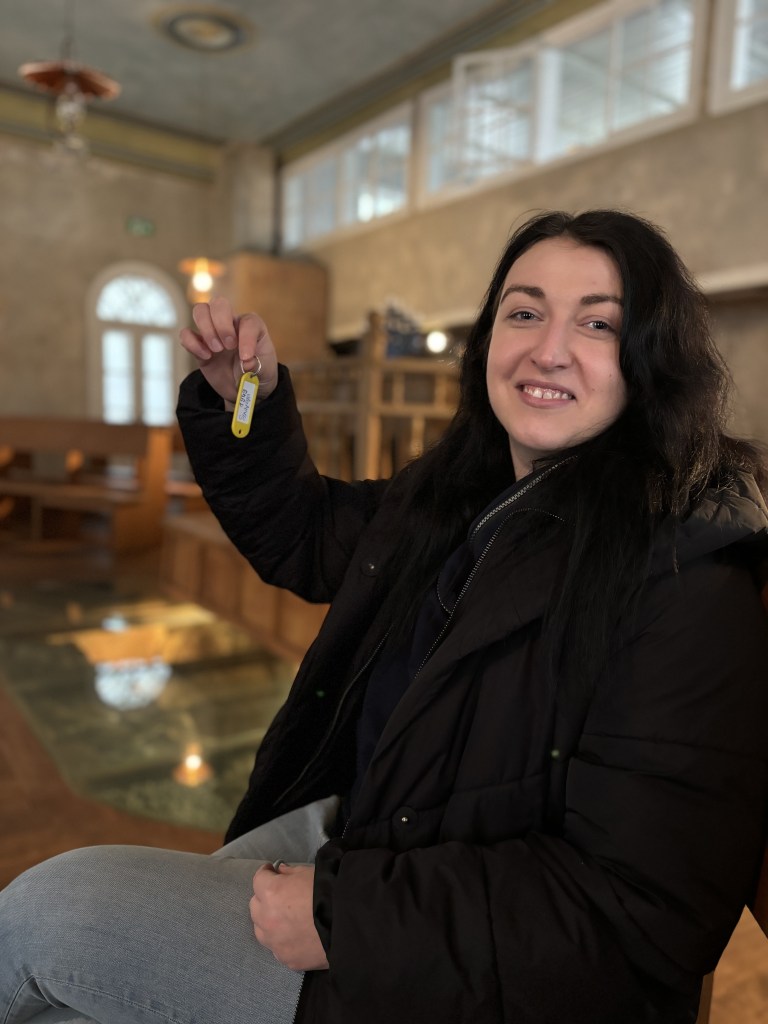
Elina, here holding the keys to the Green Synagogue, works in the city’s Tourism Department, and in my mind, is the best ambassador a city could have.

Elina, holds the keys to the synagogue, and so too, the historic details of the city, which she unfolds like the pages of a novel. After carefully leading me through the several rooms in the synagogue, which dates from 1846, she escorts me past the nearby buildings. She points to the former Jewish Bank, a modest but handsome brick building across the street. A minute later she directs my attention to an old fire house, once staffed with Jewish firemen who, she says, famously doubled as town musicians.

The former Jewish Bank, now a several unit apartment building.
The old fire station, once staffed by Jewish fire fighters who doubled as the municipal band.

Having previously seen the city’s new Center of Culture, GORS, well-regarded across Latvia, I know the city is being proactive about trying to make itself a sustainable city. Smaller cities such as Daugavpils and Rezekne, like similarly-sized cities throughout the world, are confronting shrinking and aging populations. Their younger citizens are heading to the big more dynamic cities like the capital, Riga, here in Latvia. Just a few years ago, to invest in its heritage and to attract more tourists, the city hired a Norwegian team to come and restore the Green Synagogue which had remained in disrepair and unused, except for a few homeless souls, for some time. It’s that pride in itself and its history that left me rather impressed.

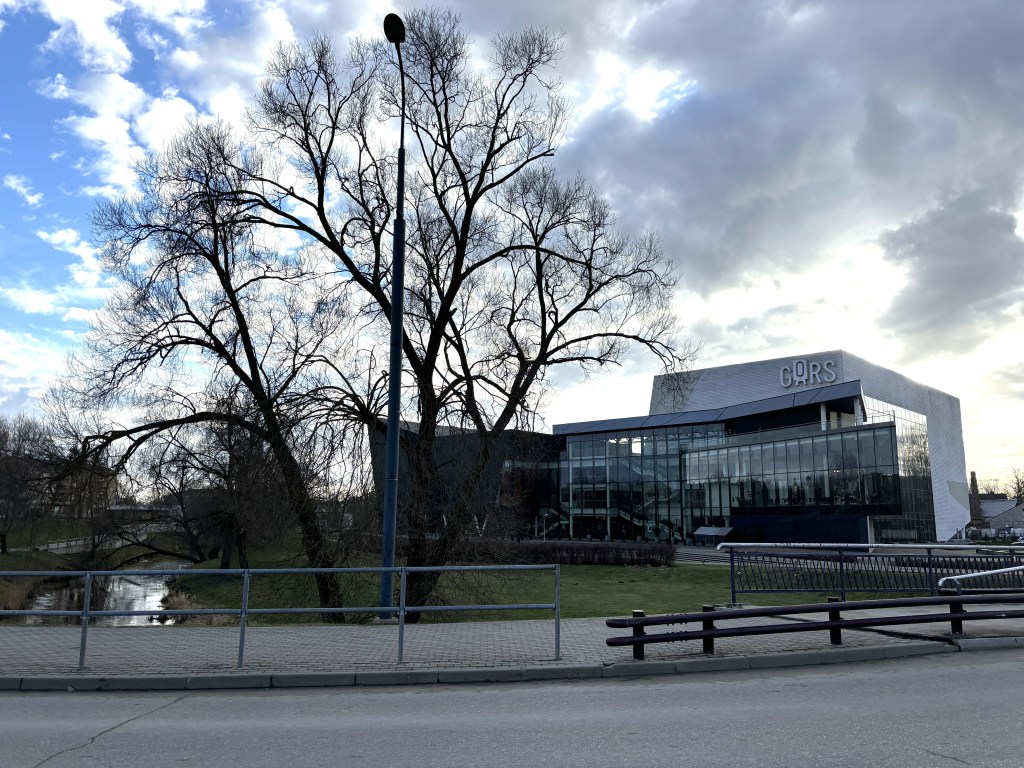
The new and nationally recognized GORS Cultural Center in Rezekne.

Unlike other places I’ve visited in Europe, the locals here did not take up arms to rid the city of its Jewish population. Elina vividly described to me the proud relationship between the Catholic and Jewish communities that once existed here. At the top of the hill, she says, is the double-spired Cathedral of the Holy Jesus Heart. The Jews would honor their Sabbath on Saturday and the town would be quiet. But on Sunday, as the worshippers left church, they would walk down the hill past blocks of Jewish-owned stores selling everything imaginable. There was a special energy in the air as sellers and buyers filled the main street with an excitement that symbolized the best the community had to offer.

It’s places like Rezekne, the towns and cities in-between, that quietly insist we slow down and listen to their history. In many ways, it’s likely they hold the most important lessons for our future.

Wall art depicting the oldest known photo of the Jews of Rezekne.

Standard

Virs Un Vards: A Man And His Word

One of the things I have always loved about our home state of Maine is that it still is a place where a handshake binds a deal. When we closed on our home in 1985, no lawyers were present-just the four of us, the owners, Mr. and Mrs. Craigin, Marsha and me, and a bank employee. We shook hands in agreement, and the deal was as good as gold.

During a recent meeting with my “person of contact,” that is, my wonderful Latvian supervisor here at the university where I am teaching, I mentioned that nearly all the Latvians I’ve encountered during my first 5-months here, students, colleagues, nearly everyone, seem especially “earnest” to me. Ilze smiled as she heard my comment, and said proudly, in fact, that characteristic is a fundamental cultural feature here in Latvia and it’s called “Virs un Vards,” literally “a man and his word.” When a Latvian says they will do something, count on it. She said it was one of the most meaningful and descriptive expressions in Latvian culture.

Later, Ilze sent me this photo, the cover and name of an old children’s book here in Latvia, “Virs un Vards,” “A Man and His Word.”

Standard

Cruises: A First-World’s Awkward Pleasure, And Everyone’s Problem

“The food here is terrible, and the portions are so small.” Woody Allen

The MSC Line’s Cruise Ship Lirica

I know cruises personally. Not from a lengthy resume of cruise ship voyages, but because I live on an island, in a city, that “welcomes” dozens of them for parts of the year. The use of “welcomes” here is certainly a euphemism. Cruise ships, for most residents, are an annoyance. For starters, they bring crowds to the streets, long queues in shops, and increase congestion in all directions. In addition, there’s that conspicuous smoke that constantly emanates from the ships’ stacks and the ongoing controversy about the dumping of both gray and black water into nearby bays.

I lead bike tours during the summer months and many of my customers are cruise ship passengers who wisely choose to do something physical while in port. They seize the chance to visit local lighthouses that have historically protected the harbor. And let’s be honest, people embarking from cruise ships spend money at local shops, buying souvenirs and trinkets from resident artists and entrepreneurs, and services like bike tours.

So it was with complete ambivalence that I recently boarded a cruise ship in the Mediterranean as December ended and January welcomed in the New Year. Candidly, our stops were fascinating: the island of Majorca, then Valencia, Spain, the port of Cagliari in Sardinia, and finally several Ligurian Sea ports not far from Rome and Florence. Our journey both commenced and ended in the gritty, yet alluring seaport of Marseille, France.

On one hand, the food aboard the Swiss-Italian owned MSC Line can best be described as “camp food” –recalling my days as a kid at summer camp. I found myself hoping for a delicious meal and yet, was constantly disappointed. Paraphrasing Woody Allen’s comedic line, “and such small portions.” On the other hand, the on-board customer-service was excellent and we took great pleasure interfacing with the international crew.

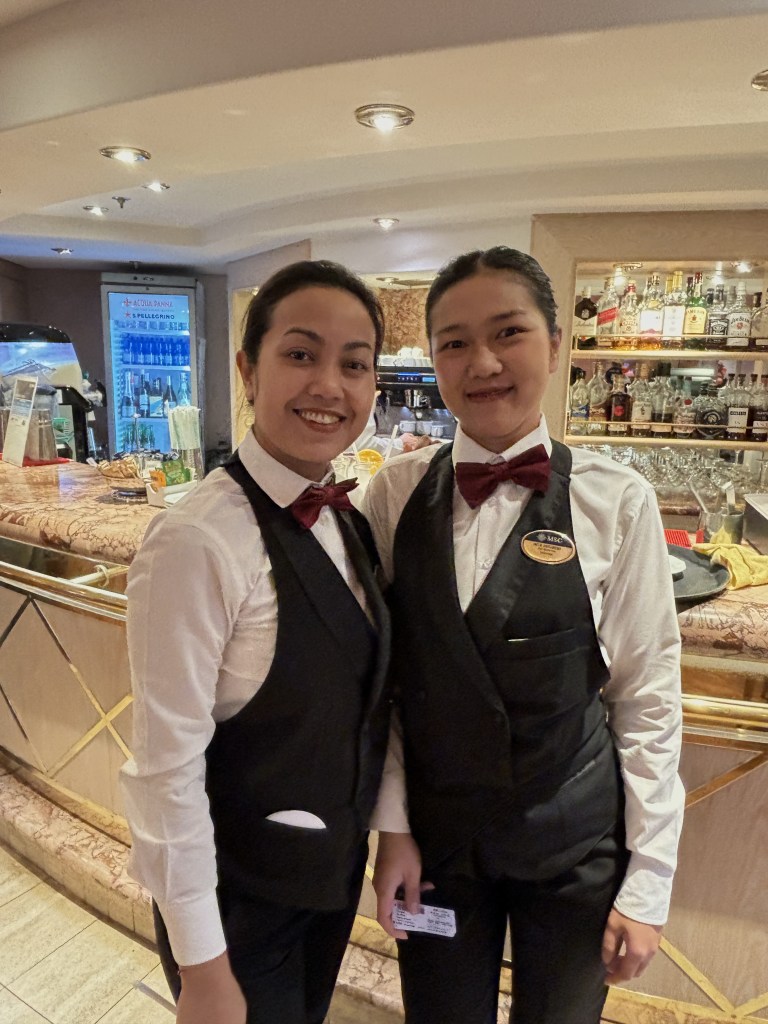
Two members of the on-board staff, sisters Agnes and Mita from Indonesia

I understand that Cunard’s Queen Mary has figured out how to delight its passengers when it comes to its culinary offerings. Royal Caribbean is also known to do a good job in this area. But when the conversation turns to what cruise ships do to local communities like Venice, Italy and Bar Harbor, Maine, naming just two, those residents care not at all about on-board food quality. They do care about the environmental degradation cruise ships create in their harbors, their skies, and on their streets. That should increasingly be everyone’s concern, including mine.

Standard

Baltic Windows

I feel that it is healthier to look out at the world through a window than through a mirror. Otherwise, all you see is yourself and whatever is behind you.” Bill Withers

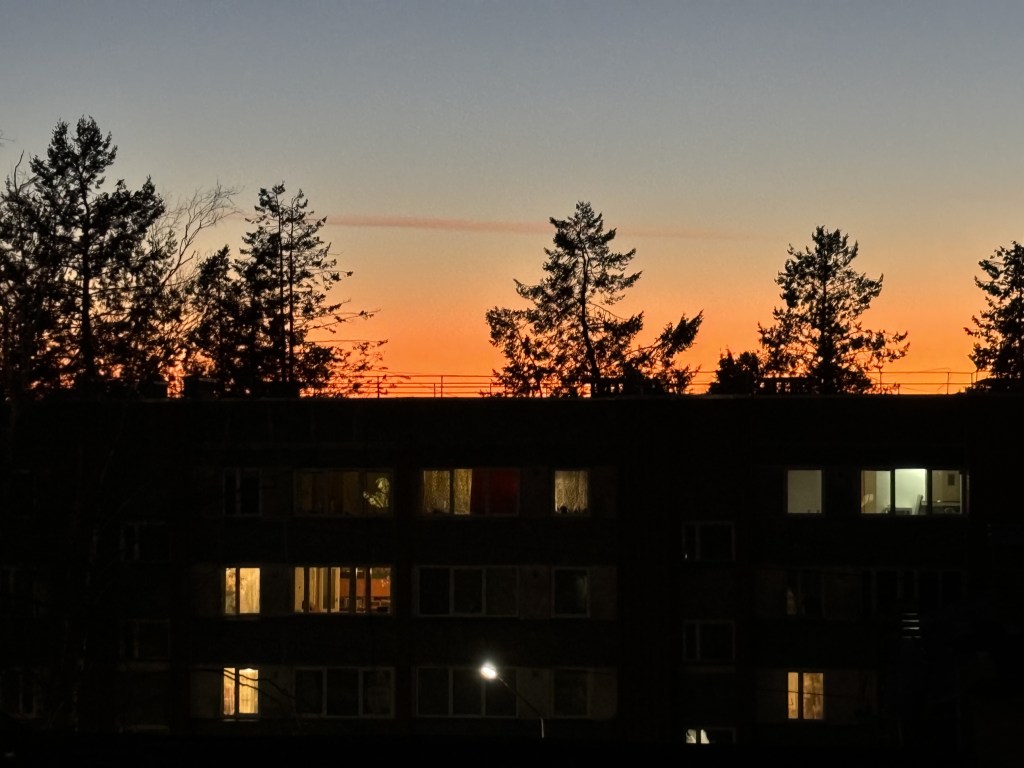
The windows of local residential flats as seen from a hallway near one of my classrooms (Daugavpils, Latvia)
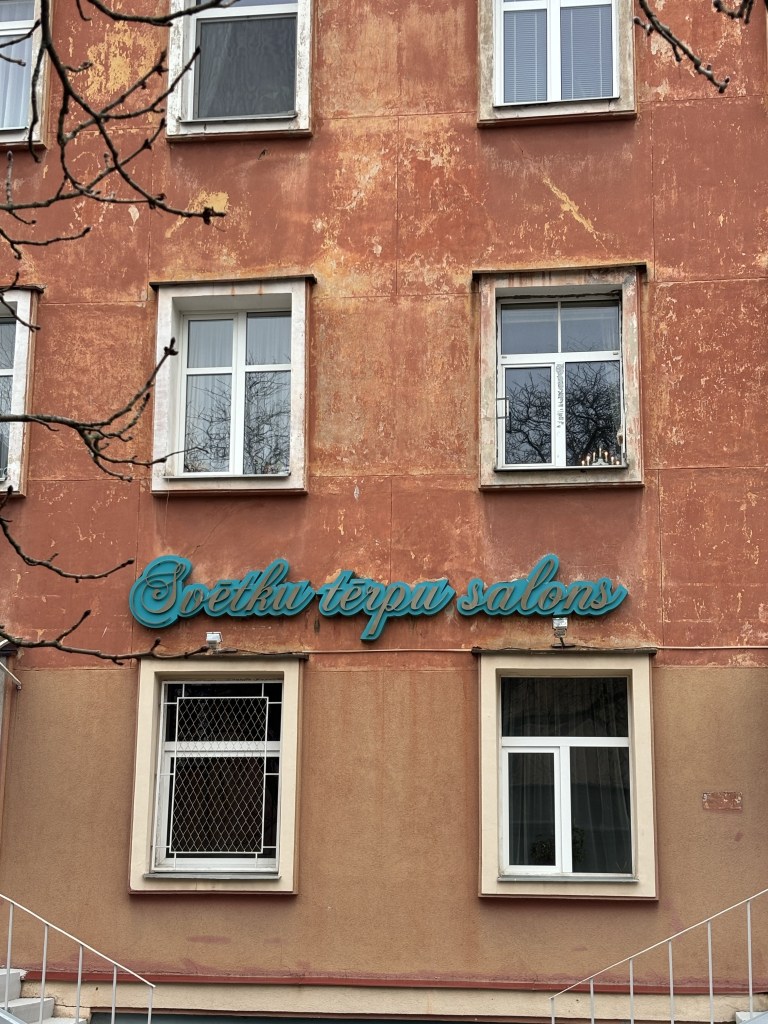
Side windows of a Stalin-era building along. November Street, one of our major thoroughfares here in Daugavpils, Latvia
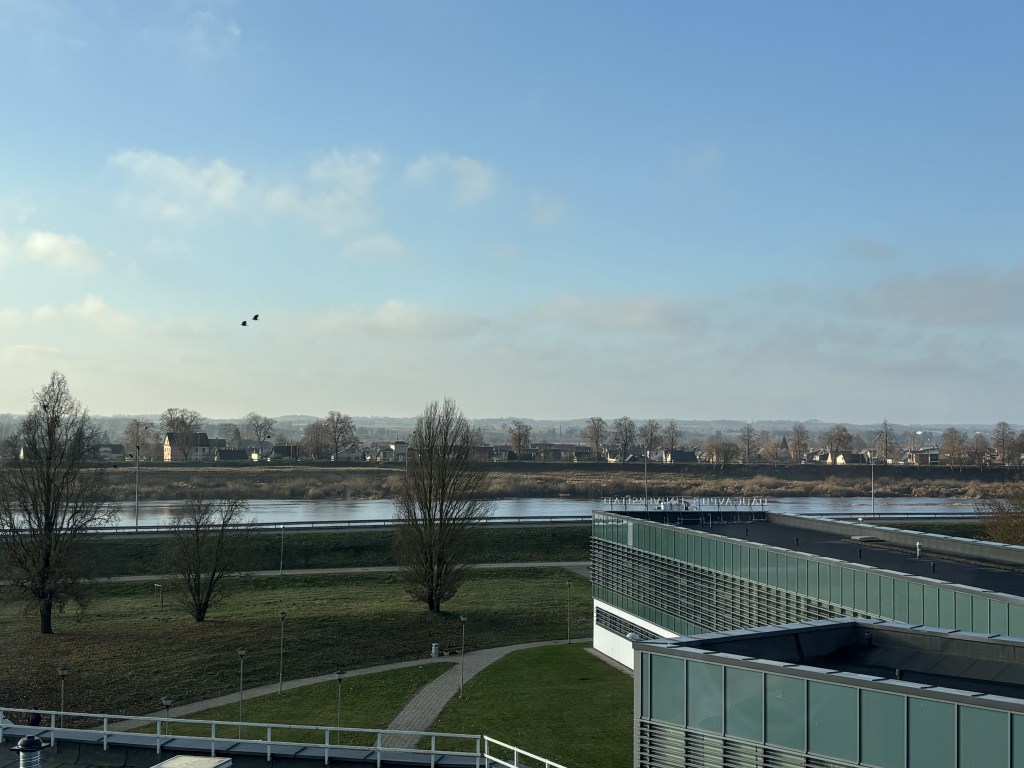
Looking north and west toward the Daugava River from my office in “The New Building,” at Daugavpils University. I hold lunchtime conversation classes here. (Daugavpils, Latvia)
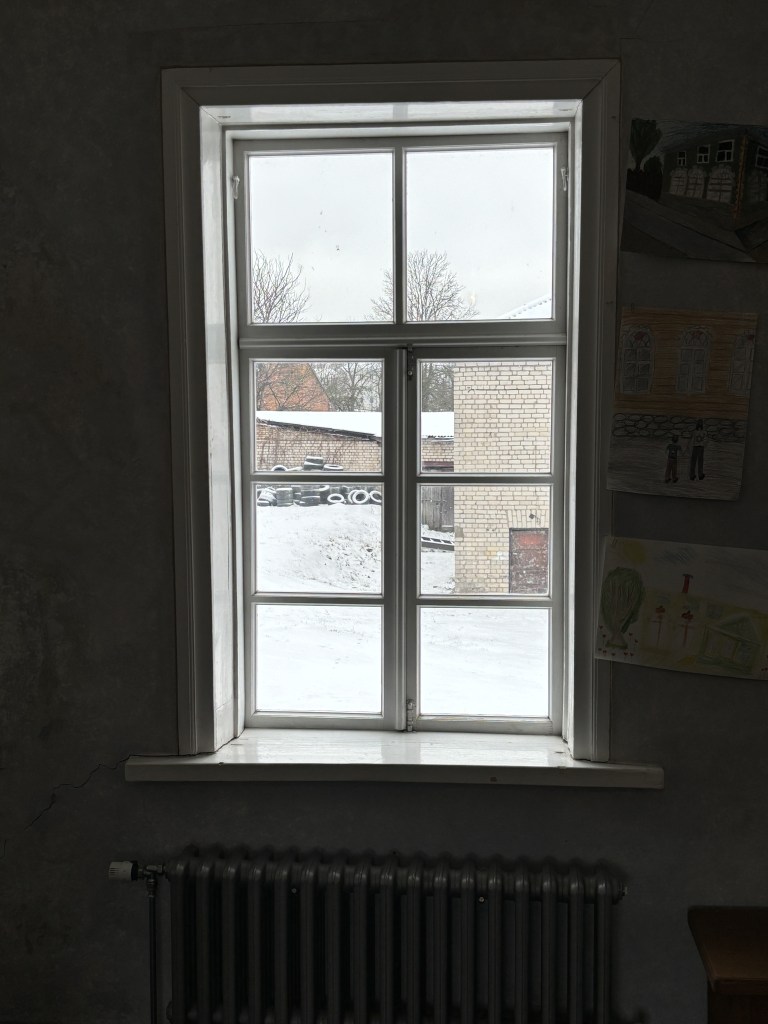
Looking out from a synagogue window. At the Green Synagogue (1845), one of the oldest wooden structures in the city of Rezekne, population 27,000. (Latvia)
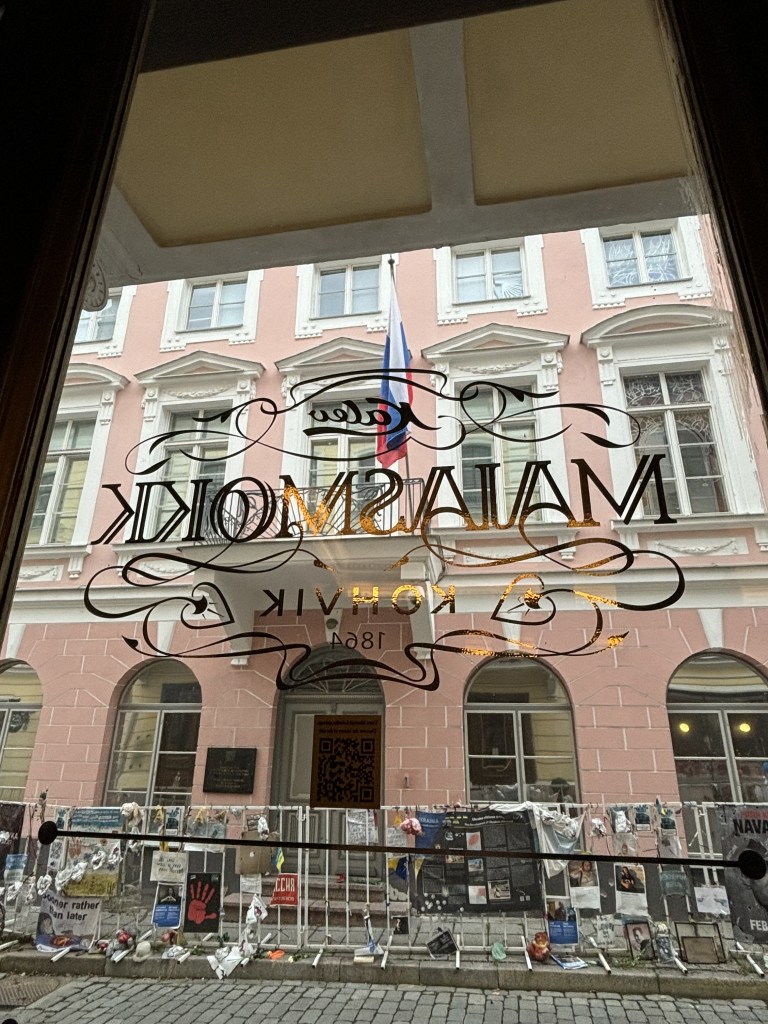
From the window of Tallinn’s oldest coffee shop, Cafe Maiasmokk (circa 1864). That’s the Russian Embassy across the street–note the protest paraphernalia. (Tallinn, Estonia)

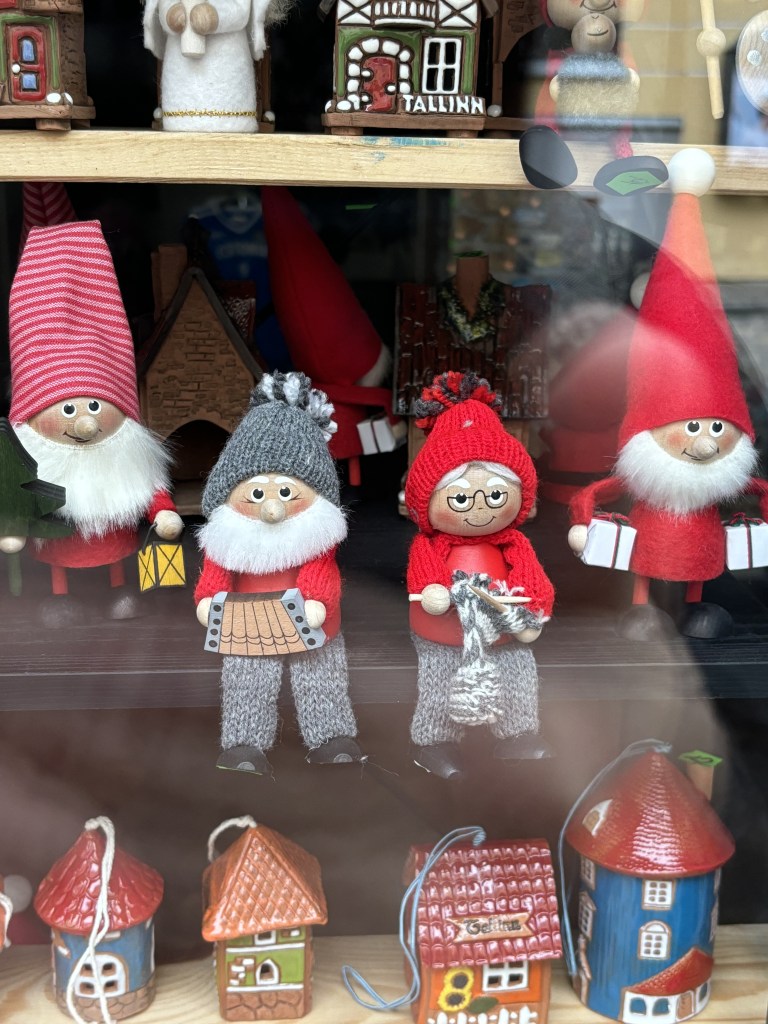
Christmas window of shop in the Old Town. (Tallinn, Estonia)

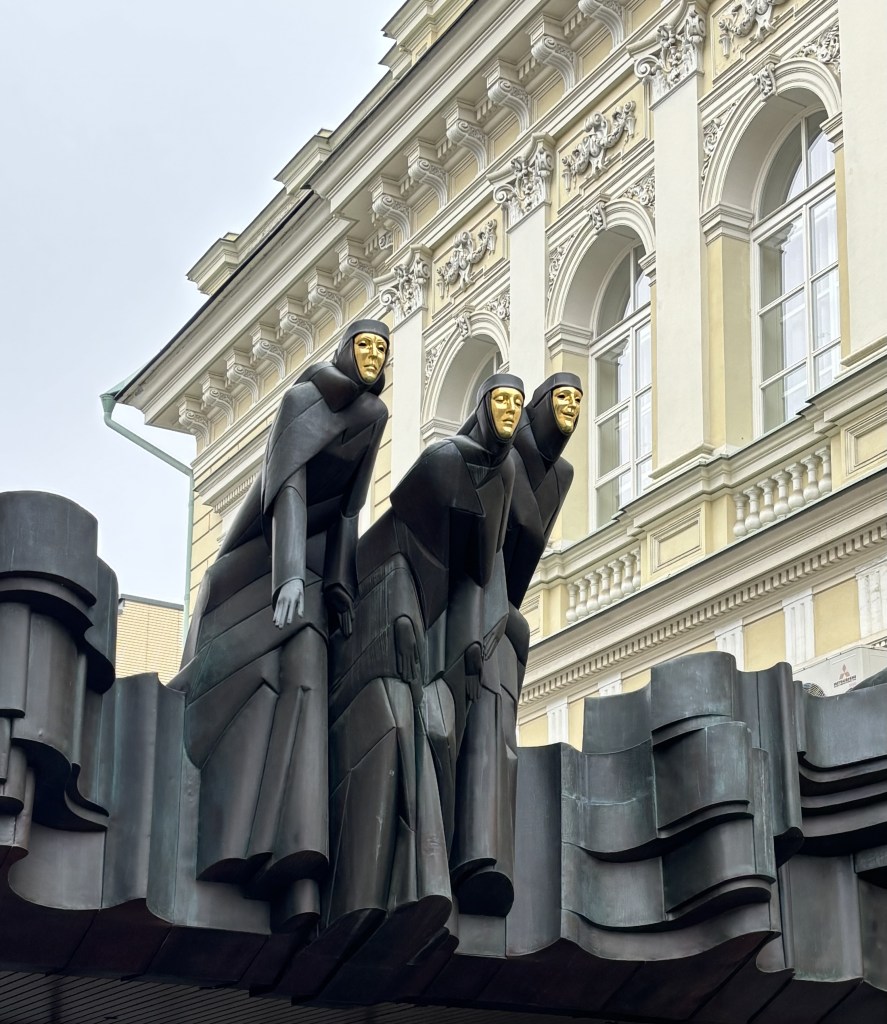
Windows overlooking nuns. Location of the Vilnius Theater. (Vilnius, Lithuania)
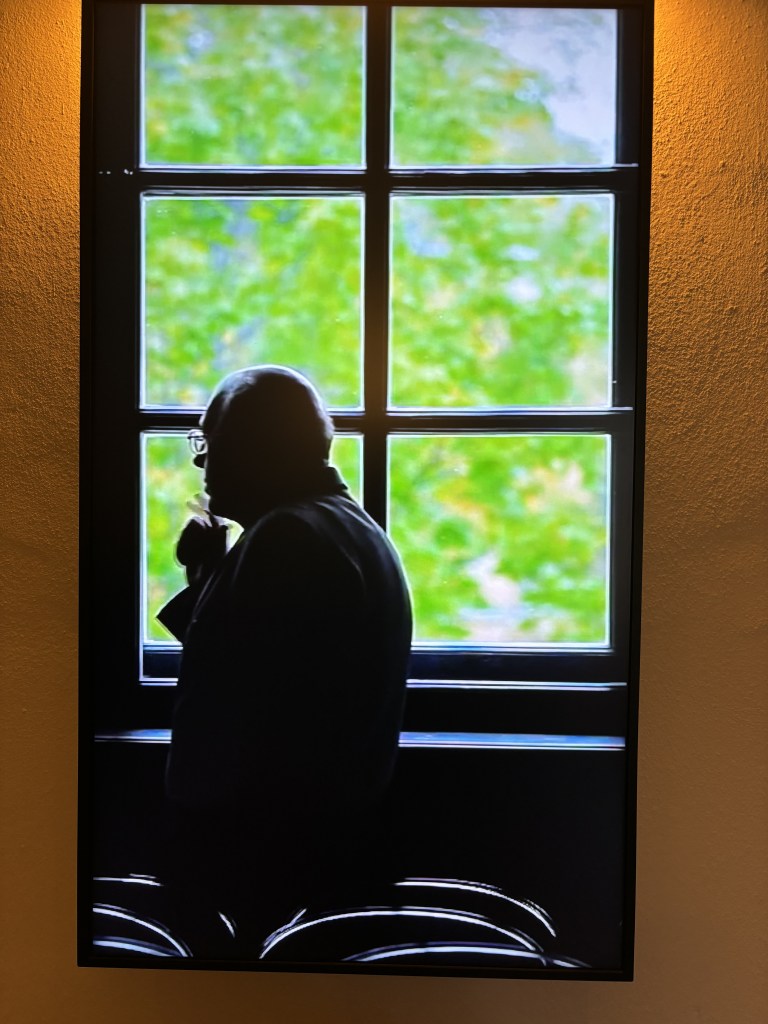
Artist Mark Rothko, born in Daugavpils, Latvia, stands near a window, shortly before his death. There is a marvelous art museum in his name here in Daugavpils.
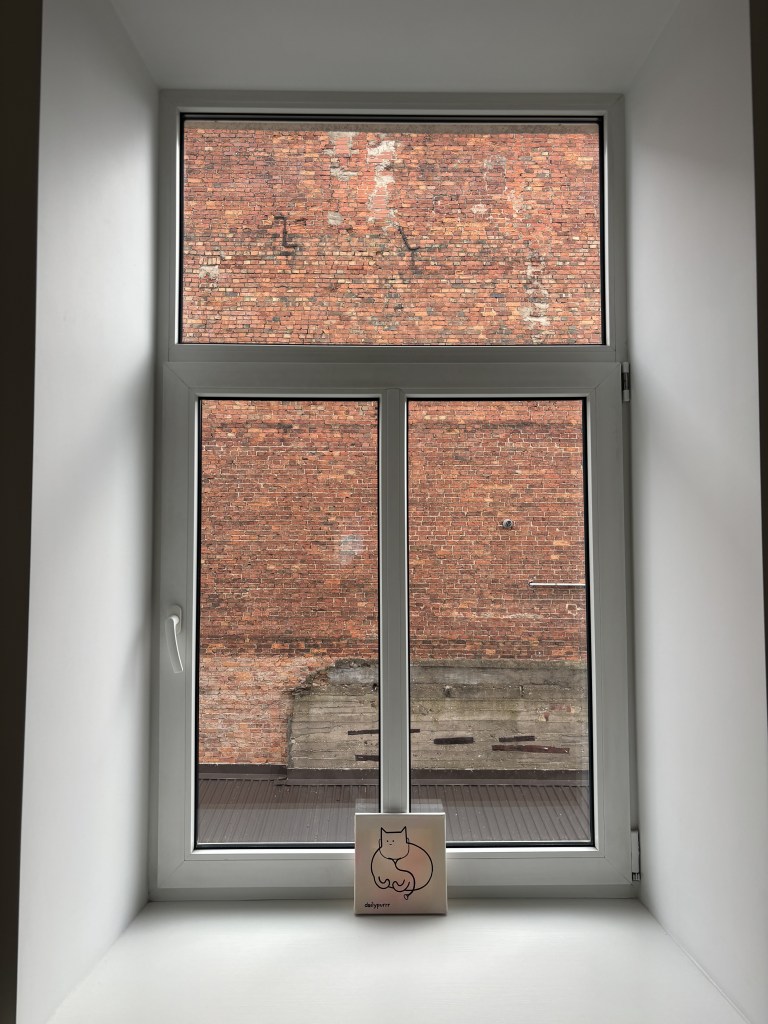
View from the window of a recently renovated flat in Daugavpils, Latvia
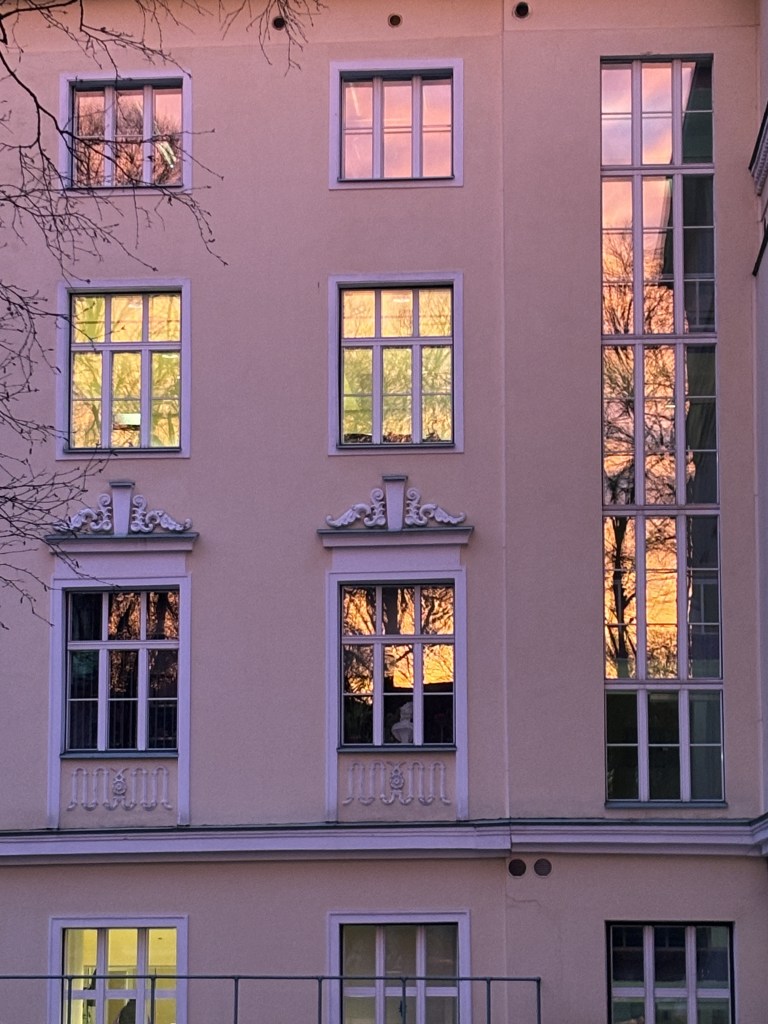
Windows reflecting a brilliant Tallinn sunset. (Tallinn, Estonia)
Standard

Lydia

“Humility is the light of understanding.” John Bunyan

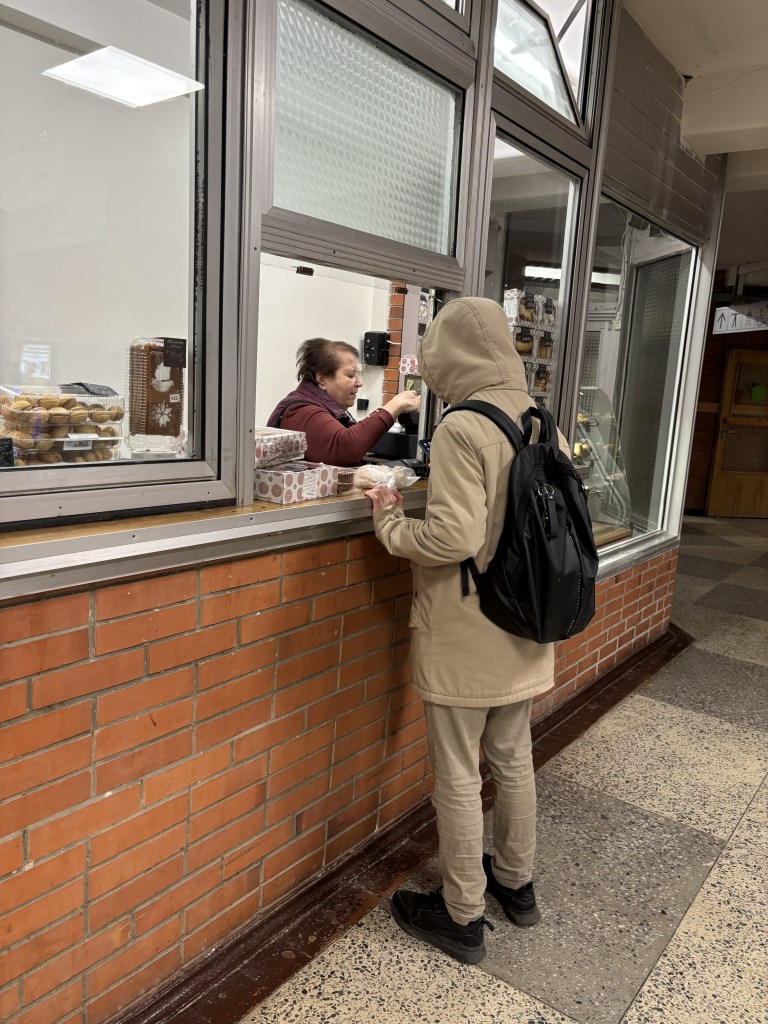
It’s a quiet dance. She listens to my request, dutifully leaves the window to make my coffee and to heat my Latvian snack in the microwave. I hear the timer ring in the distance and she returns to calculate my bill. I seek to embellish our brief time together as passengers on this twice-weekly routine, by asking how her day is going.

Brick by brick, exchange by exchange, I am building a social cottage here. A few people, like Lydia, help piece it all together. Her slight smile, her friendly voice, are the mortar that help hold it all together. I know I could easily leave it like that: comfortably anonymous and perfunctorily routine. But then, I’ll miss learning something more, about Latvia, about this place, about Lydia.

So I ask if I can speak to her sometime in the days ahead-an interview of sorts, I say. She agrees, and I wonder if she understands my request.

Lydia was born 62 years ago in the tiny hamlet of Faltopi about 30 kilometers southeast of Daugavpils. It is near the Latvian-Belarus border. She was an only child, she tells me, as was her husband of 42-years and their daughter, Inesa.

Inesa, though, changed all that, having 5-children. She moved to the UK, leaving the country, as a number of younger Latvians do, seeking opportunities and higher paying jobs elsewhere. When I learn that Inesa’s eldest daughter, Ustina, is in dental school, I say with some certainty, “Oh, you must be very proud.” A huge smile envelops Lydia’s face.

Lydia serving a student at the campus canteen where she works
weekdays from 8:30 – 4:00.

With her grandchildren living in England, Lydia likes to practice using her English-luckily for me. Latvians are highly literate (99%+) and well-educated. Lydia graduated from Riga Polytechnic University, majoring in building and architecture. It’s her interest, she says, in meeting and speaking with others, that brings her to this canteen window, a portal for brief exchanges of food, beverage and conversation.

This semester I visit Lydia’s building on Mondays and Wednesdays where I lead lunchtime English conversation classes. Knowing she’s here, that I can say hello, ask how she’s doing, adds something intangibly meaningful to my day. And Lydia, was my mom’s name.

Lydia and I share a history now, a place in time and space. She is not part of the official curriculum I offer my English students, and won’t be mentioned in a written report to the US. Embassy, or to program contacts in Washington, D.C. But meeting Lydia is exactly why I am here, teaching in Latvia.

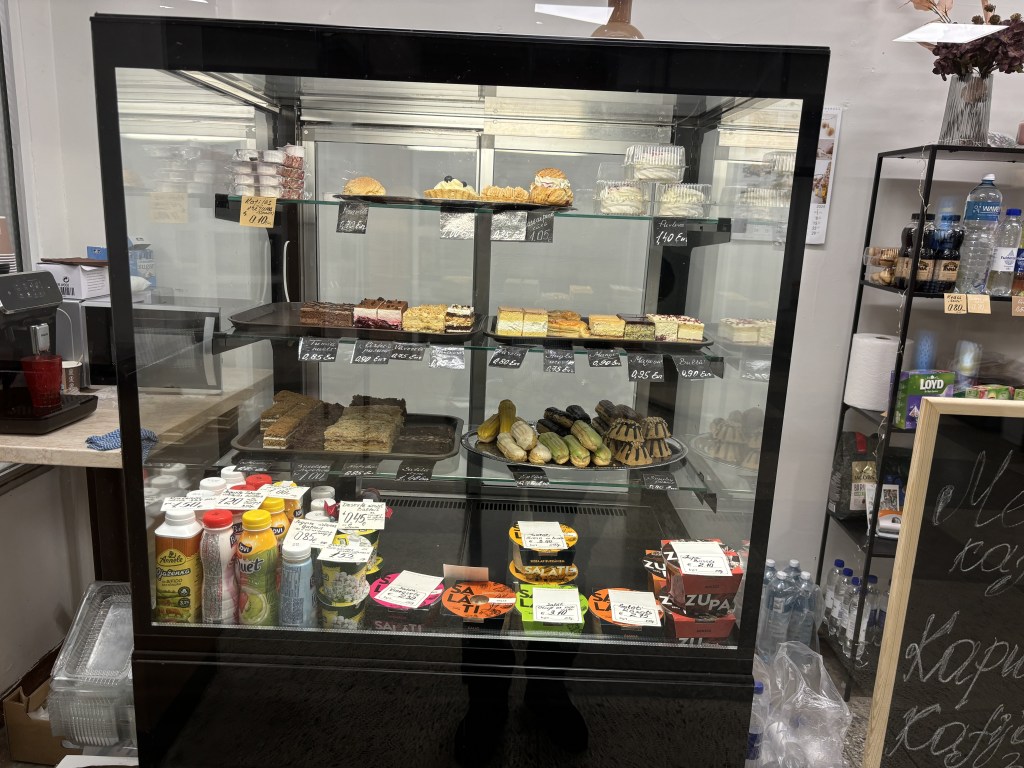
Sweets served-up by Lydia.

Standard

Genocide, noun

The definition courtesy of Oxford Languages

“The deliberate killing of a large number of people from a particular nation or ethnic group with the aim of destroying that nation or group…’a campaign of genocide.'”

Similar: Racial killing, massacre, wholesale slaughter, mass slaughter

As of 10 December 2024, according to Wikipedia, over 46,000 Palestinians have been killed in Gaza. 70% of these deaths have been women and children. This number has been confirmed by Reuters, the BBC, CNN, and the AP, amongst others.

©Mahmoud ssa/Anadolu via Getty Image

A recent investigation by Amnesty International has concluded Israel is committing genocide against Palestinians in Gaza.

I ask the reader, how will these actions bring lasting peace to the Region? How will these actions reduce hate and animosity between people? How will these killings ensure a safe future for the State of Israel?

And finally I ask, have we, the Jewish people, forgotten the meaning of Genocide? Is the cry “Never Again,” a proprietary ideal, or one that applies to all of humanity?

Standard

Sinagoga

Does every question have an answer? “What is the boiling point of water?” Of course, the accepted answer is 212F/100C.

The Green Synagogue in Rezekne, Latvia

Why am I drawn almost magnetically to old synagogues in nearly every city I visit?

Since our recent journey to the Green Synagogue in remote Rezekne, Latvia, I have been pondering this question.

Well, as a Jew, feeling a need to visit synagogues would be a reasonable explanation. I am familiar with almost all the artifacts and rituals associated with a synagogue. Very little about them is “foreign” to me. Seeing a matzo oven on the ground floor of the Green Synagogue, while a pleasant surprise, is a familiar tradition. And yet, as I walked the Camino de Santiago the well-known pilgrimage across northern Spain, even being Jewish, I was often drawn to churches we passed along the way.

The Synagogue of Pecs, Hungary, consecrated in 1869.

Perhaps being a history buff makes as much sense as any explanation. I majored in history in college and remain fascinated with the connections old buildings, like synagogues, have with the country, cities, and cultures I find them in. The old synagogue in Pecs, Hungary, is part of that country’s dark history of suffocating the Hungarian Jews out of existence in a relatively short time during World War II. But it’s much more complex than solely the historical connections.

No, being a curious traveler is a much more reasonable explanation. Some of these old buildings have become world famous tourist destinations. The Ahrida Synagogue in the Fatih neighborhood in Istanbul, for example, was a stop on our tour in that Turkish city. It was built in 1430 as part of a then thriving Jewish community. My curiosity as a traveler was stopped in its tracks as I stood humbly in front of its ancient gate.

The Ahrida Synagogue (circa 1430) in the Fatih neighborhood of Istanbul.
The Dohany Synagogue (1854) in Budapest is, understandably, on nearly every tourist’s itinerary

A traveler to Budapest can’t escape the overwhelming presence of the Dohany Synagogue in that amazing city so richly endowed with countless tourist destinations. It’s the world’s second-largest synagogue with an impressive seating capacity exceeding 3,000 people. Few travelers to Budapest miss stopping there.

I am drawn to synagogues for all these reasons and likely many more. But what I do know, is that I rarely connect to a place more intimately than I do through its synagogue. I feel part of their history–an intimate connection that often leaves me saddened when I depart.

Sad for what these old synagogues represent: once-vibrant communities that bloomed across most of Europe, now evaporated. Jewish people energized Budapest to the tune of 24% of its pre-World War II population. Vilnius, the capital of Lithuania, then nicknamed the “Jerusalem of the East,” once had 106 synagogues. Today, it has one. Cities and towns here in eastern Latvia had populations that were 50-60% Jewish. In the Rezekne of 1935, home of the Green Synagogue pictured above, 75% of all commercial businesses were owned by Jews.

So, why am I drawn to synagogues? Questions rarely have one simple answer. What is the boiling point of water? As we know, the boiling point of water is 100˚C and 212˚F, but alas, that’s only at sea level. Even for that one, there’s more than one answer…at different altitudes or pressures, the number is different. Answers to questions are always much more complicated than that.

Standard

Abandonment

“I am not so different in my history of abandonment from anyone else after all. We have all been split away from the earth, each other, ourselves.”

Susan Griffin

A once proud Polish military hospital stands empty on the grounds of an old fortress here in Daugavpils

Abandonment. It’s an unmistakeable and striking feature here in Daugavpils, Latvia. The city is dotted with a large number of unoccupied or abandoned buildings. In other places I know, Portland, Maine, or Budapest, Hungary, for example, these properties would occupy the dreams of developers. Not so here, with a continuously shrinking population and lower average incomes than in other parts of Latvia.

This building stands on November 18th Street-an address honoring Latvia’s Independence Day

Since the Russians departed in the early 1990’s, the factories have withered, and the belts, tightened. But hopefully, the once more vibrant and prosperous past here, is, as Shakespeare said in his play, The Tempest, prologue.

Even in their emptiness, even in their solitude, there is a kind of steadfast beauty and quiet promise of hope.

Flowers, perhaps a sign of hope, adorn this window ledge in an otherwise abandoned neighborhood

Standard