Biking Balaton

A 150-mile, surprisingly easy biking adventure welcomes newcomers in Central Hungary. If you like wine, nearly empty bike lanes, and friendly locals, I invite you to bike around Lake Balaton outside the busy summer season.
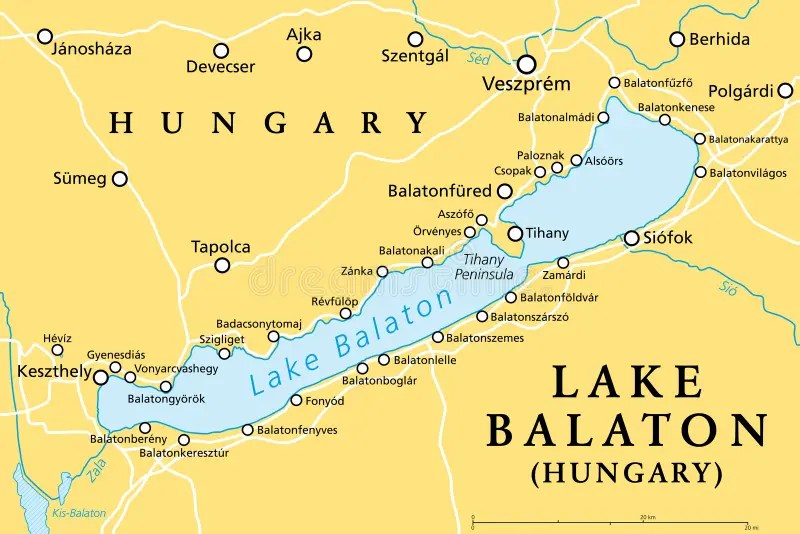
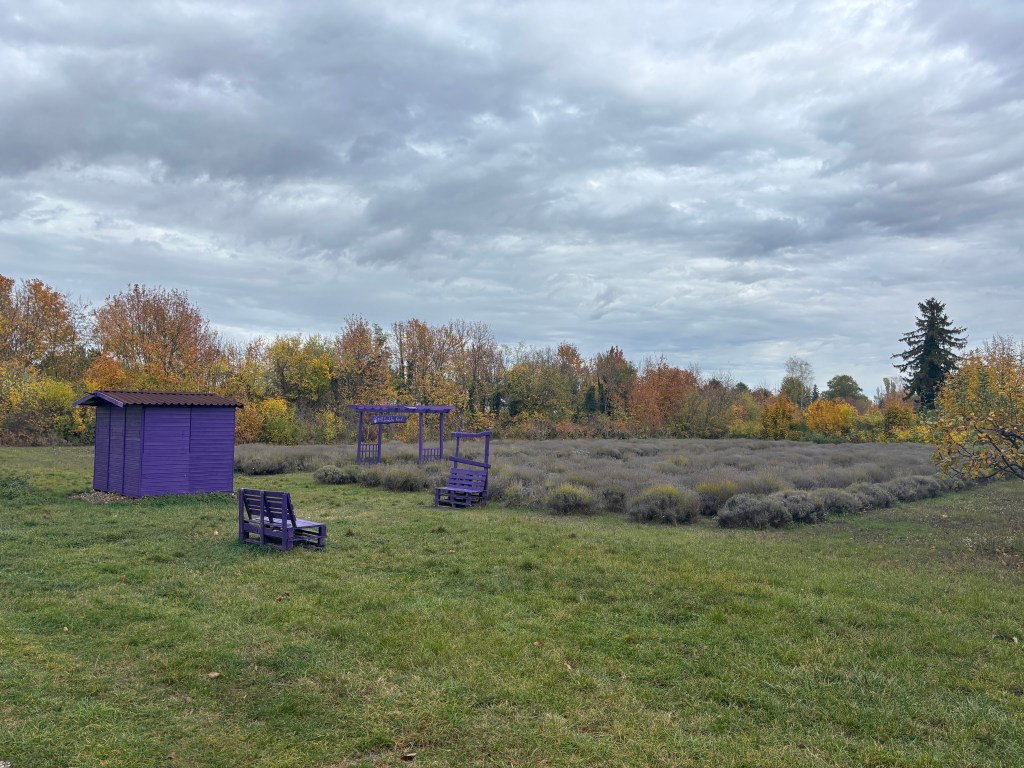
I started out in the tony little town of Balatonfured. Heading west (counterclockwise), I passed through wine and lavender country. Keszthely, on the lake’s far western shore, welcomed me after the 1st day of biking.
A lavender field along the lake.

To be honest, I am not a serious biker. I don’t clip-in, or wear nifty tights. I don’t do 100-mile days. I bike with only 6 or 12-speeds. And of particular note, I look rather quirky riding on the 16” wheels of my Brompton folding bike. All that said, you will rarely see me on my bike without a mile-wide smile.

But I do enjoy biking and I ride everywhere I can. We don’t own a car. Living on a Maine island as we do, borrowing and lending things is a way of life. A neighbor lends us his old hybrid Toyota during the summer months (thanks Jeff!). That’s for transportation needs while on the island. Other friends lend us their cars in Portland. Surprisingly often, my bike and a 30-liter bike bag become my in-town vehicle for shopping, hardware runs, and for just finding fun rides in the area. Lighthouses, coffee houses and nature preserves are amongst my favorite destinations.

But you don’t need biking tights, 21-speeds or clip-ons to bike Lake Balaton in Hungary. A few things might help: an appreciation for paprika and goulash, a love of good local wines, a willingness to “put -up” with Budapest (that said tongue-in-cheek), having about 9-10 days available to let go, decompress and enjoy keeping a beautiful lake on your immediate left.

Biking Balaton, I bike roughly 25-40 miles a day starting out about 9AM. I usually roll into my destination sometime in the late afternoon. High points of a typical day? Miles of golden autumnal bike lanes. A lunch perhaps featuring Langos, Hungary’s local pizza-like dough covered in sour cream, cheese and garlic. So good, they can easily become a habit. Delicious local red and white wines that are shockingly inexpensive. And countless lakeside village scenes featuring swans, lapping water and magical vistas.
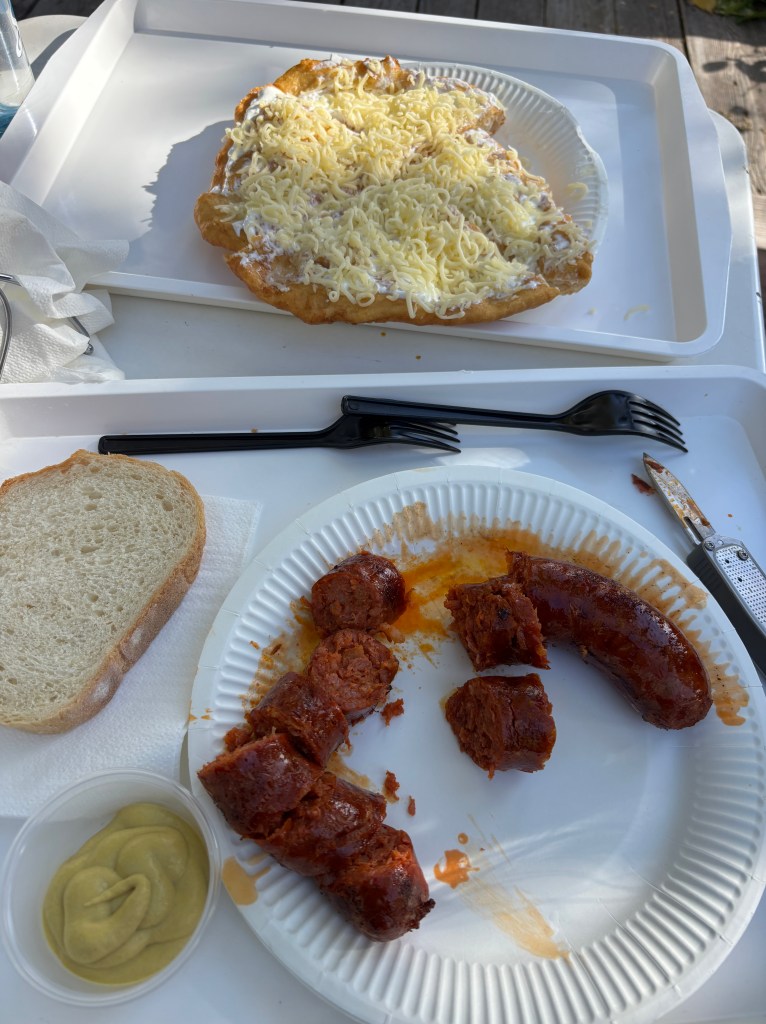
Langos (above) and local Hungarian sausage.

I first biked Balaton in the fall of 2018. Taking advantage of a national holiday, I was able to turn-off my high school English teacher role in Hungary for a few days. There is an easy train connection from Budapest right to the lake. It’s only a several hour train ride to Balatonfured, or other fascinating lakeside towns that can easily remind you of a New England village in the fall. This most recent circumnavigation was my third around Balaton.
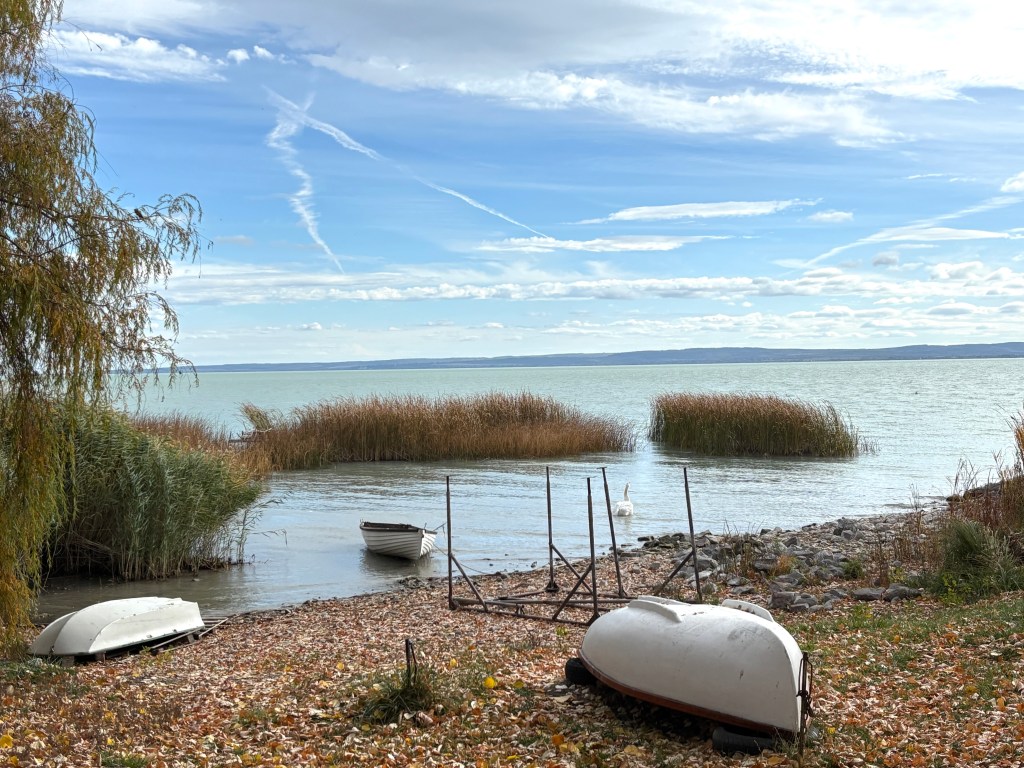
Balaton offers quiet coves, and countless other magical places to stop and ponder life.

I typically bike Lake Balaton over 4-days, riding counter-clockwise around the azure-hued lake. The north shore is filled with vineyards and small hills that melt down to the water. Its southern shore is more densely populated with summer communities playing the role of escape-valve for Hungarians who live in busy Budapest. Everyone seems to have a family place on Lake Balaton, or has a family member or friend who does.
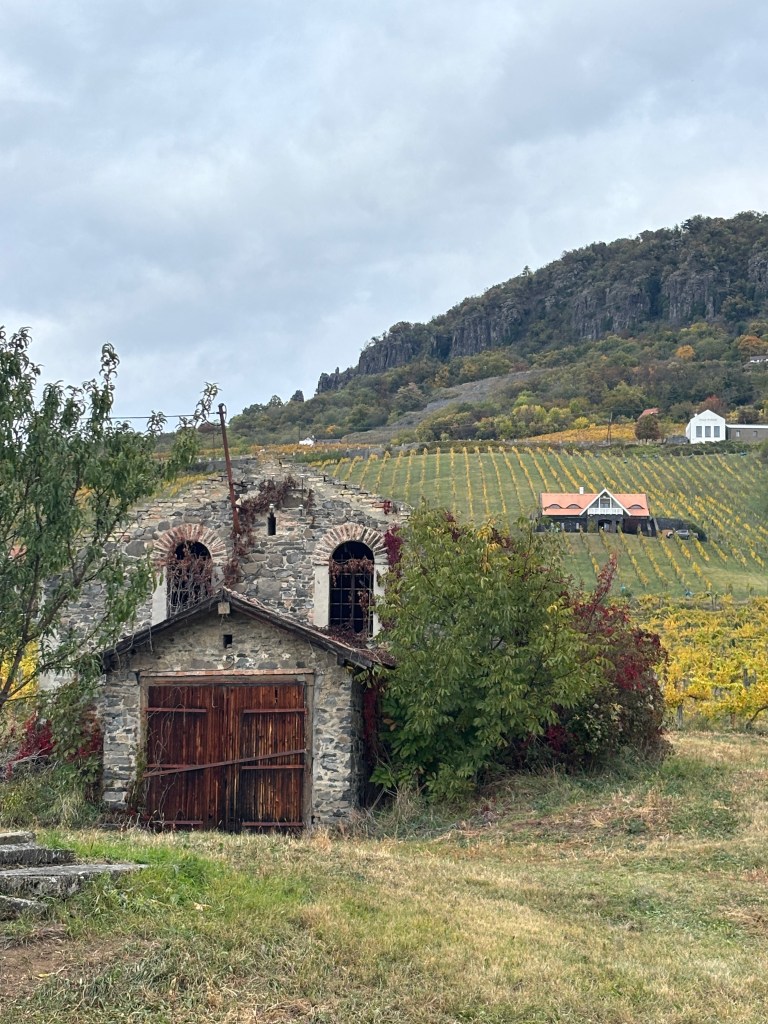
A vineyard along Balaton’s north shore.

But during the Spring or Fall (my favorite time), Balaton is yours for the taking. Its bike lanes are quiet. It’s easy to find a place to stay (I often stay at AirBnB or similar apartments), and the lakeside nooks and crannies reveal their secrets. I can leave the annoying state of American politics behind and somehow ignore the wild politics of Hungary. In many ways, Balaton is a kind of oasis.

And I’ve yet to address the exciting bonus. Before and after biking Balaton you get to spend some time in the country’s capital, Budapest. For me, Budapest is a magical city–the beautiful Danube meandering its way between hilly, voluptuous Buda, and its exciting and gritty partner, Pest. There’s entirely too much to do. But if you are smart enough to decide to bike Balaton, you’re no doubt up to the task of deciding how to joyfully spend your time in Budapest.

The author in Balatonfured before starting out on his most recent circumnavigation of Lake Balaton.

Standard

Sinagoga

Does every question have an answer? “What is the boiling point of water?” Of course, the accepted answer is 212F/100C.

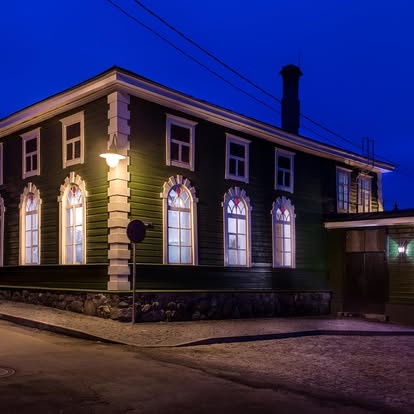
The Green Synagogue in Rezekne, Latvia

Why am I drawn almost magnetically to old synagogues in nearly every city I visit?

Since our recent journey to the Green Synagogue in remote Rezekne, Latvia, I have been pondering this question.

Well, as a Jew, feeling a need to visit synagogues would be a reasonable explanation. I am familiar with almost all the artifacts and rituals associated with a synagogue. Very little about them is “foreign” to me. Seeing a matzo oven on the ground floor of the Green Synagogue, while a pleasant surprise, is a familiar tradition. And yet, as I walked the Camino de Santiago the well-known pilgrimage across northern Spain, even being Jewish, I was often drawn to churches we passed along the way.

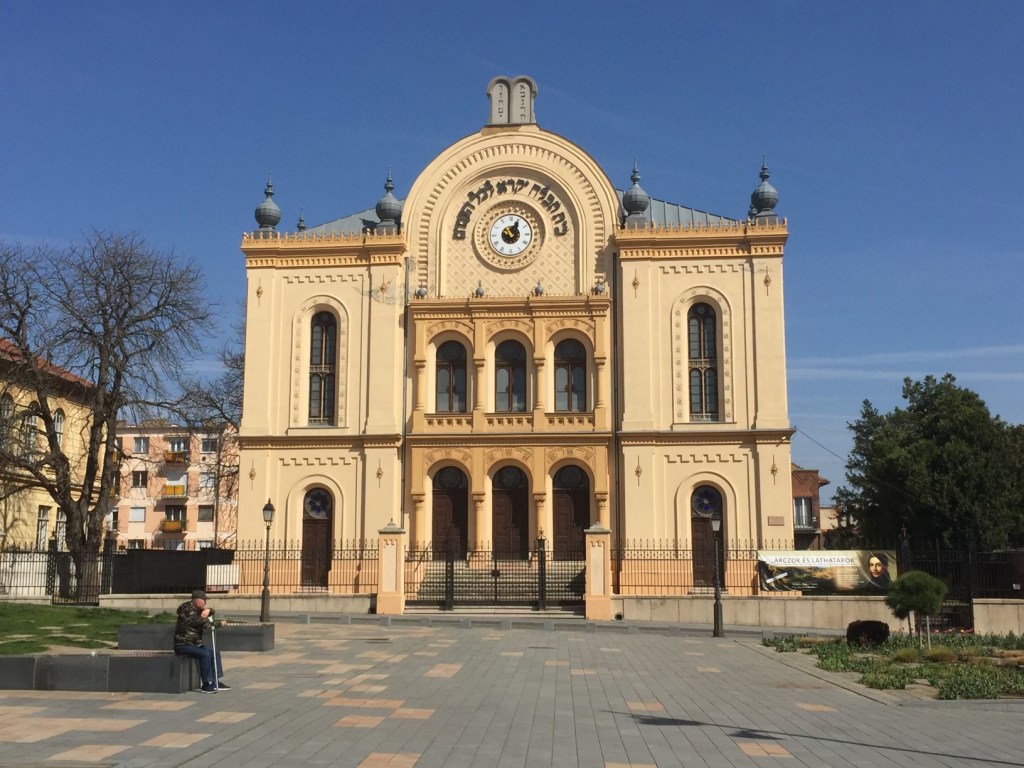
The Synagogue of Pecs, Hungary, consecrated in 1869.

Perhaps being a history buff makes as much sense as any explanation. I majored in history in college and remain fascinated with the connections old buildings, like synagogues, have with the country, cities, and cultures I find them in. The old synagogue in Pecs, Hungary, is part of that country’s dark history of suffocating the Hungarian Jews out of existence in a relatively short time during World War II. But it’s much more complex than solely the historical connections.

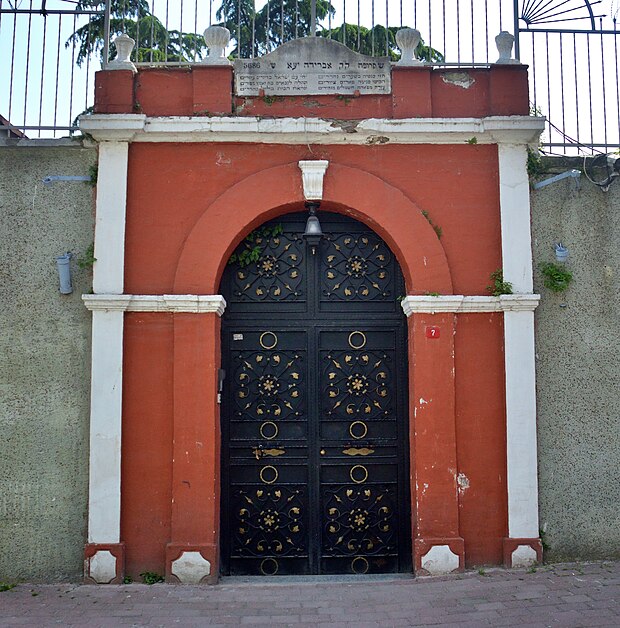
No, being a curious traveler is a much more reasonable explanation. Some of these old buildings have become world famous tourist destinations. The Ahrida Synagogue in the Fatih neighborhood in Istanbul, for example, was a stop on our tour in that Turkish city. It was built in 1430 as part of a then thriving Jewish community. My curiosity as a traveler was stopped in its tracks as I stood humbly in front of its ancient gate.

The Ahrida Synagogue (circa 1430) in the Fatih neighborhood of Istanbul.
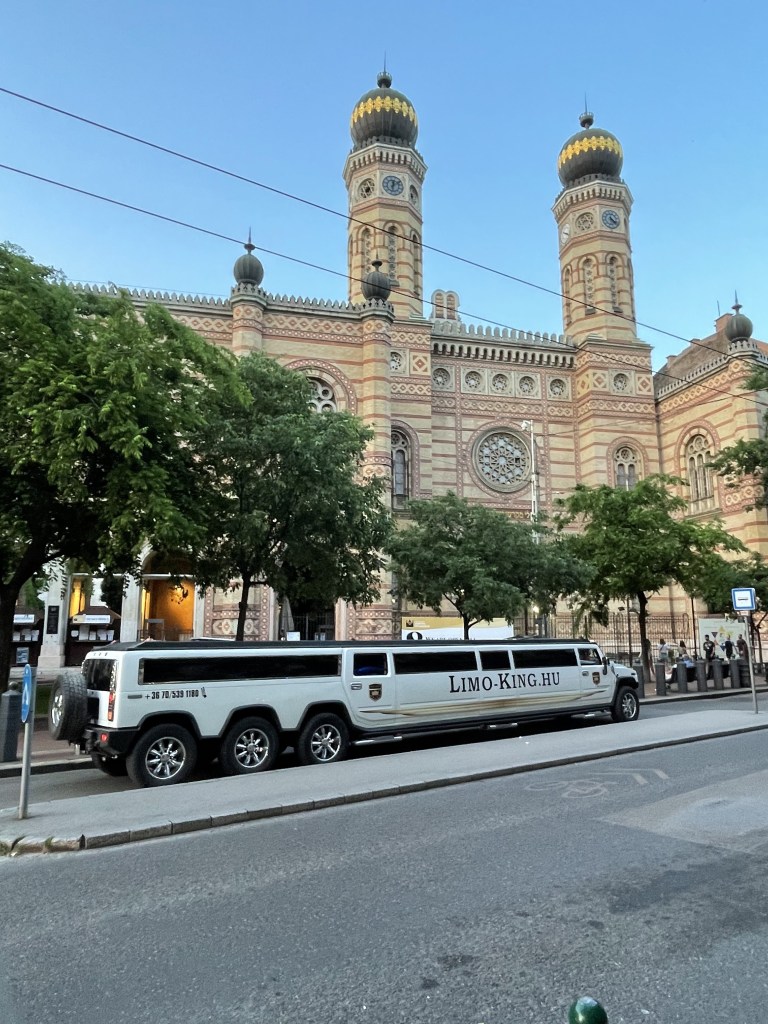
The Dohany Synagogue (1854) in Budapest is, understandably, on nearly every tourist’s itinerary

A traveler to Budapest can’t escape the overwhelming presence of the Dohany Synagogue in that amazing city so richly endowed with countless tourist destinations. It’s the world’s second-largest synagogue with an impressive seating capacity exceeding 3,000 people. Few travelers to Budapest miss stopping there.

I am drawn to synagogues for all these reasons and likely many more. But what I do know, is that I rarely connect to a place more intimately than I do through its synagogue. I feel part of their history–an intimate connection that often leaves me saddened when I depart.

Sad for what these old synagogues represent: once-vibrant communities that bloomed across most of Europe, now evaporated. Jewish people energized Budapest to the tune of 24% of its pre-World War II population. Vilnius, the capital of Lithuania, then nicknamed the “Jerusalem of the East,” once had 106 synagogues. Today, it has one. Cities and towns here in eastern Latvia had populations that were 50-60% Jewish. In the Rezekne of 1935, home of the Green Synagogue pictured above, 75% of all commercial businesses were owned by Jews.

So, why am I drawn to synagogues? Questions rarely have one simple answer. What is the boiling point of water? As we know, the boiling point of water is 100˚C and 212˚F, but alas, that’s only at sea level. Even for that one, there’s more than one answer…at different altitudes or pressures, the number is different. Answers to questions are always much more complicated than that.

Standard