
Definition: Everyday carry…a collection of useful items that are consistently carried on a person every day.
Is it a statement of preparedness, nostalgia, practicality, or yet another kind of subculture? In a brave new world of intense connectivity, where many people understandably seek privacy and anonymity, I thought this concept might offer a platform for gentle revelation.
I want to recognize our tendency to over-idealize things. Mitch Albom, from Tuesdays With Morrie fame, noted “We are too involved in materialistic things, and they don’t satisfy us. The loving relationships we have, the universe around us, we take these things for granted.”
In contrast, I’d like to allow for the occasion that treasured items might actually provide a carpet ride to another more revelatory place. Design as Art author Bruno Munari said, “When the objects we use every day and the surroundings we live in have become in themselves a work of art, then we shall be able to say that we have achieved a balanced life.”
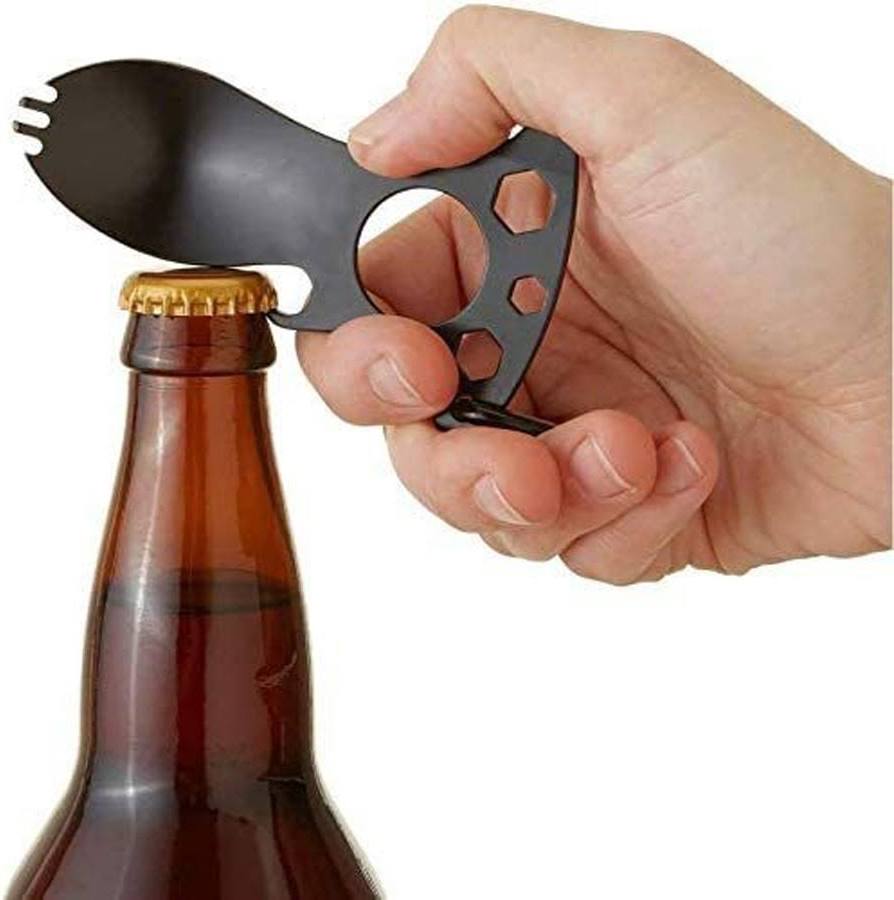
I used to regularly carry a funny looking titanium utensil called a spork that attached to a carabiner. At varying times it functioned as a screwdriver, a fork, a spoon, and even as a wrench. It became a favorite carry of mine. Is that really different, other in magnitude, from the bloke who preens over his Bentley SUV?
If a face can launch a thousand ships, then a favorite item can spark a revealing conversation. Then there’s the My Essentials Series, 10-Things I Can’t Live Without. Comedian Jerry Seinfeld, for example, shares why yellow legal pads and Bic pens are important tools in his life. I love that simple items can be a platform for self-disclosure and revelation–the magical interlude when someone brings enthusiastic candor and transparency to the moment. In effect saying, “I’d like to tell you a little bit about who I am as a person.”
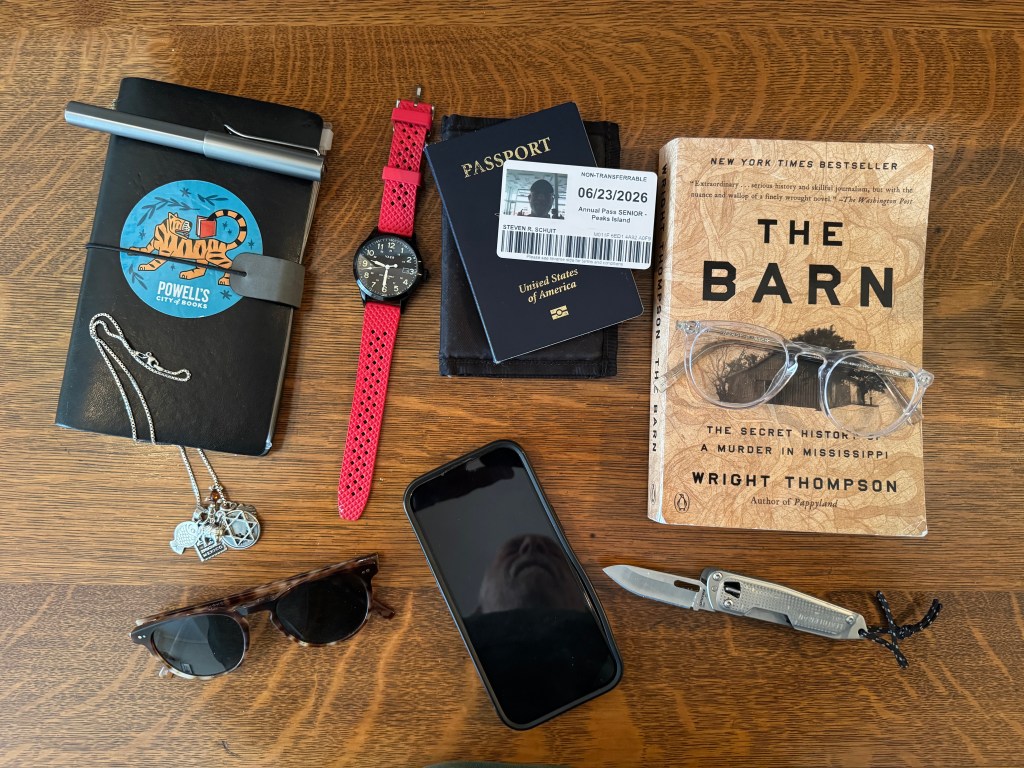
My everyday carry includes from top left…A notebook and roller ball pen for fun writing when on the run, my favorite old-school analog watch from a California company, Vaer, my wallet with key documents including my passport and Peaks Island annual ferry pass, a good read I can tuck into my backpack–in this instance, The Barn, a non-fiction work about the 1955 murder of Emmett Till in Mississippi, glasses from Warby Parker, a pocket knife with practical blades and tools, my iPhone, Warby Parker shades and finally, my necklace with silver charms from different countries I have visited.
This batch of everyday carry reflects, I think, my love of traveling, of staying off the couch, of leaning in toward old-school, of valuing simplicity.
Now it’s your turn. What does your everyday carry say about you? I’d like to know.


 Short Talks Through a Wide World