Rezekne, A Place in Between

Places like Rezekne remind us to see beauty and opportunity in the mundane moments of life, rather than constantly chasing after the next big thing. They remind us that there is value in slowing down and appreciating the journey. (Paraphrasing Jeff Goins, author of “The In-Between”)
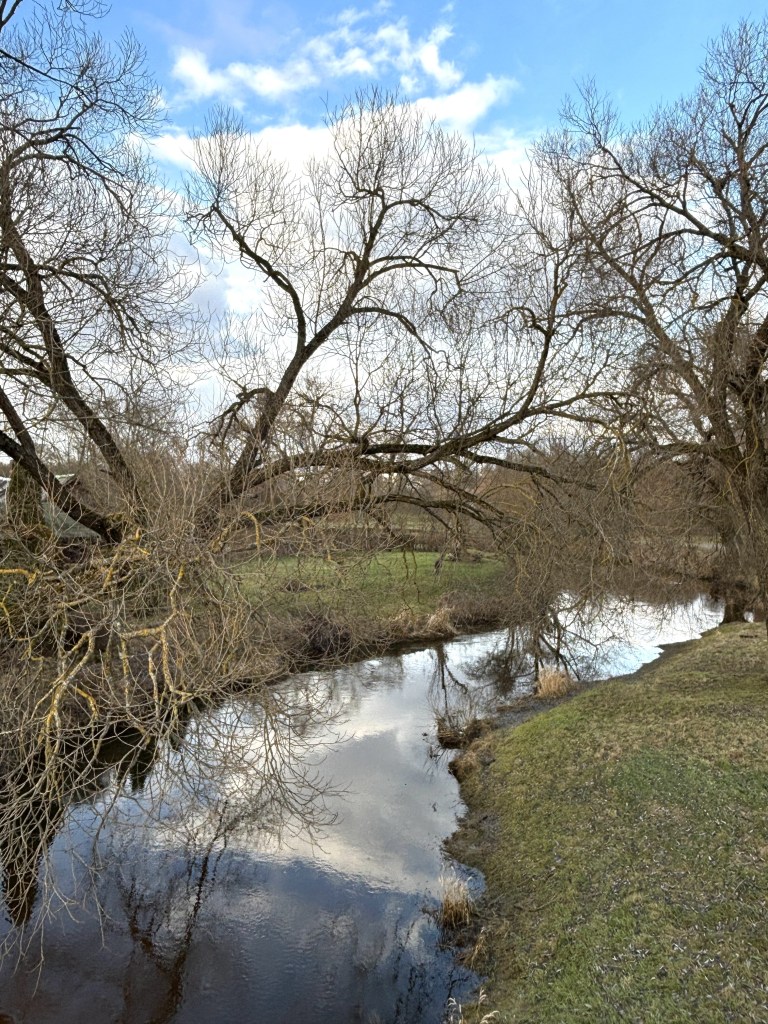
The Rēzekne River as it meanders through the downtown area of this small Latvian city of 26,000 people.

Well known cities like Seoul, Tokyo and London are immediately recognizable and bring iconic images to mind: man-made canyons of gleaming buildings, long steel bridges, and streets almost comically teeming with people. Then there are the places in-between, the oft-ignored stops along train lines, the towns with awkwardly paved streets, where the smell of homes still heating with wood or coal fills the air. Locals are apt to still speak an old dialect from centuries past, and to move with a patient gait knowing that whatever is around the next corner will inevitably wait.

Rezekne in Latvia’s eastern-most Latgale Region, built on 7-small hills, is such a place. An old city, lying only 39-miles from the Russian border, it was once part of the Pale of Settlement, the large area in western Russia where Jews were once permitted to live and prosper in relative peace. In the late 19th century the city was 60% Jewish, and as late as 1935, the population was a quarter Jewish.

On a recent overcast Friday, I took the bus from Daugavpils, where I teach English, and about 2-hours later arrived in Rezekne with a plan to meet Elina, the city’s Tourism Information Specialist. Speaking fluent English and well-versed in history, Elina met me outside the Green Synagogue located on Israel Street in the city’s Old Town. The Synagogue, she tells me, and the surrounding neighborhood, were miraculously spared from the intense bombing inflicted by the Russians during World War II. In fact, nearly 70% of the buildings in Rezekne were destroyed.
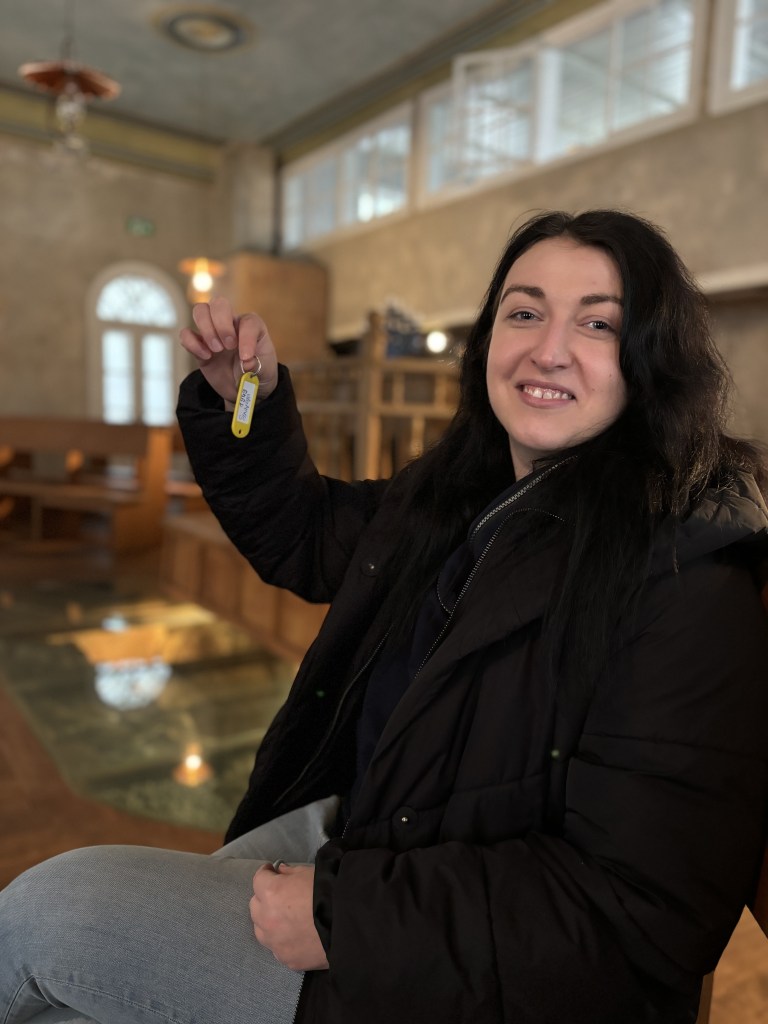
Elina, here holding the keys to the Green Synagogue, works in the city’s Tourism Department, and in my mind, is the best ambassador a city could have.

Elina, holds the keys to the synagogue, and so too, the historic details of the city, which she unfolds like the pages of a novel. After carefully leading me through the several rooms in the synagogue, which dates from 1846, she escorts me past the nearby buildings. She points to the former Jewish Bank, a modest but handsome brick building across the street. A minute later she directs my attention to an old fire house, once staffed with Jewish firemen who, she says, famously doubled as town musicians.

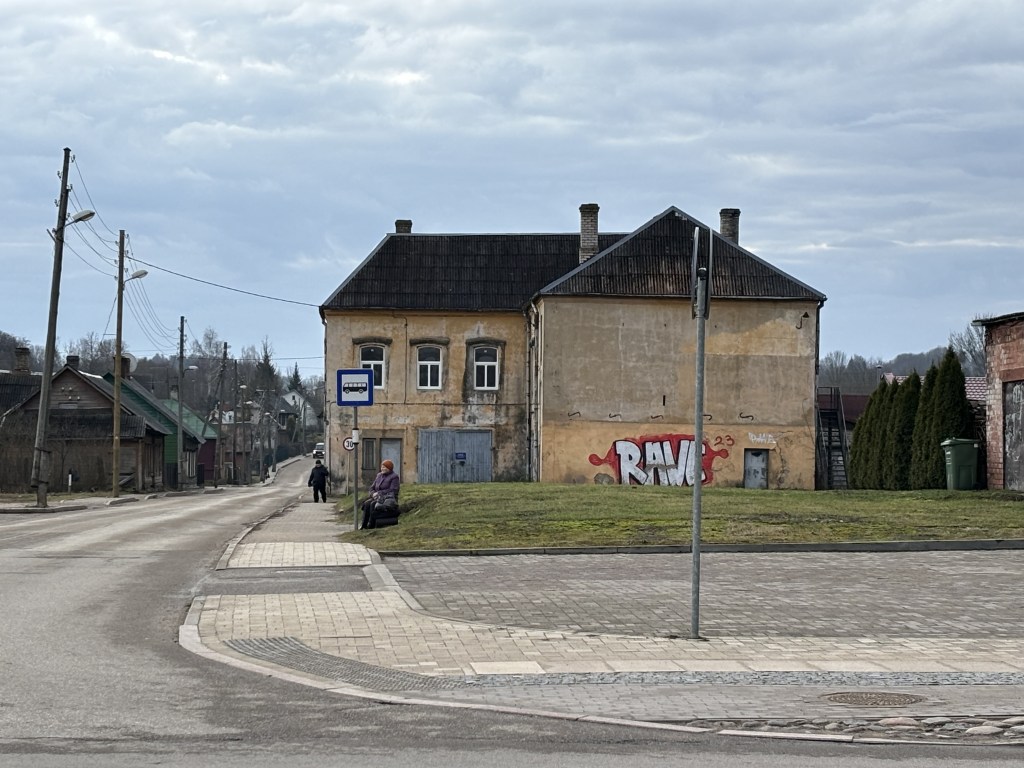
The former Jewish Bank, now a several unit apartment building.
The old fire station, once staffed by Jewish fire fighters who doubled as the municipal band.

Having previously seen the city’s new Center of Culture, GORS, well-regarded across Latvia, I know the city is being proactive about trying to make itself a sustainable city. Smaller cities such as Daugavpils and Rezekne, like similarly-sized cities throughout the world, are confronting shrinking and aging populations. Their younger citizens are heading to the big more dynamic cities like the capital, Riga, here in Latvia. Just a few years ago, to invest in its heritage and to attract more tourists, the city hired a Norwegian team to come and restore the Green Synagogue which had remained in disrepair and unused, except for a few homeless souls, for some time. It’s that pride in itself and its history that left me rather impressed.
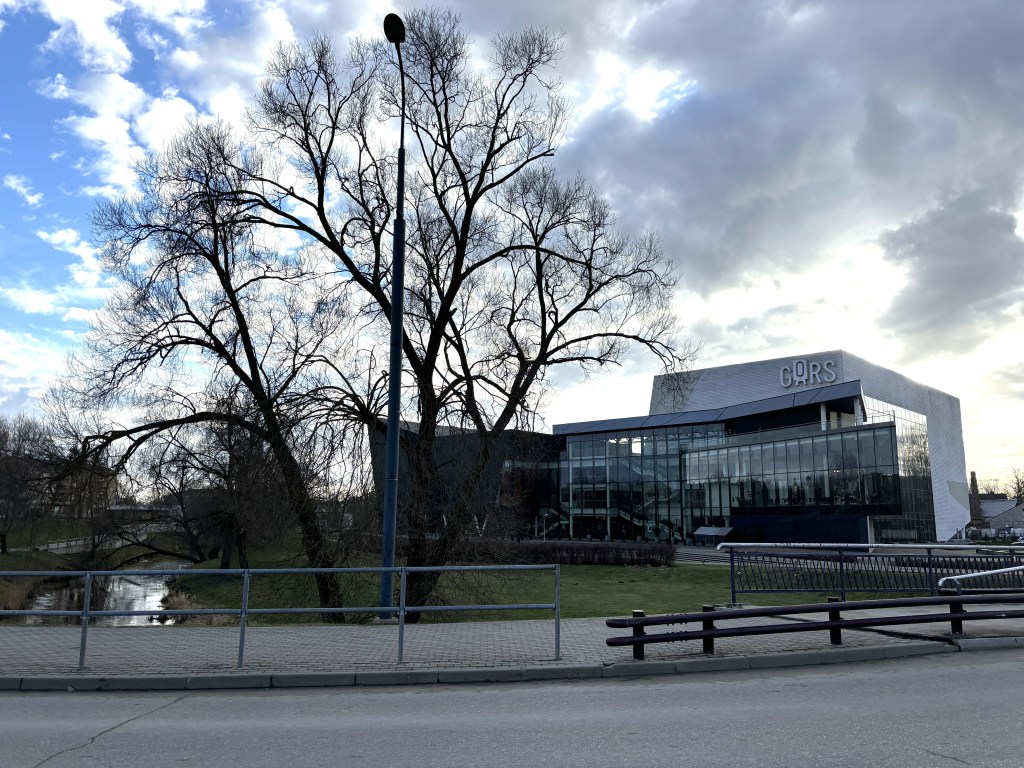
The new and nationally recognized GORS Cultural Center in Rezekne.

Unlike other places I’ve visited in Europe, the locals here did not take up arms to rid the city of its Jewish population. Elina vividly described to me the proud relationship between the Catholic and Jewish communities that once existed here. At the top of the hill, she says, is the double-spired Cathedral of the Holy Jesus Heart. The Jews would honor their Sabbath on Saturday and the town would be quiet. But on Sunday, as the worshippers left church, they would walk down the hill past blocks of Jewish-owned stores selling everything imaginable. There was a special energy in the air as sellers and buyers filled the main street with an excitement that symbolized the best the community had to offer.

It’s places like Rezekne, the towns and cities in-between, that quietly insist we slow down and listen to their history. In many ways, it’s likely they hold the most important lessons for our future.

Wall art depicting the oldest known photo of the Jews of Rezekne.

Standard

Baltic Windows

I feel that it is healthier to look out at the world through a window than through a mirror. Otherwise, all you see is yourself and whatever is behind you.” Bill Withers

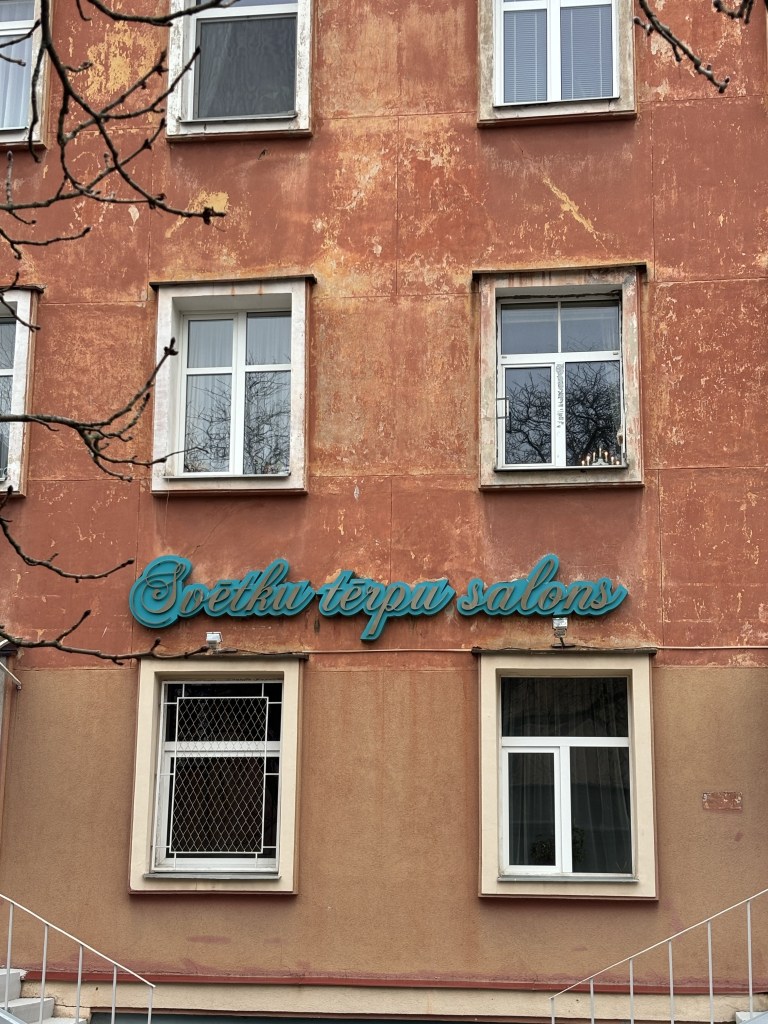
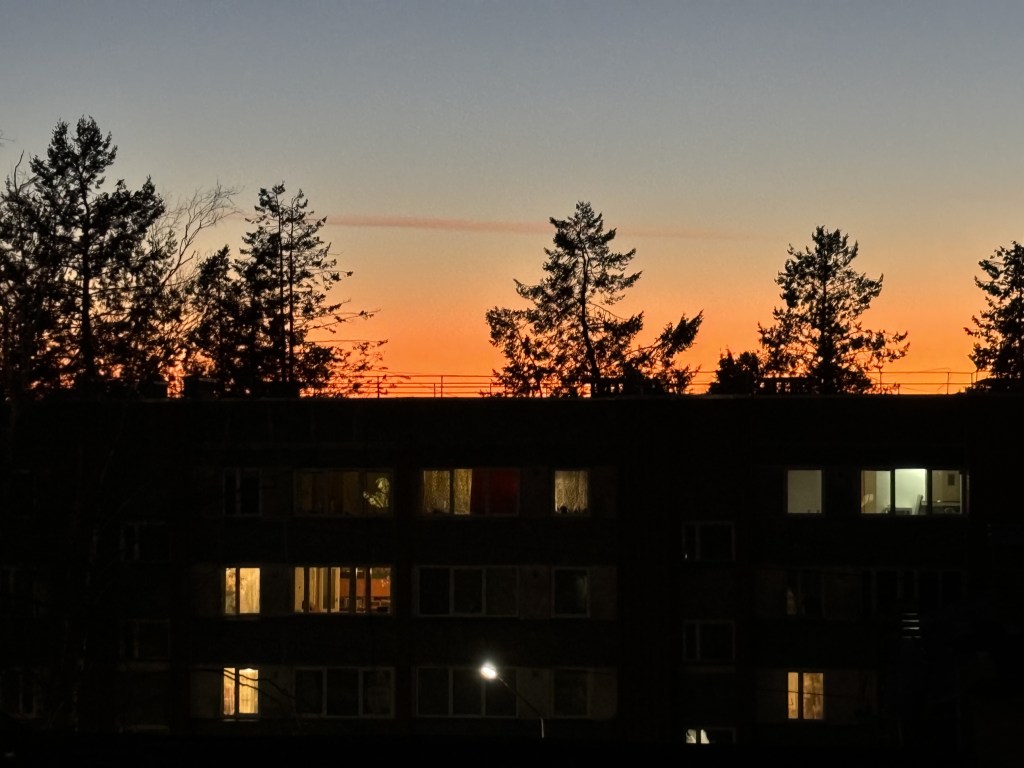
The windows of local residential flats as seen from a hallway near one of my classrooms (Daugavpils, Latvia)
Side windows of a Stalin-era building along. November Street, one of our major thoroughfares here in Daugavpils, Latvia
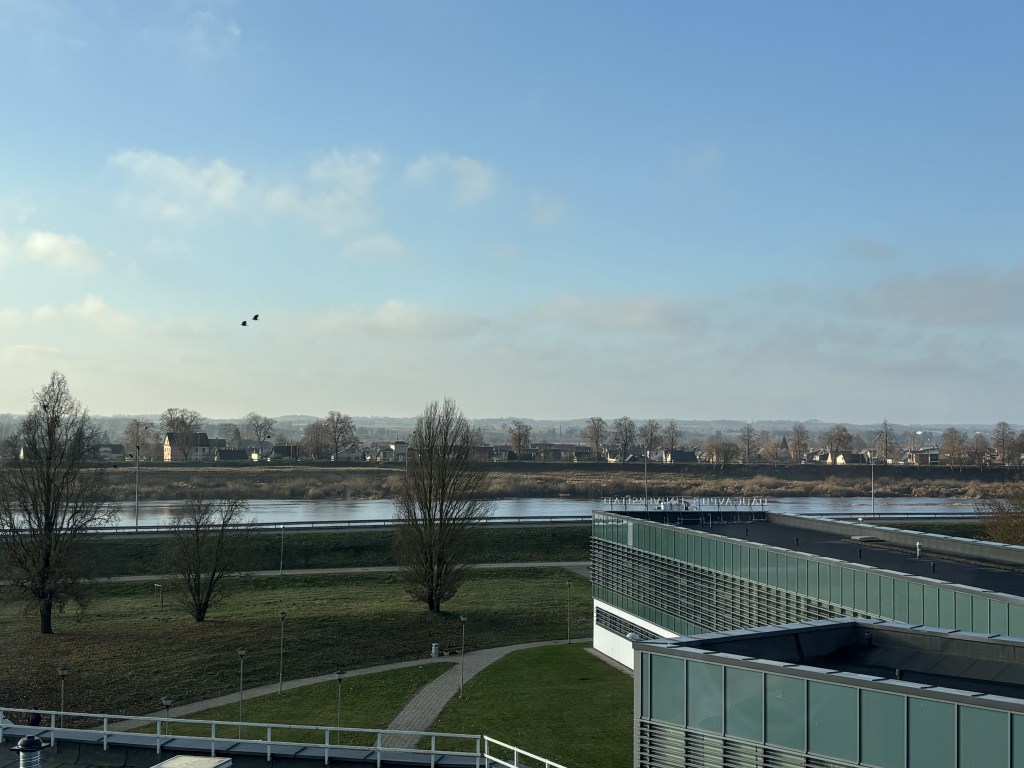
Looking north and west toward the Daugava River from my office in “The New Building,” at Daugavpils University. I hold lunchtime conversation classes here. (Daugavpils, Latvia)
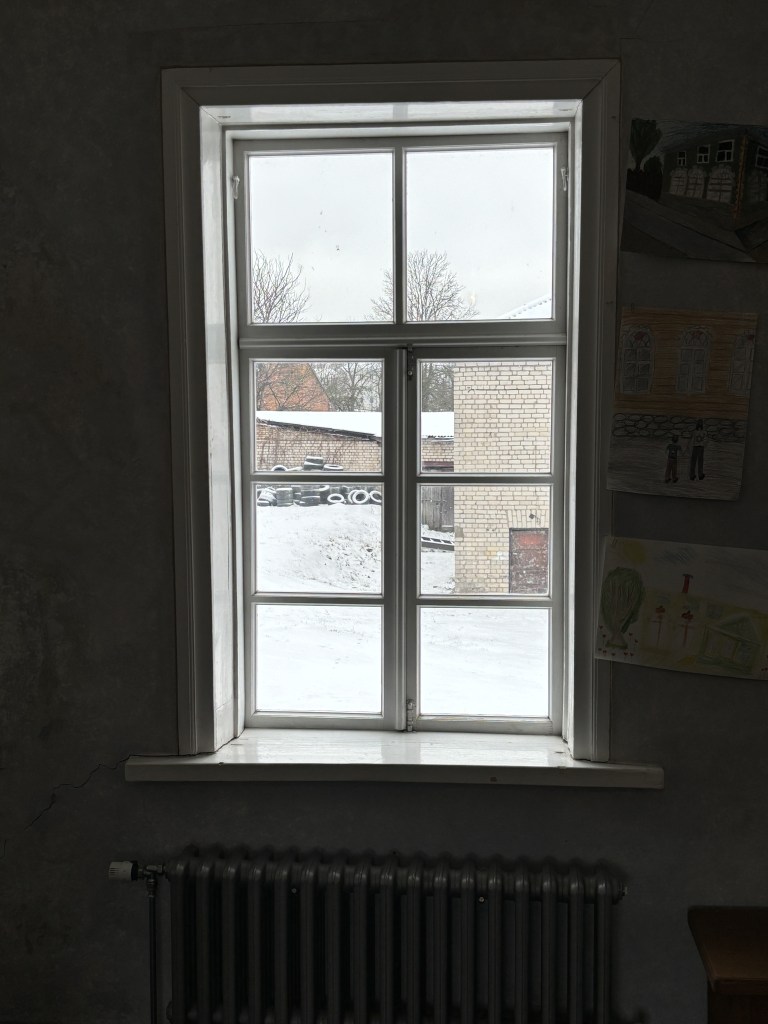
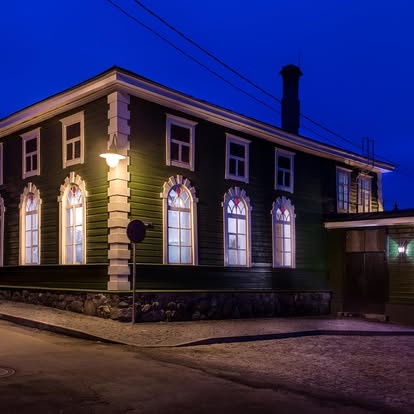
Looking out from a synagogue window. At the Green Synagogue (1845), one of the oldest wooden structures in the city of Rezekne, population 27,000. (Latvia)
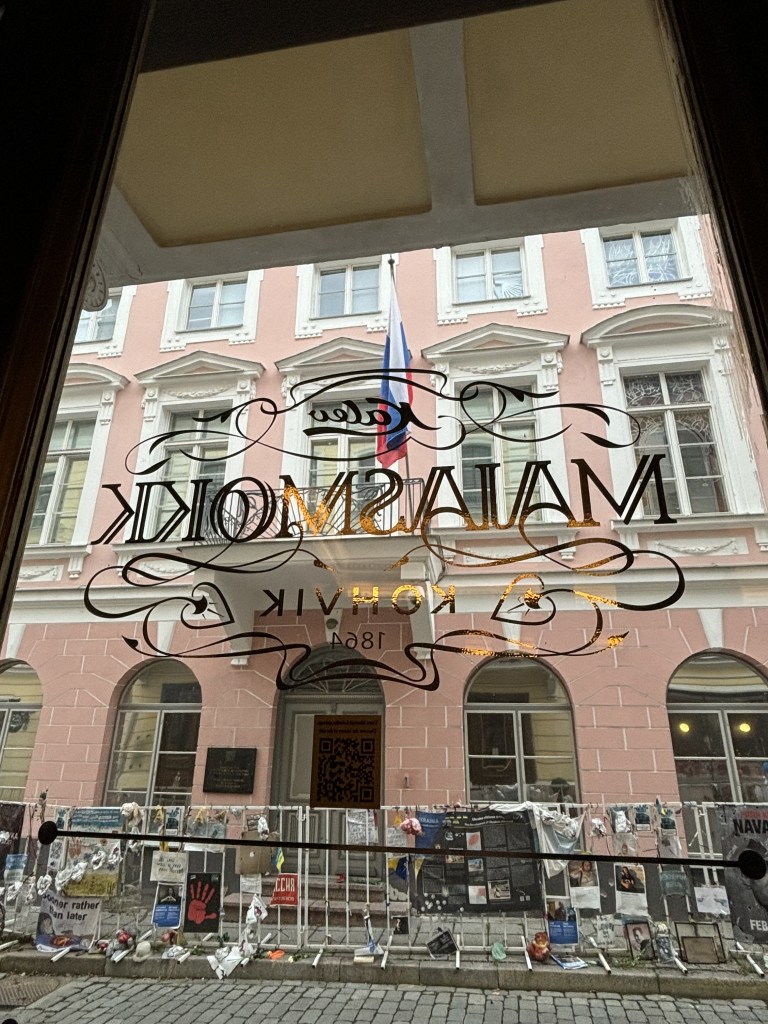
From the window of Tallinn’s oldest coffee shop, Cafe Maiasmokk (circa 1864). That’s the Russian Embassy across the street–note the protest paraphernalia. (Tallinn, Estonia)

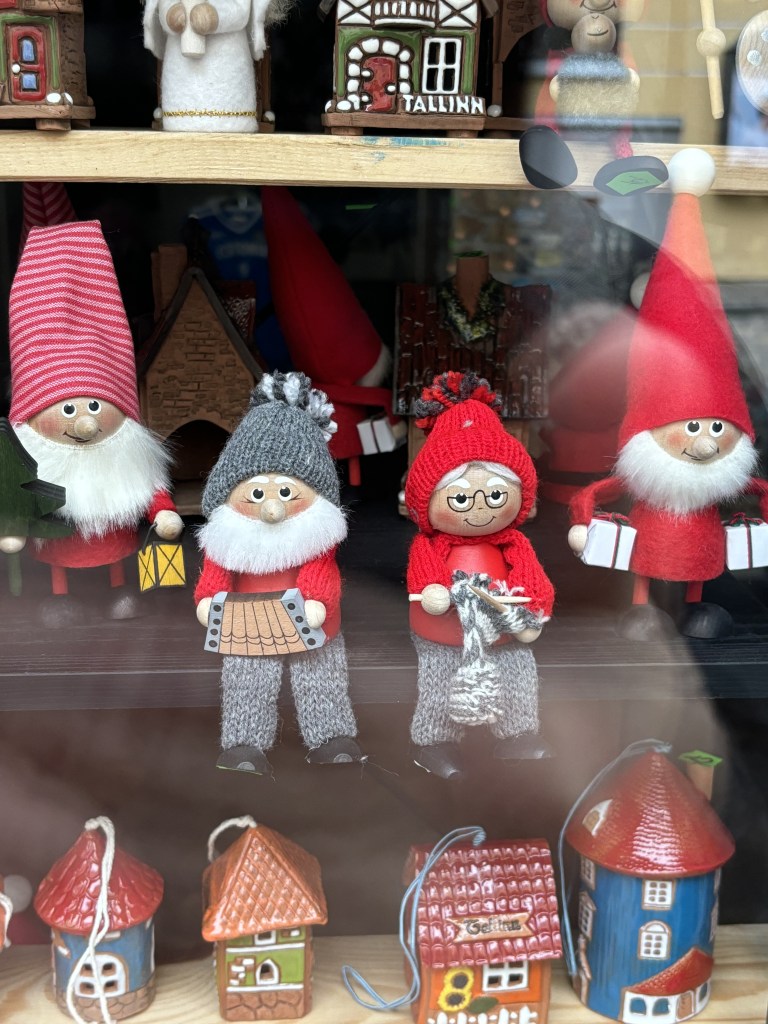
Christmas window of shop in the Old Town. (Tallinn, Estonia)

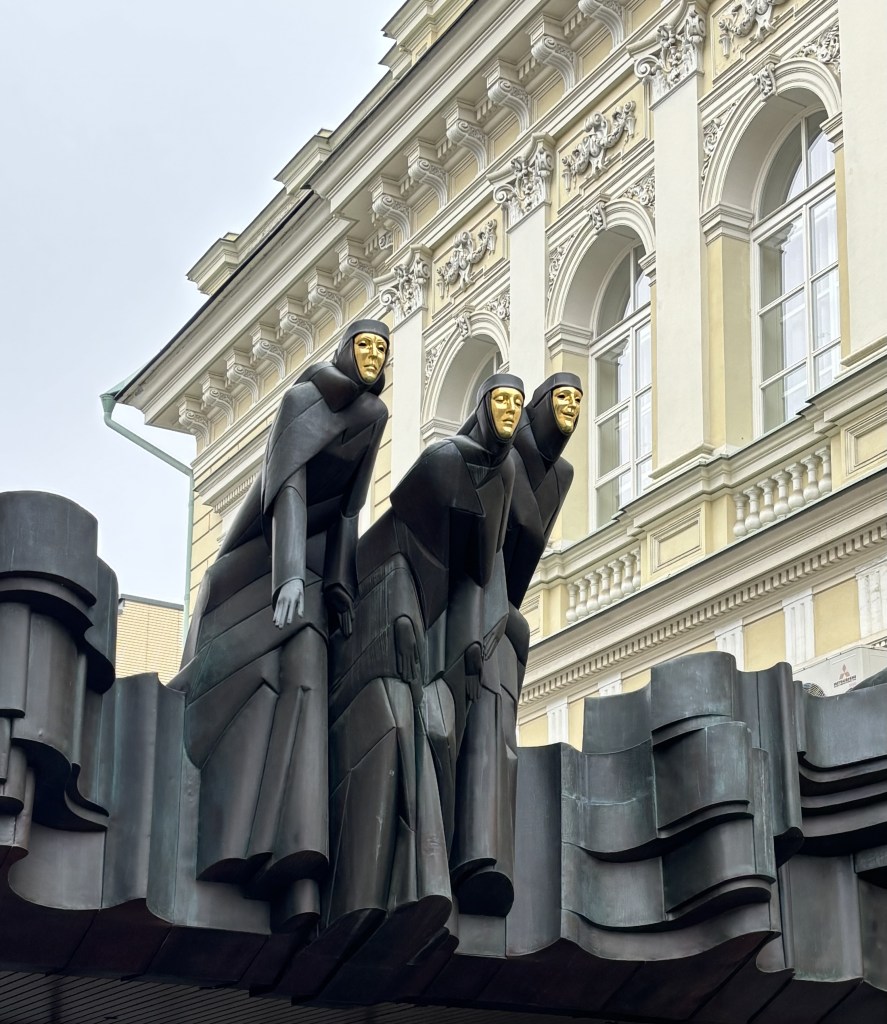
Windows overlooking nuns. Location of the Vilnius Theater. (Vilnius, Lithuania)
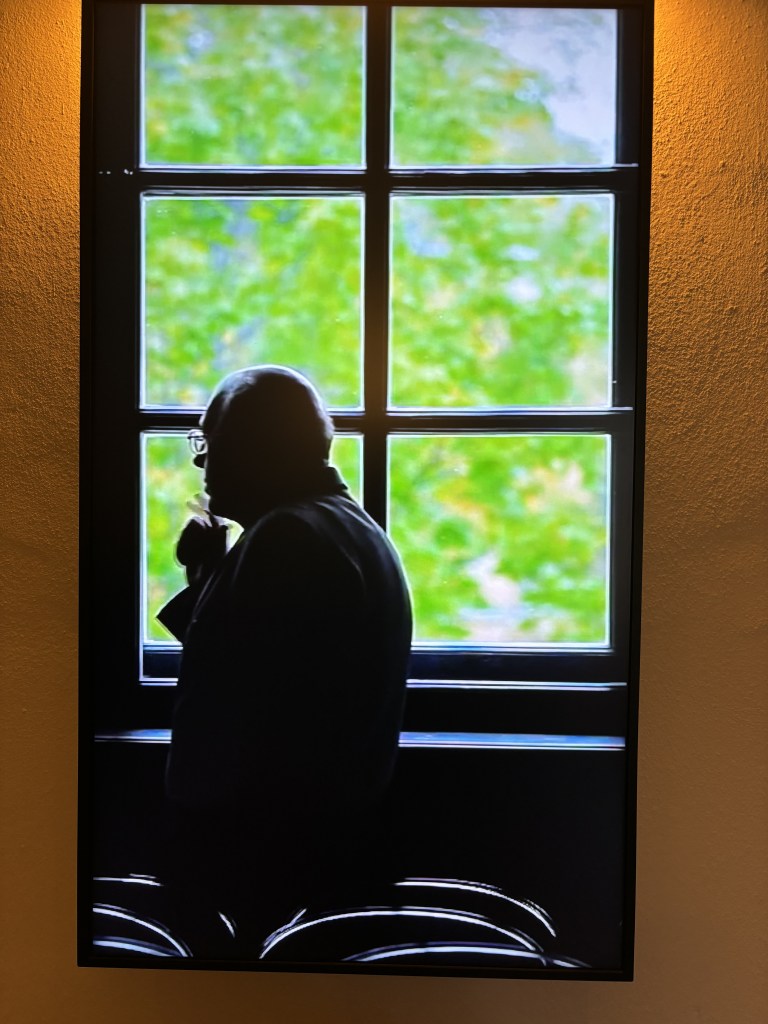
Artist Mark Rothko, born in Daugavpils, Latvia, stands near a window, shortly before his death. There is a marvelous art museum in his name here in Daugavpils.
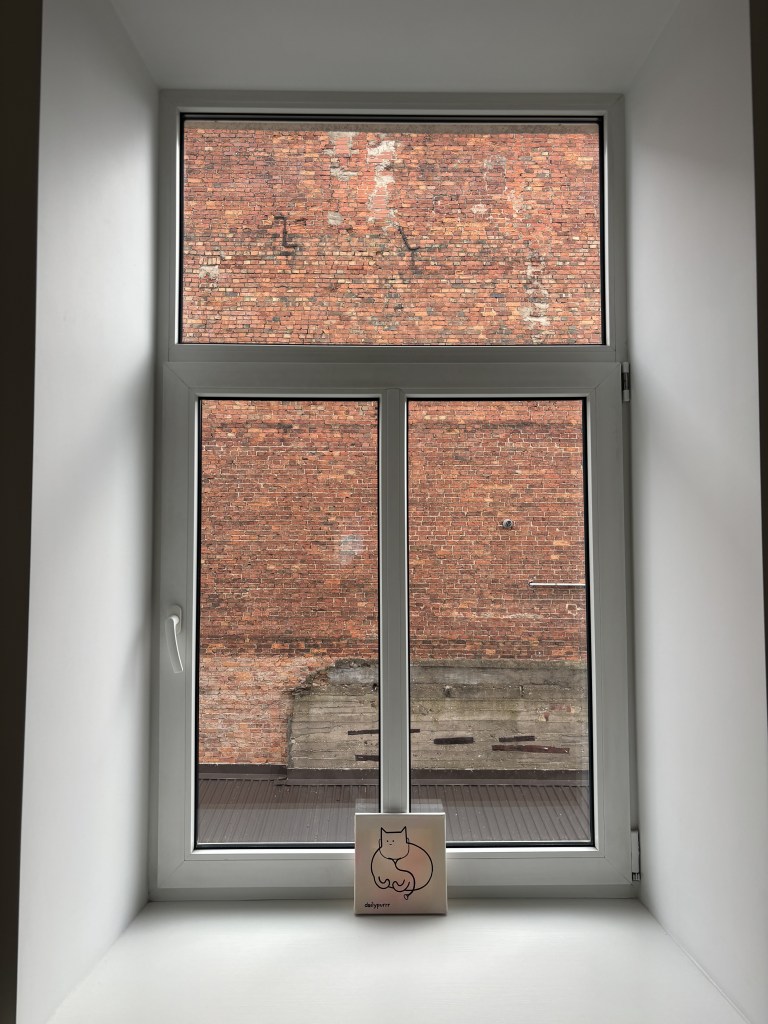
View from the window of a recently renovated flat in Daugavpils, Latvia
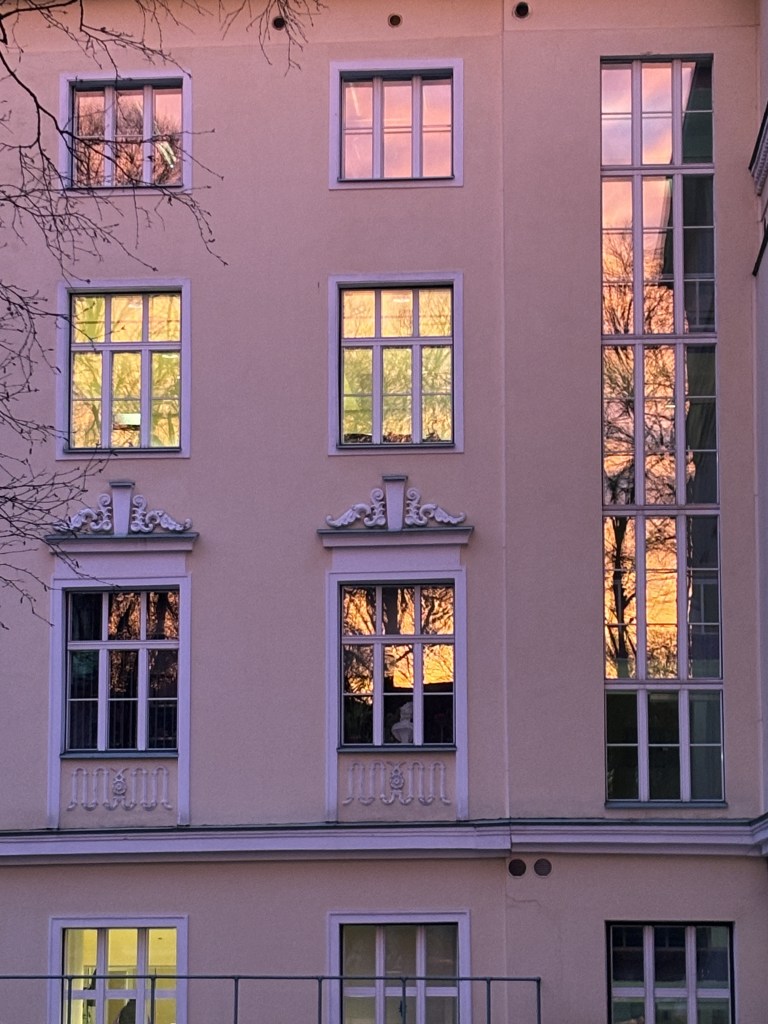
Windows reflecting a brilliant Tallinn sunset. (Tallinn, Estonia)
Standard

Sinagoga

Does every question have an answer? “What is the boiling point of water?” Of course, the accepted answer is 212F/100C.

The Green Synagogue in Rezekne, Latvia

Why am I drawn almost magnetically to old synagogues in nearly every city I visit?

Since our recent journey to the Green Synagogue in remote Rezekne, Latvia, I have been pondering this question.

Well, as a Jew, feeling a need to visit synagogues would be a reasonable explanation. I am familiar with almost all the artifacts and rituals associated with a synagogue. Very little about them is “foreign” to me. Seeing a matzo oven on the ground floor of the Green Synagogue, while a pleasant surprise, is a familiar tradition. And yet, as I walked the Camino de Santiago the well-known pilgrimage across northern Spain, even being Jewish, I was often drawn to churches we passed along the way.

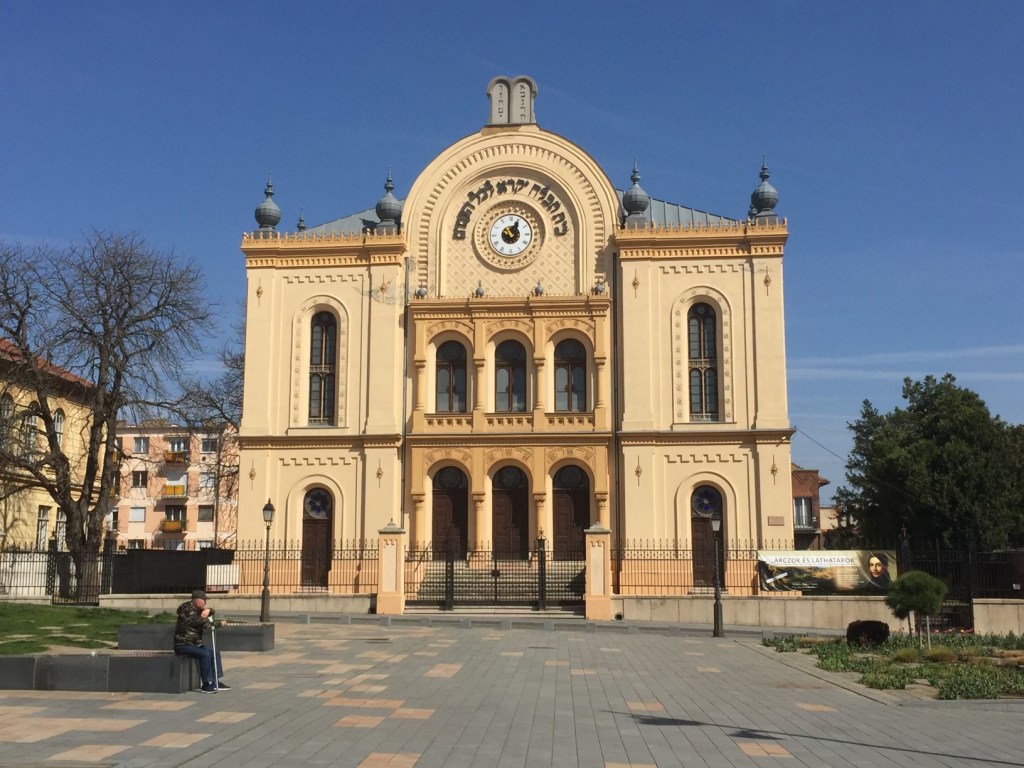
The Synagogue of Pecs, Hungary, consecrated in 1869.

Perhaps being a history buff makes as much sense as any explanation. I majored in history in college and remain fascinated with the connections old buildings, like synagogues, have with the country, cities, and cultures I find them in. The old synagogue in Pecs, Hungary, is part of that country’s dark history of suffocating the Hungarian Jews out of existence in a relatively short time during World War II. But it’s much more complex than solely the historical connections.

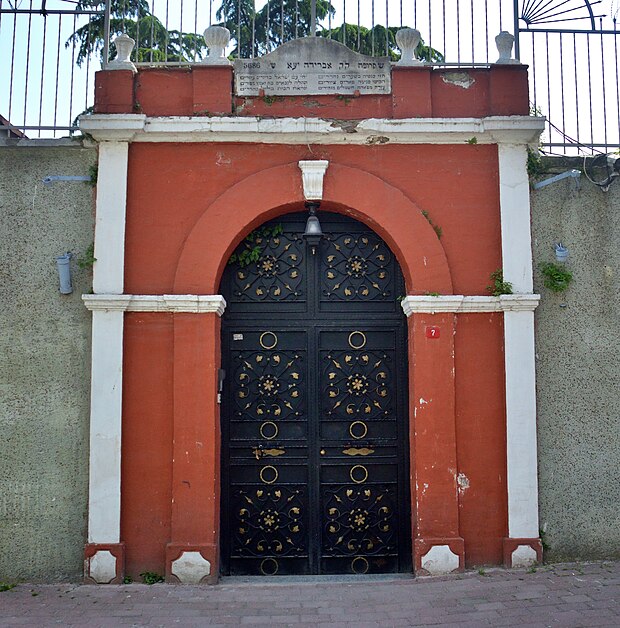
No, being a curious traveler is a much more reasonable explanation. Some of these old buildings have become world famous tourist destinations. The Ahrida Synagogue in the Fatih neighborhood in Istanbul, for example, was a stop on our tour in that Turkish city. It was built in 1430 as part of a then thriving Jewish community. My curiosity as a traveler was stopped in its tracks as I stood humbly in front of its ancient gate.

The Ahrida Synagogue (circa 1430) in the Fatih neighborhood of Istanbul.
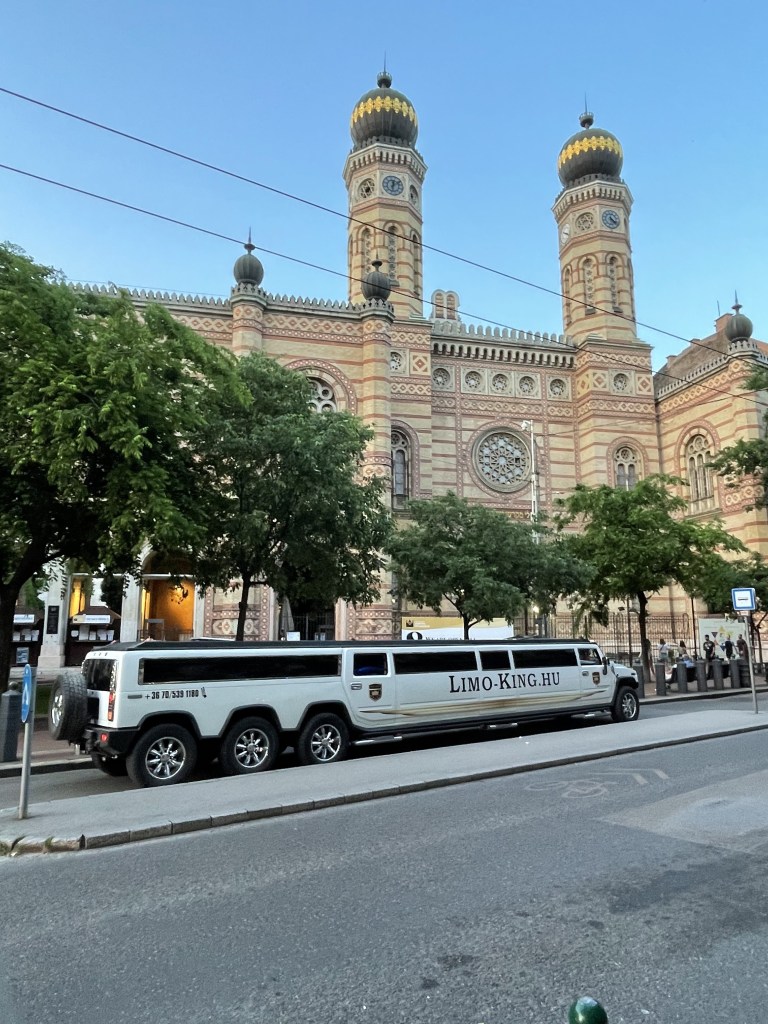
The Dohany Synagogue (1854) in Budapest is, understandably, on nearly every tourist’s itinerary

A traveler to Budapest can’t escape the overwhelming presence of the Dohany Synagogue in that amazing city so richly endowed with countless tourist destinations. It’s the world’s second-largest synagogue with an impressive seating capacity exceeding 3,000 people. Few travelers to Budapest miss stopping there.

I am drawn to synagogues for all these reasons and likely many more. But what I do know, is that I rarely connect to a place more intimately than I do through its synagogue. I feel part of their history–an intimate connection that often leaves me saddened when I depart.

Sad for what these old synagogues represent: once-vibrant communities that bloomed across most of Europe, now evaporated. Jewish people energized Budapest to the tune of 24% of its pre-World War II population. Vilnius, the capital of Lithuania, then nicknamed the “Jerusalem of the East,” once had 106 synagogues. Today, it has one. Cities and towns here in eastern Latvia had populations that were 50-60% Jewish. In the Rezekne of 1935, home of the Green Synagogue pictured above, 75% of all commercial businesses were owned by Jews.

So, why am I drawn to synagogues? Questions rarely have one simple answer. What is the boiling point of water? As we know, the boiling point of water is 100˚C and 212˚F, but alas, that’s only at sea level. Even for that one, there’s more than one answer…at different altitudes or pressures, the number is different. Answers to questions are always much more complicated than that.

Standard