
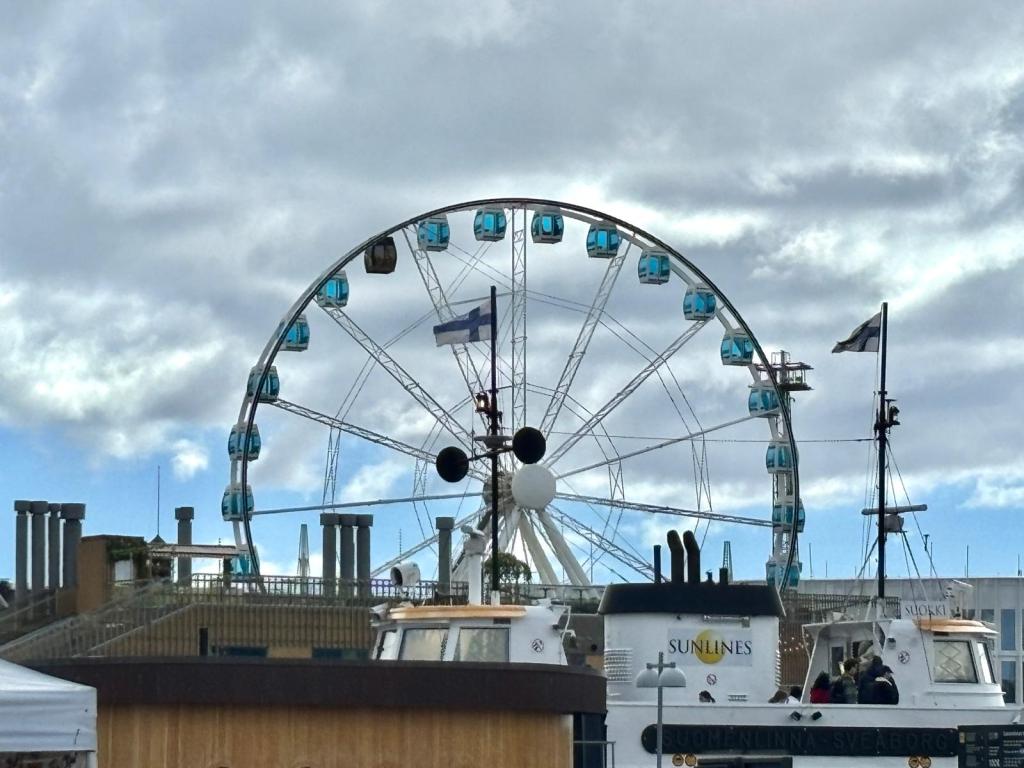
11 o’clock is a functioning sauna and is available for rent
Everyone is writing about Finland these days. There was the piece in The New York Times, The Happiest Country in the World Isn’t What You Think, by Byron Johnson and friends, challenging Finland’s place atop the happiness throne. Basically, these guys at Harvard think they’ve developed a better way to measure “happiness.” I also saw the article, Finland Says It Can Teach Tourists to Be Happy. Challenge Accepted, by Brits Lotking, who recently went to Finland to see “if she could bring happiness back to America with her.” You know, I sense a bit of sardonic skepticism, and a good ol’ dose of American arrogance in this taking measure of Finland’s 8-year run at being selected as the happiest country in the world. The U.N.’s World Happiness Report is released about this time every year and once again, it lists Finland as #1.
I’ve been using that report as a vehicle for teaching English for many years now. It’s a handy way to introduce a global study where you can compare and contrast countries. You can ask students to do some self-assessing: “On a 1-10 scale, how happy are you?” It also allows some running room for students to voice their own skepticism about the concept and how it gets measured in the report. I see skepticism as a good thing, a key component of critical thinking.
So, I had a modicum of skin in the game during our recent trip, our second, to Finland. I was going, of course, to see the sights of Helsinki, but my secondary mission was to ask around and see if this happiness thing had some truth to it–at least in the eyes of the locals. I did what I usually do, strike up conversations with nearly everyone, then see if there is a natural opening, and ask what they think about Finland being a happier place. I even pulled my walking tour guide aside and asked if he would talk about it offline for a minute or two. He smiled knowingly, and asked if I’d be willing to wait 45-minutes or so and he would get to it.
Sure enough, some time later, he stopped at a convenient spot along a sidewalk in a park a block or two from the harbor. He looked over the group and said, “Let’s talk about this happiness thing,” as if it was a huge elephant in the room that everyone was itching to address. “Whether you call it happiness, satisfaction, or just being pleased, it’s real,” he assured us. Now he had my attention. I had arrived at the top of the sacred mountain, and the old wise priest was talking it up.

He started as if riffing, not in an arrogant way, but leaning plantiffly, as if making a case…
-Well, all our schools are public. There are no private schools. Our kids go to school 20-hours a week. Start their day at the reasonable time of 9AM, and we disdain competitive testing.
-When parents give birth to a new child, they get 3-years parental leave. First though, the government delivers a box to your home which contains about 50-items that parents of new borns can use to make their lives easier.
-If you lose your job, the government pulls out all the stops to help you regain employment. There are retraining programs, job assistance and of course, financial support, until you find your next job.
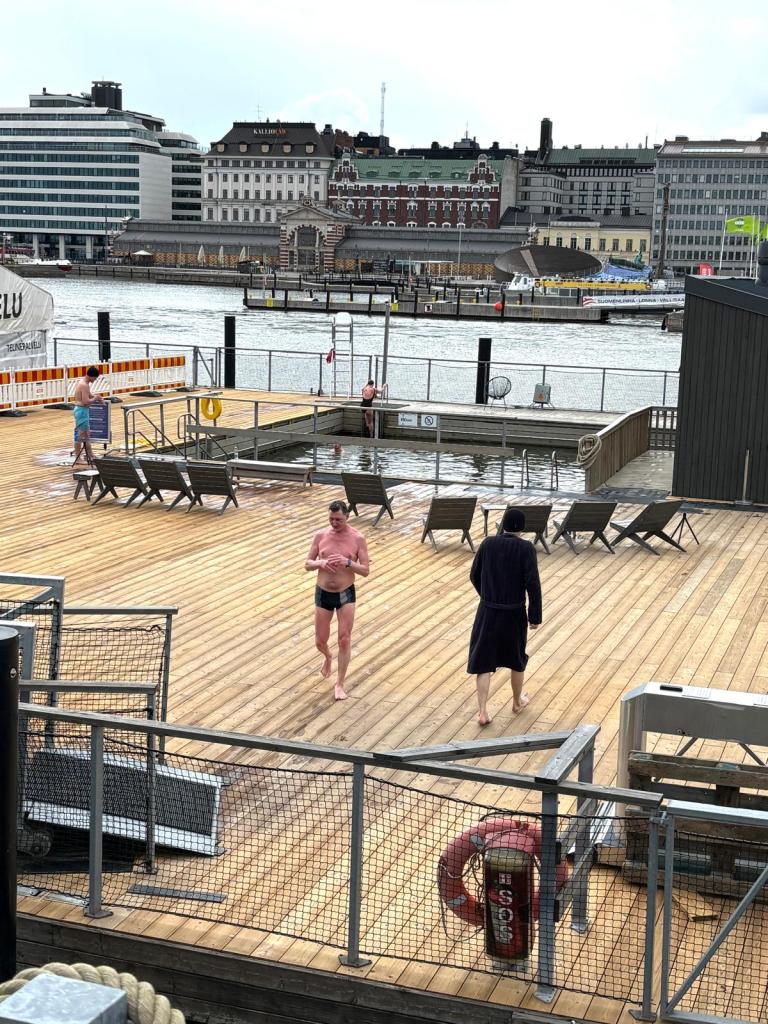
The sauna is a long-standing cultural tradition in Finland. Some say it’s a significant factor in the country’s high happiness ratings.
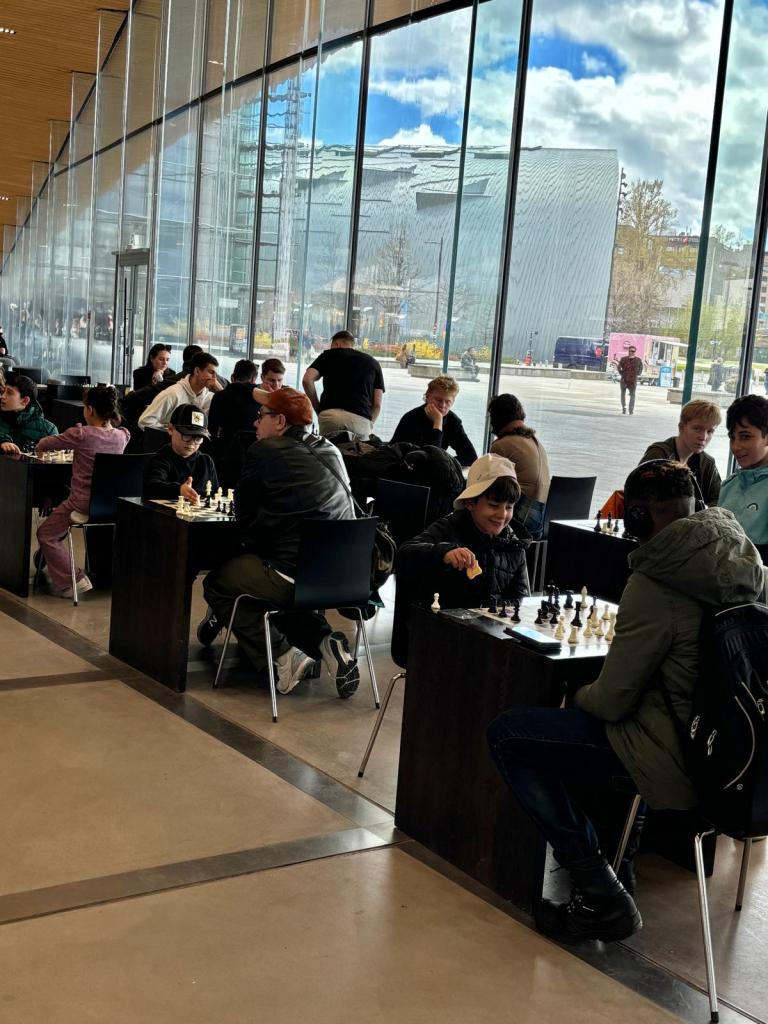
-He talked about schools, museums, and other institutions that support citizens, like libraries, and on that note, we immediately walked over to the new Helsinki Public Library that sits on a huge square across from the Parliament Building on one side and kiasma, the Finnish National Gallery, on the other. Frankly, I have never seen such a community-oriented facility in my life. I was standing in the glassed enclosed lobby looking around and wondered where I was. There were tables earmarked for chess playing right at the entrance and a sense of momentum and purpose moving around me. Each floor, in turn, boasted different services and activities for Helsinki citizens of any age. There were music rooms, cooking rooms, meetings rooms available free of charge. There were training facilities and printing facilities, places to watch films. There were several coffee shops and areas just to hang out, and yes, even books for loan. But you could also check-out tools and even artwork to hang in your home for a time. One can spend days there. But that’s the point, Finnish winters are long and dark.
Another reason to think Finns might be happier than the average country, has to do with their long standing cultural relationship to the sauna. It’s not “sawna,” like we would say back in Maine, it’s pronounced “sow-na,” carrying just a touch of elan as the word leaves the lips of a Finn. Saunas are that sacred ritual where people sit in wooden paneled dry heat rooms sweating their brains out. In Finland, that activity is almost always followed by some level of cold water dowsing whether in a tub, a lake, the harbor, or even via a cold shower. It’s the intense heat, then incredible cold, that makes it special, if not the existential ritual that some claim. But our tour guide insisted that the national pastime was perhaps the most important factor contributing to the Finish being the happiest people.
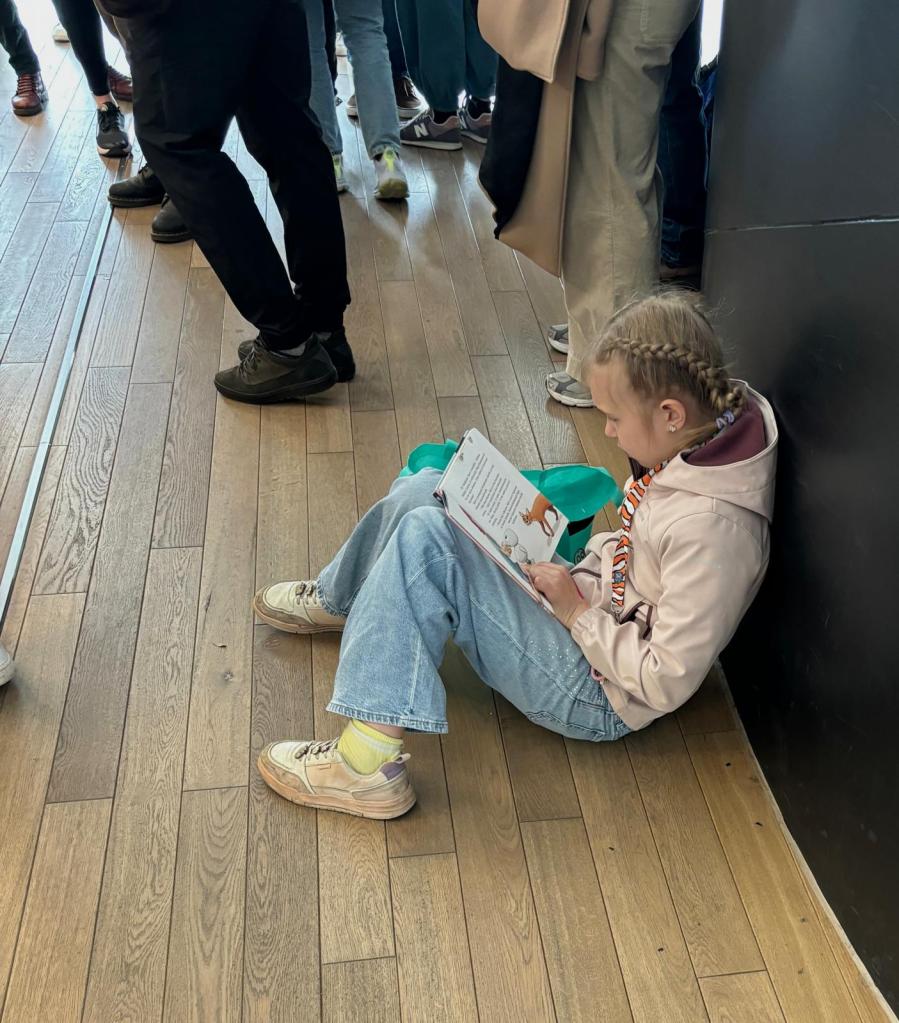
deeply immersed in her book
So, I left Finland satisfied, and frankly convinced. They are certainly not the most gregarious people I’ve met. Finns check-in on the quiet, slightly distant, side. But they say, once in that sauna, they have license to break out of their shells, and apparently they do. They won’t brag about it, and only discuss it seriously, if pushed a bit. But I for one, believe it to be true. The Finns are one happy lot. I saw why with my own eyes.
 Short Talks Through a Wide World