Definition: Everyday carry…a collection of useful items that are consistently carried on a person every day.
No, not random crap. But rather, everyday carries.
Is it a statement of preparedness, nostalgia, practicality, or yet another kind of subculture? In a brave new world of intense connectivity, where many people understandably seek privacy and anonymity, I thought this concept might offer a platform for gentle revelation.
I want to recognize our tendency to over-idealize things. Mitch Albom, from Tuesdays With Morrie fame, noted “We are too involved in materialistic things, and they don’t satisfy us. The loving relationships we have, the universe around us, we take these things for granted.”
In contrast, I’d like to allow for the occasion that treasured items might actually provide a carpet ride to another more revelatory place. Design as Art author Bruno Munari said, “When the objects we use every day and the surroundings we live in have become in themselves a work of art, then we shall be able to say that we have achieved a balanced life.”
I used to regularly carry a funny looking titanium utensil called a spork that attached to a carabiner. At varying times it functioned as a screwdriver, a fork, a spoon, and even as a wrench. It became a favorite carry of mine. Is that really different, other in magnitude, from the bloke who preens over his Bentley SUV?
A spork, an old everyday carry of mine
If a face can launch a thousand ships, then a favorite item can spark a revealing conversation. Then there’s the My Essentials Series, 10-Things I Can’t Live Without. Comedian Jerry Seinfeld, for example, shares why yellow legal pads and Bic pens are important tools in his life. I love that simple items can be a platform for self-disclosure and revelation–the magical interlude when someone brings enthusiastic candor and transparency to the moment. In effect saying, “I’d like to tell you a little bit about who I am as a person.”
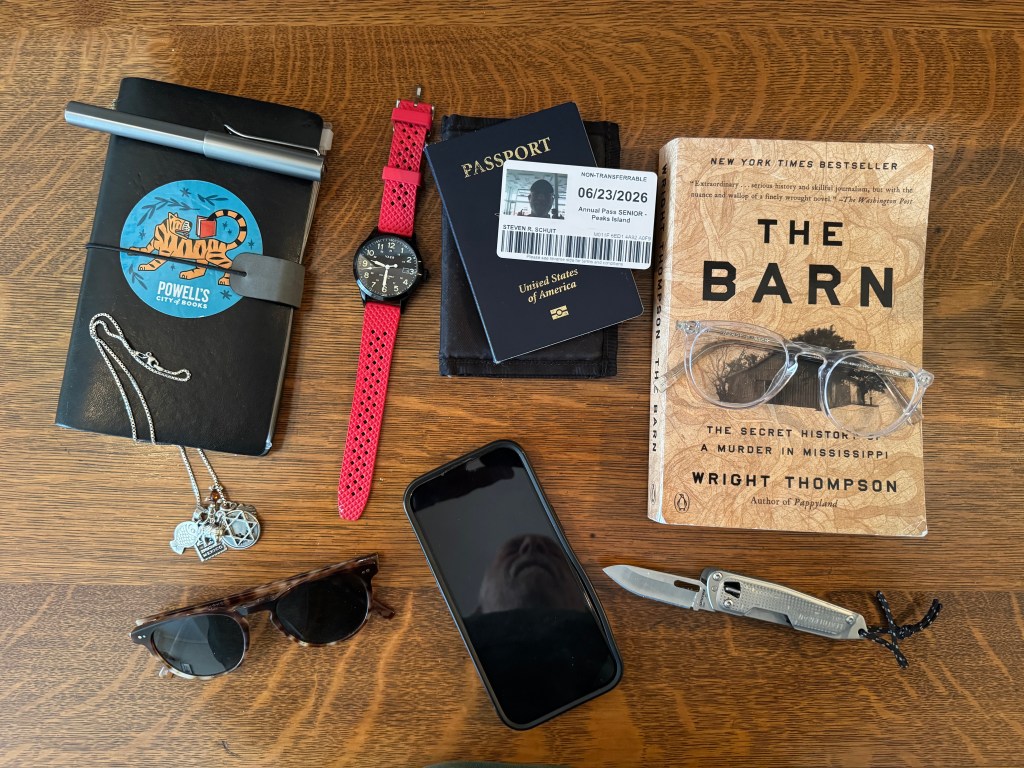
My current everyday carry…
My everyday carry includes from top left…A notebook and roller ball pen for fun writing when on the run, my favorite old-school analog watch from a California company, Vaer, my wallet with key documents including my passport and Peaks Island annual ferry pass, a good read I can tuck into my backpack–in this instance, The Barn, a non-fiction work about the 1955 murder of Emmett Till in Mississippi, glasses from Warby Parker, a pocket knife with practical blades and tools, my iPhone, Warby Parker shades and finally, my necklace with silver charms from different countries I have visited.
This batch of everyday carry reflects, I think, my love of traveling, of staying off the couch, of leaning in toward old-school, of valuing simplicity.
Now it’s your turn. What does your everyday carry say about you? I’d like to know.
My DNA is forever paired with water. Schuit, my surname, literally is a small Dutch boat. I suspect that when Napoleon invaded Holland and required all families to “modernize” by having both first and family names, my ancestors took the name Schuit because their livelihood was inextricably woven with the sea–the sea that both empowered and regularly flooded that small country.
I’ve always lived within a stone’s throw of water. I was born and raised in New York City’s waterfront neighborhoods of Bay Ridge and Bensonhurst in Brooklyn. Later, we moved to Merrick on Long Island where several of my friends lived on the water and as teenagers had their own boats. Today, we call Peaks Island in Maine our home. We’re one of several hundred families that take a ferry to and from the mainland on a regular basis, our fortunes tied directly to the tides and prevailing winds.
So, it wasn’t especially unusual when, as we walked the Camino de Santiago across northern Spain in 2017, a fellow pilgrim mentioned Lake Balaton. Csabi (Chubby) asked about a knee sleeve I had wrapped around one of my legs and my tendency to stop every hour or two to ice my knee. I told him I was about to undergo knee surgery once I completed the Camino and hoped to make a successful transition from jogging to biking as my go-to exercise regimen.
“Ever hear of Lake Balaton in Hungary?” he asked. Though I prided myself on my knowledge of geography, I had to admit that I hadn’t. This Hungarian native insisted that a big, beautiful lake in central Hungary awaited me when my knee was healed. And to add to the serendipity that often finds its way to travelers, shortly after I received an offer to teach English in, of all places, Budapest, Hungary.
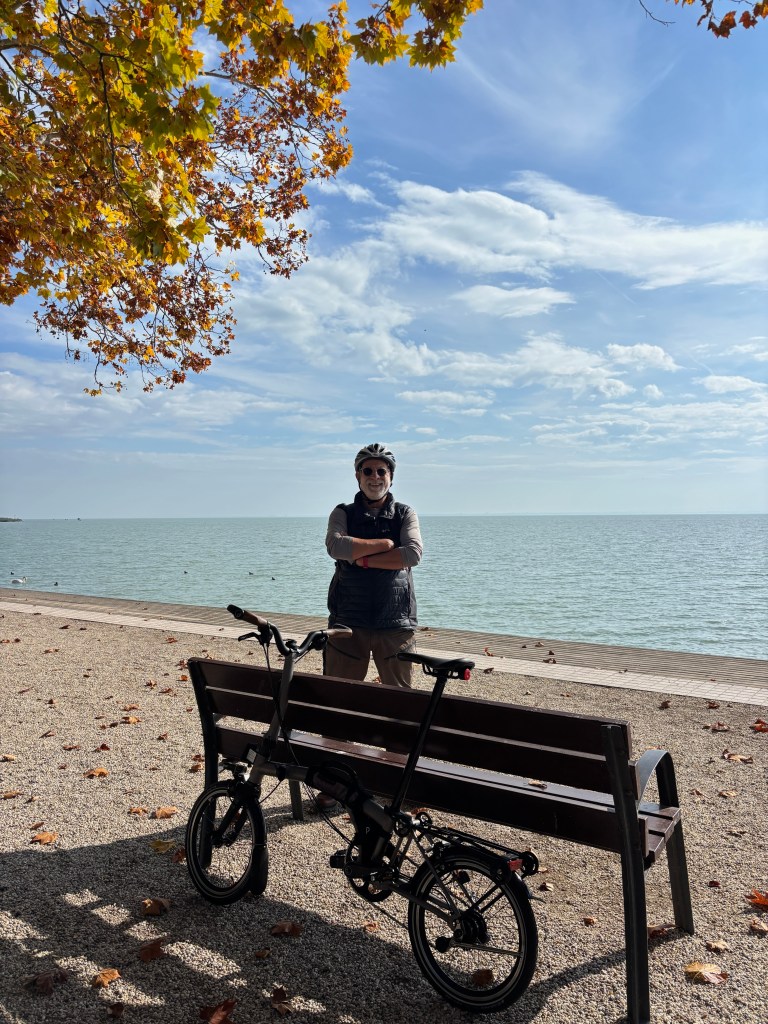
The author with his folding bike in the popular tourist town of Balatonfured on Lake Balaton in Hungary.
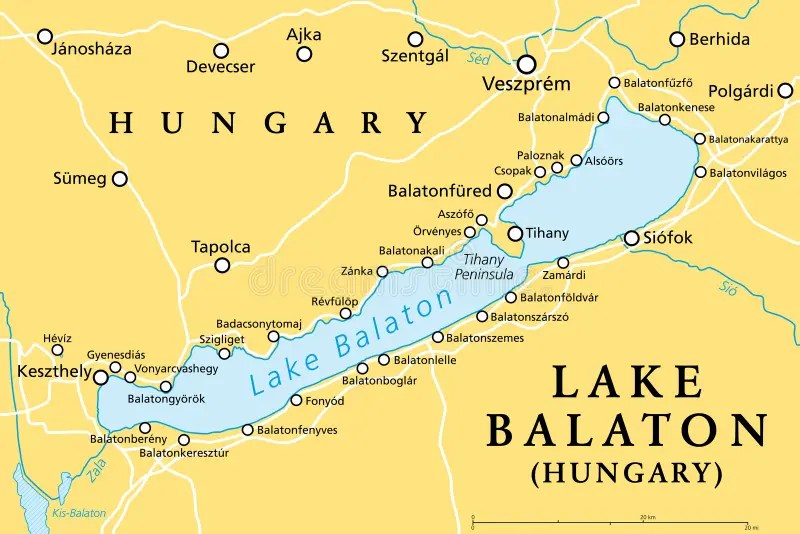
I have since biked around Lake Balaton three times on one of my Bromptons–a British folding bike. A folding bike sacrifices little in terms of efficiency and comfort and, at the same time, allows for easy traveling given that it folds up to roughly one-third its size and can be transported in a hard case almost anywhere in the world. One can enjoyably bike around the 150-mile circumference of the lake at one’s own pace traveling through wine country, past small Hungarian villages and wildlife refuges along the shores of a beautiful pastel-blue lake–all while being caressed by a well-maintained bike lane. It makes for some of the most enjoyable biking I have had the pleasure to experience.
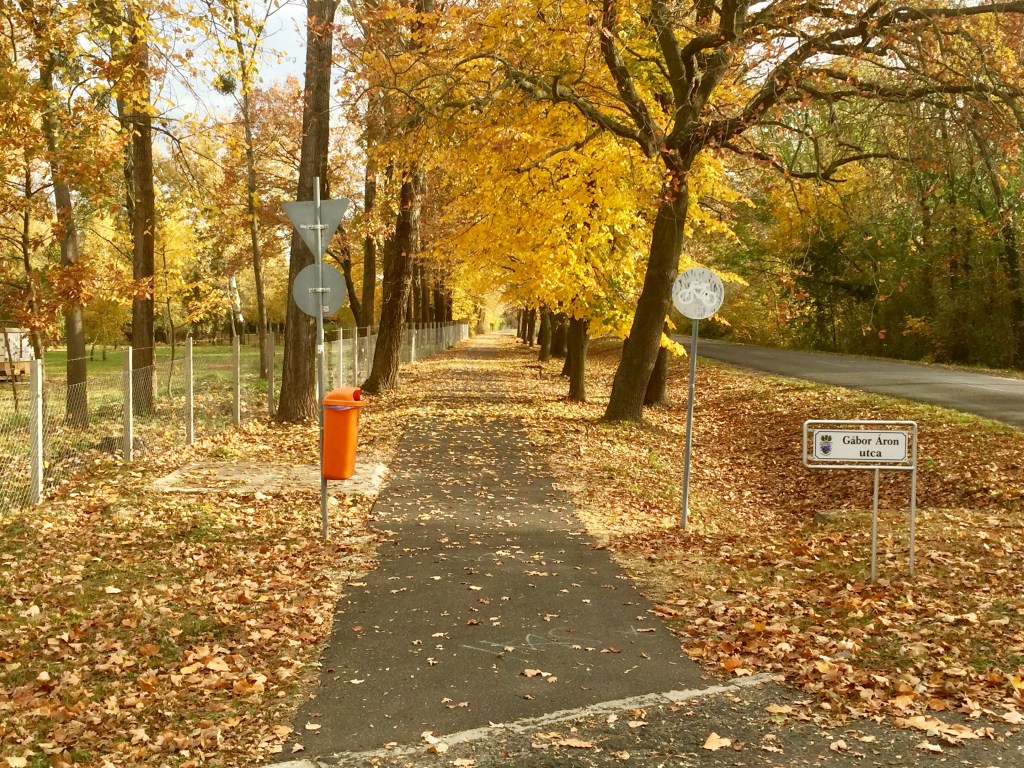
A “golden” bike lane along Lake Balaton. This photo taken along the southwestern corner of the lake.
So it hit me. Where else in the world can I find such natural generosity? Two other lakes came to mind–both the largest lakes in their respective countries: Lake Biwa in Japan, and Lake Chapala in Mexico. So, let’s consider these biking opportunities and how they compare to biking Lake Balaton, Central Europe’s largest lake.
Feature/Lake
BIWA (Japan)
CHAPALA (Mexico)
BALATON (Hungary)
Area
260 sq. miles
420 sq. miles
229 sq. miles
Age
4-million years old
38,000 years old
16,000 years old
Shore Length
146 miles
166 miles
150 miles
Maximum Depth
341 feet
34 feet
40 feet
Easily Circumnavigated by Bike?
Yes
No*
Yes
Water Condition
Clean. Drinking water for the city of Kyoto.
Polluted.
Fairly Clean
*The north shore of Lake Chapala has a bike path which runs parallel to the lake. It runs from the town of Jocotepec on the northwestern end of the lake, through Ajijic, and continues to the city of Chapala on the north central shore of Lake Chapala.
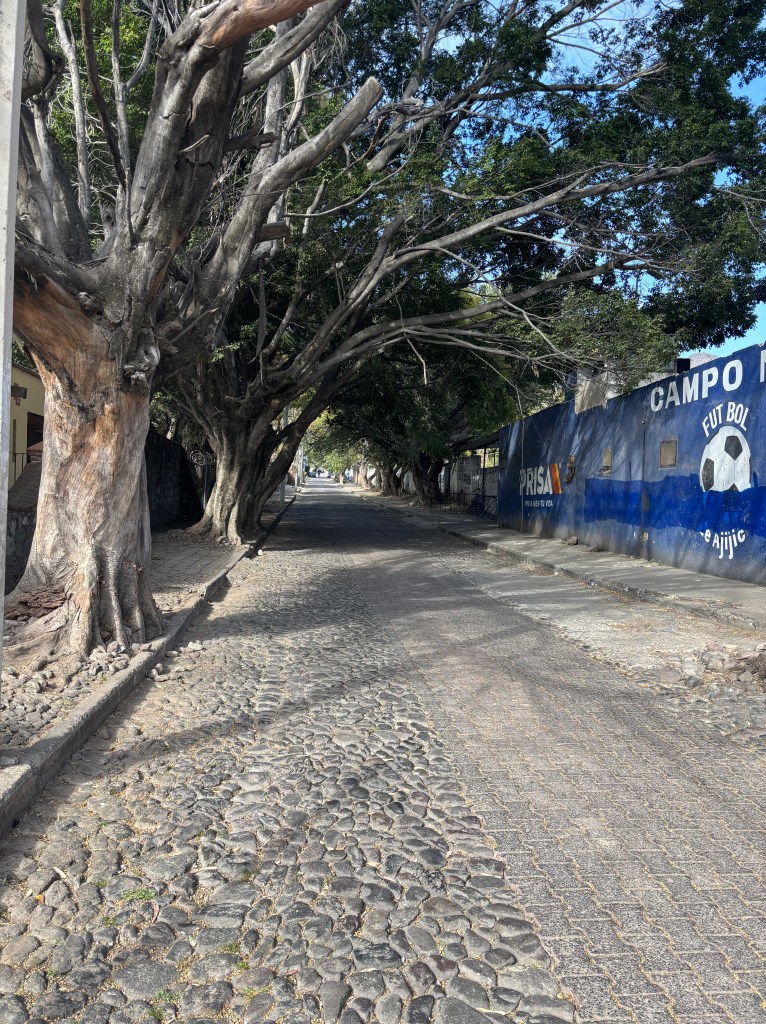
Most of the streets around Lake Chapala are made of cobblestones making casual biking a bit challenging.
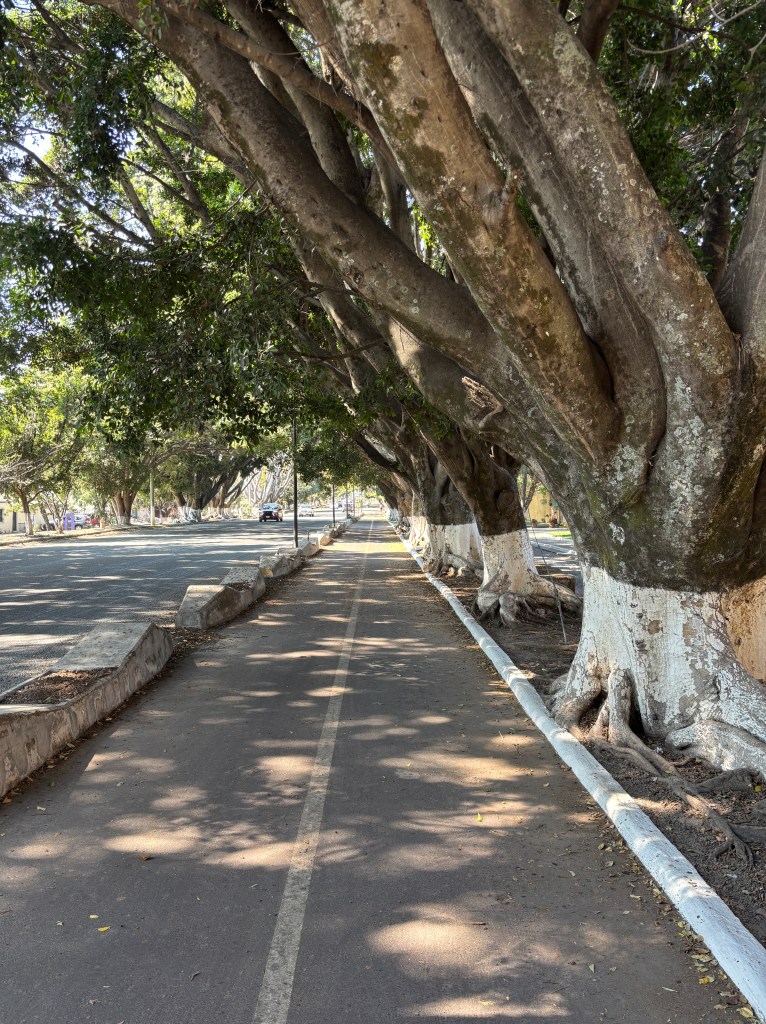
A fairly new bike path runs across about half the length of the north shore of Lake Chapala in Mexico. The nearly constant sun glistens off the surface of the beautiful lake. White Pelicans along with other varieties of ducks and birds can be seen everywhere here. Sadly however, the lake is polluted by chemicals from agricultural runoff and a dirty river flowing down from Guadalajara. Once you find a way to navigate the countless cobblestone streets and get yourself to the bike path running from Jocotepec in the northwest to the city of Chapala, the biking is smoother and safer. Chapala has a wonderful waterfront malecon filled with vendors, visitors and locals. But biking around the rest of the lake is currently problematic as Mexico generally is not bike-friendly.
The bike lane along Lake Chapala, here running through the town of Ajijic.
Lake Biwa, Japan’s largest lake, is an older and much deeper body of water than either Lake Balaton or Chapala. It provides drinking water to the Kyoto area, that city having been Japan’s capital until 1861. While all three lakes have a surprisingly similar circumference of about 150-miles, Lake Biwa seems to be especially bike friendly. Vlogger, Jitensha Adventures, describes her 4-day circumnavigation of Biwa, presenting maps of their 4-day trip featuring stays in guest houses and stops in restaurants along the way. While I can’t speak personally about biking Lake Biwa, I have visited Japan many times over the years both as a tourist and as a trekker. I am attracted to Japan’s respect for nature and well-orchestrated rituals of efficiency, organization and cleanliness. I once walked the streets of Kyoto looking for one stray cigarette butt and was unable to find any.
Johnny Z. Lee, another biking vlogger, offers his perspective on biking Biwa, describing the quality of the bike lanes he encountered on his swing through Biwa. His biking is faster and more aggressive than that of Jitensha and her biking partner.
My personal approach to biking is more akin to the turtle in the old fable of the hare vs. the tortoise. I average about 30-40 miles a day, making frequent stops whenever a view, old square, or coffee shop calls out my name.I usually book my stay in advance and scout out nearby eating places that would likely reward my day’s biking efforts. I smile as bikers in lycra whiz past me striving to bike around Lake Balaton in one-day. I take 3 1/2 days as I savor the details of nooks and crannies and the insights I can glean from conversations with locals.
Balaton, Chapala and Biwa are the largest lakes in their respective countries. Interestingly, they are similar in size. But they are more different than they are similar. Balaton and Biwa offer significantly more bike-friendly experiences. They are also cleaner bodies of water. Balaton’s north shore features wine vineyards, while Biwa offers shrines and temples for contemplative interludes.
Perhaps these lakes call out to you too. My Dutch DNA and folding bikes are always at the ready. I can go only so long without having a plan to bike a brilliant body of water. Lakes Balaton, Biwa and Chapala all await. Biwa seems to be calling me next. I’m an easy sell.
“We’re goin’ up, up, up, it’s our moment You know together we’re glowin’ Gonna be, gonna be golden Oh-oh-oh, up, up, up with our voices Gonna be, gonna be golden.”Lyrics from Golden, K-Pop Demon Hunters
Unfamiliar cold mornings that I couldn’t quite square. I was in a training program for new Peace Corps Volunteers in a smoky, gritty, South Korean city trying to figure out how I might fit in…
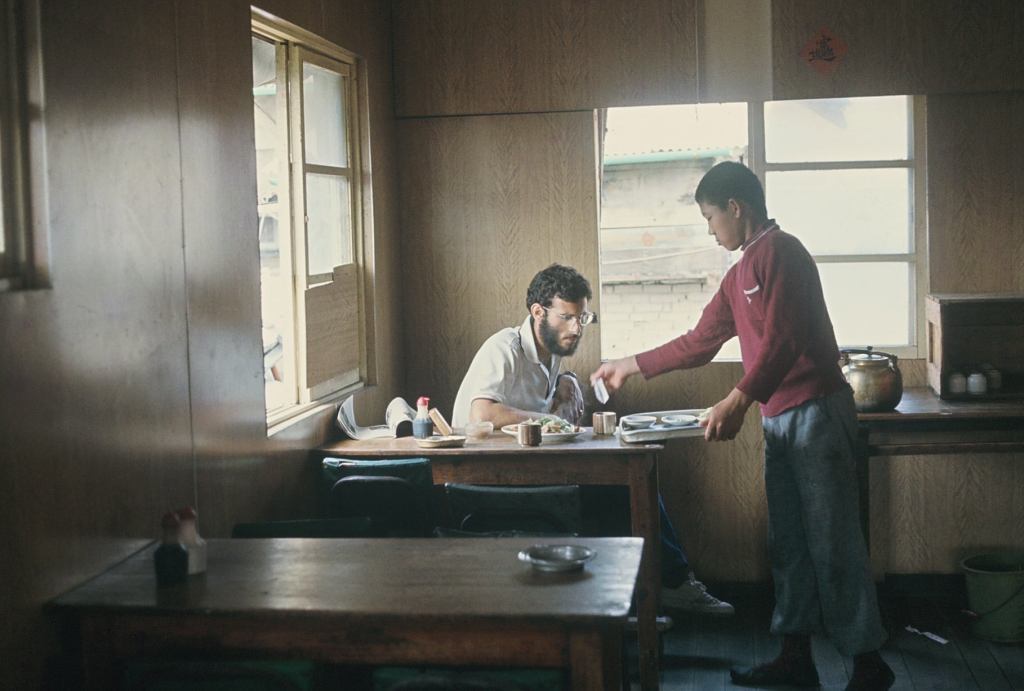
I left the inn where I was staying searching for something to eat before the day’s first session. In a tiny wooden restaurant across from the tired hotel where our orientation was being held I discovered a breakfast nook with only a small unbalanced table and two stools. It’s here I ordered my first-ever bowl of ramen noodles. The kind woman with calloused hands preparing my noodle dish was probably in her mid-30’s-though she looked over 50. On that cold morning nothing could have tasted more delicious.
Typical Korean restaurant circa 1974.
This was the Korea I discovered tucked in time between the pervasively destructive Korean War of the early 1950’s and Korea’s ascendancy to its modern democracy and eventually, to its place as the 12th largest economy in the world. On that winter morning in 1973 North and South Korea had roughly the same per capita GDP. North Korea’s leaders chose to stick with its authoritarian model, a closed ruthless society. South Korea, on the other hand, was soon to host the 1988 Summer Olympics in Seoul and never look back.
“Oh-oh-oh, I’m done hidin’, now I’m shinin’ like I’m born to be Oh, our time, no fears, no lies That’s who we’re born to be.”
Remarkably, South Korea is roughly only the size of Indiana. It’s impossible to ignore its outsized influence on the rest of the world. In the U.S. today it’s hard to find a home without a Korean appliance. Think Samsung and LG. The world’s streets are filled with Korean cars. Consider Hyundai, Kia or Genesis. Korea is the darling of global entertainment. I was in Korea for my second teaching stint there from 2012-2017 when the song Gangnam Stylelit the world. Then it was BTS, and now, K-Pop Demon Hunters, the most watched Netflix show of all time. The #1 song in the world today? Golden, from the aforementioned video and sung by 3-young Korean-American women.
And Korean ramen was just the beginning. Kimchi, gochujang, and a banquet of Korean foods have flooded every nook and cranny in the world. One can find excellent Korean food in Riga, Latvia’s capital city. New York famously has its own huge and highly popular Korea Town. You no doubt have viewed Korean drama on TV, taken in a Korean movie or cheered a Korean baseball player playing for Major League Baseball.
Korea has a way of seducing. Just when you think you’re about to sink yourself into something homegrown, it turns out there’s some gochujang sauce in the mix. I recently installed heat pumps in my Maine island home only to see the name Samsung splayed across the large cartons they were shipped in. I visit my grandkids here in Portland, Oregon, and my 2-year old granddaughter is dancing proudly and wildly to the soundtrack of K-Pop Demon Hunters. Today, the world’s most popular ramen is Korea’s Shin Ramen.
Pick of the season book in Portland, Oregon’s famous Powell’s Bookstore suggests Korea’s global culinary influence.
No different than any other country, South Korea has its problems. Its lowest-in-the-world birth rate, with its cascading consequences, is considered by some observers to be an existential threat to the country. But there’s little doubt that its vibrant democracy and almost unforgiving work ethic have sustained its economic success.
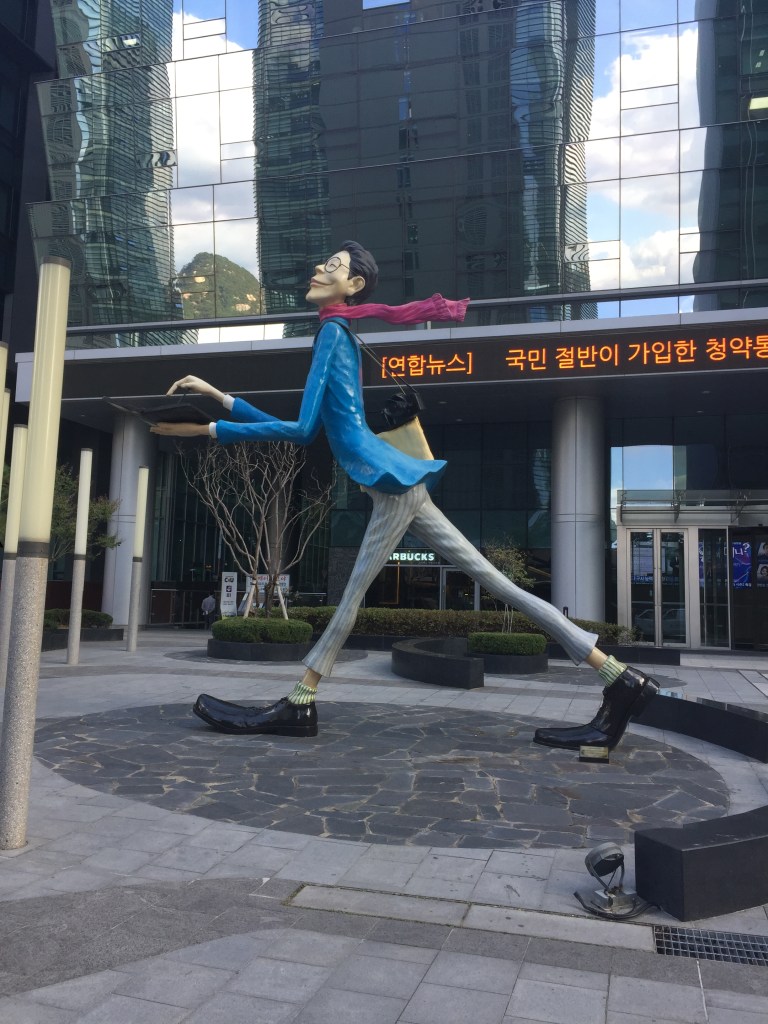
Seoul art depiction of Korea’s “hurry-hurry” work ethic-a young Korean rushing off with computer in hand.
Korea has long been nicknamed Land of the Morning Calm, and rightly so. And, while Golden may be symbolic of its current electrifying global influence, one needs to wonder where the country goes from here. From its enchanting morning calm to its golden afternoon in the sun, one wonders what evening has in store for South Korea.
“I’m done hidin’, now I’m shinin’ like I’m born to be We dreamin’ hard, we came so far, now I believe.”
Film and songs currently taking the world by storm.
A 150-mile, surprisingly easy biking adventure welcomes newcomers in Central Hungary. If you like wine, nearly empty bike lanes, and friendly locals, I invite you to bike around Lake Balaton outside the busy summer season.
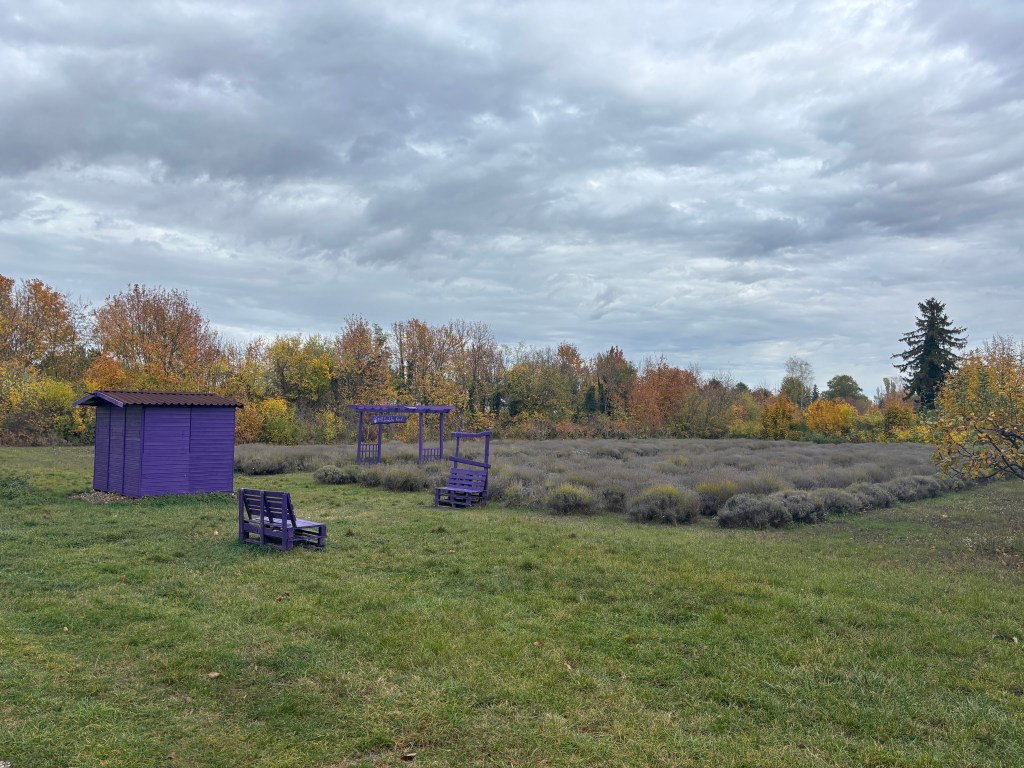
I started out in the tony little town of Balatonfured. Heading west (counterclockwise), I passed through wine and lavender country. Keszthely, on the lake’s far western shore, welcomed me after the 1st day of biking.A lavender field along the lake.
To be honest, I am not a serious biker. I don’t clip-in, or wear nifty tights. I don’t do 100-mile days. I bike with only 6 or 12-speeds. And of particular note, I look rather quirky riding on the 16” wheels of my Brompton folding bike. All that said, you will rarely see me on my bike without a mile-wide smile.
But I do enjoy biking and I ride everywhere I can. We don’t own a car. Living on a Maine island as we do, borrowing and lending things is a way of life. A neighbor lends us his old hybrid Toyota during the summer months (thanks Jeff!). That’s for transportation needs while on the island. Other friends lend us their cars in Portland. Surprisingly often, my bike and a 30-liter bike bag become my in-town vehicle for shopping, hardware runs, and for just finding fun rides in the area. Lighthouses, coffee houses and nature preserves are amongst my favorite destinations.
But you don’t need biking tights, 21-speeds or clip-ons to bike Lake Balaton in Hungary. A few things might help: an appreciation for paprika and goulash, a love of good local wines, a willingness to “put -up” with Budapest (that said tongue-in-cheek), having about 9-10 days available to let go, decompress and enjoy keeping a beautiful lake on your immediate left.
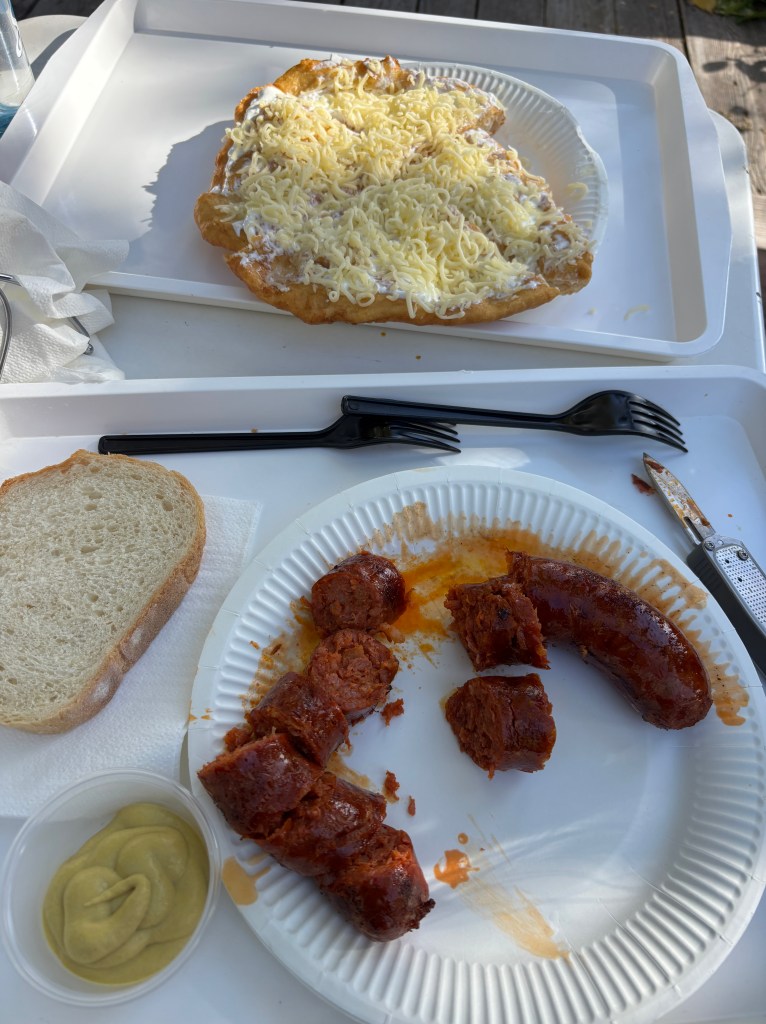
Biking Balaton, I bike roughly 25-40 miles a day starting out about 9AM. I usually roll into my destination sometime in the late afternoon. High points of a typical day? Miles of golden autumnal bike lanes. A lunch perhaps featuring Langos, Hungary’s local pizza-like dough covered in sour cream, cheese and garlic. So good, they can easily become a habit. Delicious local red and white wines that are shockingly inexpensive. And countless lakeside village scenes featuring swans, lapping water and magical vistas.
Langos (above) and local Hungarian sausage.
I first biked Balaton in the fall of 2018. Taking advantage of a national holiday, I was able to turn-off my high school English teacher role in Hungary for a few days. There is an easy train connection from Budapest right to the lake. It’s only a several hour train ride to Balatonfured, or other fascinating lakeside towns that can easily remind you of a New England village in the fall. This most recent circumnavigation was my third around Balaton.
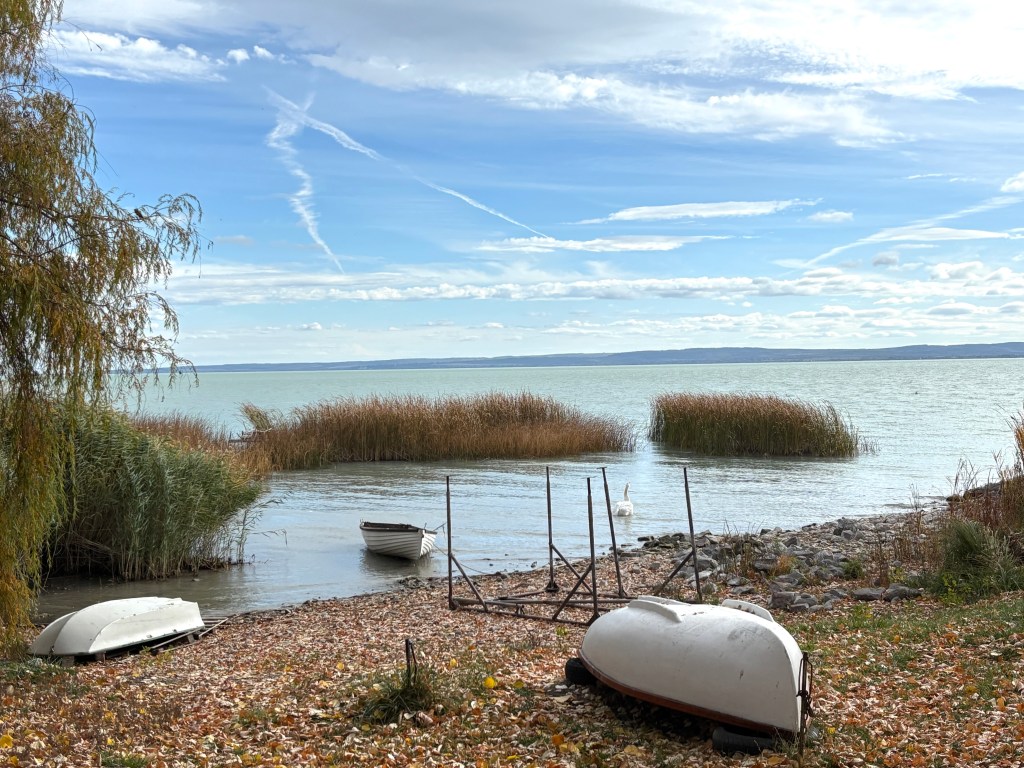
Balaton offers quiet coves, and countless other magical places to stop and ponder life.
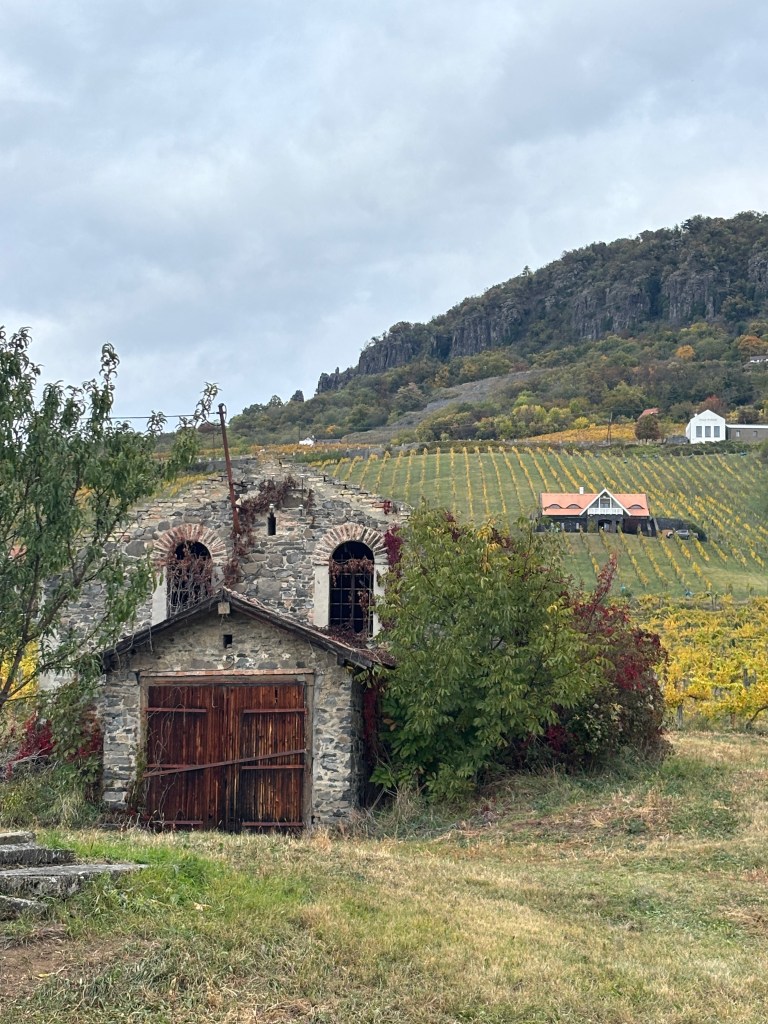
I typically bike Lake Balaton over 4-days, riding counter-clockwise around the azure-hued lake. The north shore is filled with vineyards and small hills that melt down to the water. Its southern shore is more densely populated with summer communities playing the role of escape-valve for Hungarians who live in busy Budapest. Everyone seems to have a family place on Lake Balaton, or has a family member or friend who does.
A vineyard along Balaton’s north shore.
But during the Spring or Fall (my favorite time), Balaton is yours for the taking. Its bike lanes are quiet. It’s easy to find a place to stay (I often stay at AirBnB or similar apartments), and the lakeside nooks and crannies reveal their secrets. I can leave the annoying state of American politics behind and somehow ignore the wild politics of Hungary. In many ways, Balaton is a kind of oasis.
And I’ve yet to address the exciting bonus. Before and after biking Balaton you get to spend some time in the country’s capital, Budapest. For me, Budapest is a magical city–the beautiful Danube meandering its way between hilly, voluptuous Buda, and its exciting and gritty partner, Pest. There’s entirely too much to do. But if you are smart enough to decide to bike Balaton, you’re no doubt up to the task of deciding how to joyfully spend your time in Budapest.
The author in Balatonfured before starting out on his most recent circumnavigation of Lake Balaton.
It sounds almost whimsical, if not straight-up naive. The U.S. State Department told us, in so many words, “As an English Language Fellow, living and teaching overseas, you’ll be engaging in ‘Soft Diplomacy’ on behalf of your country.”
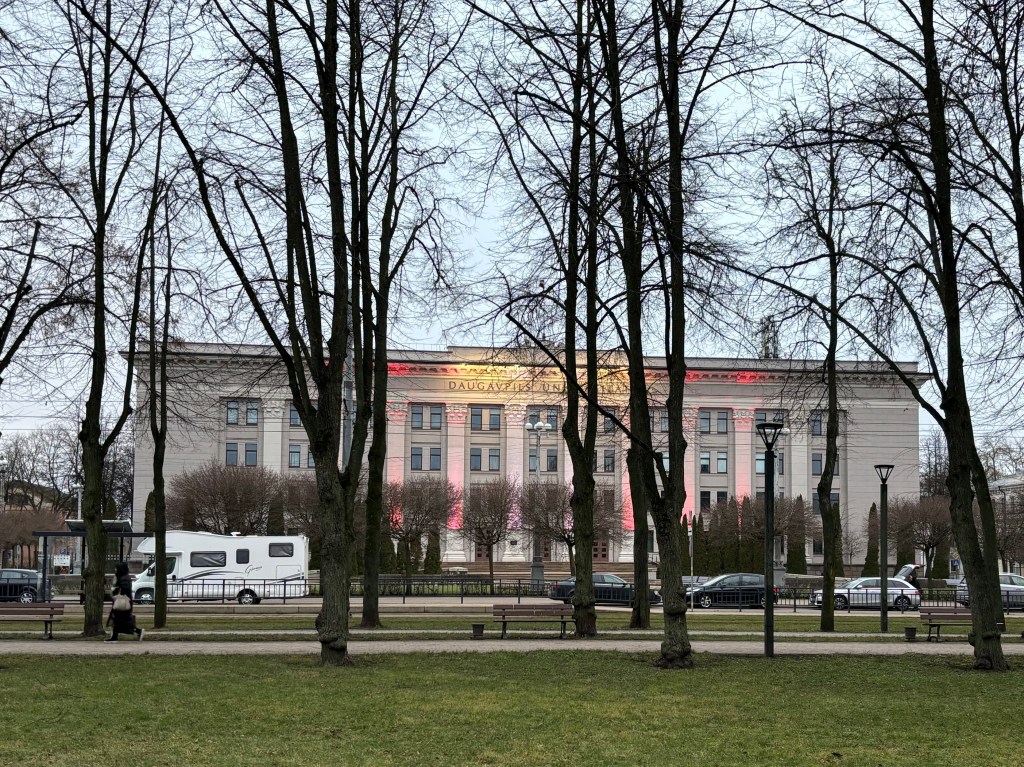
The “Old Building” on the campus of Daugavpils University
Yesterday, after a 10-month stint teaching at a university in a remote city, here in Latvia, I found myself walking through a park here in Riga at about dusk. I was in a reflective mood, leaving Latvia as I am, early tomorrow morning. Twilight, I find, is the time when taking photos is best–the light is perfect for clarity, for colors, and for capturing the “essence” of things. It feels like an apt metaphor for my year here–I was somehow able to capture and appreciate the essence of my relationships with students and colleagues. It was a year of relationships, rather than simply transactions. Latvians, I’ve come to learn, see themselves as a bit distant at first, slow to connect with others. But once they do, they really make those connections real.
The Economic Challenges Here
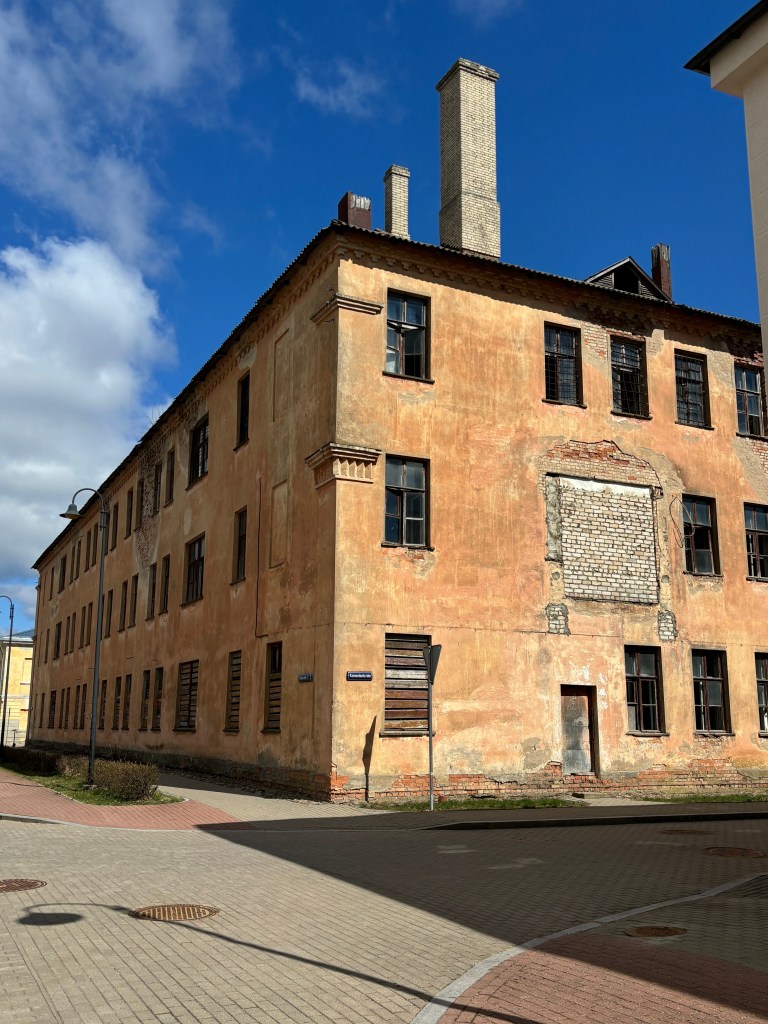
And, keeping it real, we should talk about the economy here. These days, Latvia’s economy seems stalled, taking a backseat to the other two Baltic States, Estonia and Lithuania. Yes, the capital, Riga, does feel upbeat and vibrant. But for the country overall, that’s a chimera. My home city here, Daugavpils, far to the east near the borders with both Belarus and Russia, is watching its population decline, and has been for years. The handsome city, while dignified and proud, is dotted with abandoned buildings. In 1993 when the Soviet Union withdrew, factories began closing. Many locals felt that the E.U. didn’t want the cheap competition that Latvian production offered, so rather than investing in a sustainable economy, they started sending Euros to largely pacify the locals. This did little to build a Latvian economy for the long run.
An abandoned building within the City’s historic Fortress. There are many throughout the city
Meanwhile, Estonia, just to the north, historically more aligned with Finland and the rest of Scandinavia, saw their economy take off. Lithuania, bordering on Latvia’s south, is currently, by most accounts , experiencing an economic renaissance. It’s vibrant capital city, Vilnius, was named “Europe’s Green City for 2025,” recognizing its progress along environmental criteria such as: increased miles of bike and pedestrian paths, hotels that have met strict environmental standards, and park expansions. Lithuanian “youth,” the group of citizens 30-years old and younger, have been rated as the “happiest” youth cohort in the world for the 2nd straight year, according to the World Happiness Reportpublished by the United Nations.
I’ve repeatedly queried my Latvian friends about these economic differences amongst Estonia, Lithuania and Latvia, natural bedfellows as they are. While their answers are nuanced, there is an unmistakable theme: in the end, the cultures and the people are quite different. While the Estonians have historically looked north toward Finland, and Lithuanians gazed west toward Germany and Poland, Latvia peered eastward toward Russia, and as a result, the culture has been largely influenced by that country. Well, what does that really mean? What are the consequences of having been more aligned with Russia and the Soviet Union all those years?
One answer came from one of my students this year–let’s call him Rich. Rich is a bit older and more experienced than my other undergraduate students who are mostly in their late teens and twenties. He had once lived in the Chicago area for 6-months. What struck him profoundly, he recalled, was what he observed taking place after snow storms. He noticed that municipal vehicles immediately came by to efficiently plow the snow from the streets, then shortly after the plowing, residents armed with shovels, diligently cleared their driveways and sidewalks. OK, I wondered, so what’s unusual about this? But Rich continued. You’d never see residents here grab their shovels and in civic-unison take care of removing snow from their homes and sidewalks. Instead, he said, they would be sitting around waiting, complaining and criticizing their government for lack of action. It was, he explained, more of a Russian-style approach to dealing with civic matters: watching, waiting for someone to come do something, and then complaining…
Not a few Latvians have criticized their own culture as the key obstacle to turning their economy around. The complaining and concomitant lack of action is one challenge, but so too is what they perceive as graft. E.U. funds, which come in massive amounts to support projects like train systems, highway modernization and other development initiatives, get siphoned into the pockets of politicians and cronies at every turn. This apparently is well-known by nearly everyone I spoke with. Moreover, many Latvians say, it is at epidemic levels in Latvia–far worse than in either Estonia and Lithuania where, they say, more of the money from the E.U. actually gets to the projects they were earmarked for.
Daugavpils, Latvia’s 2nd Largest City
You get a predictable reaction from many Latvians, most often one of subtle condescension, when you mention the city of Daugavpils. They seemingly judge the 80%, or so, of the area’s ethnic Russians, and Russian speakers, as “a problem.” In actuality, as bigotry often proves to be when “poked-at” a bit, the people of Daugavpils are almost always, in turn, welcoming, kind, curious and appreciative of having an American in their midst.
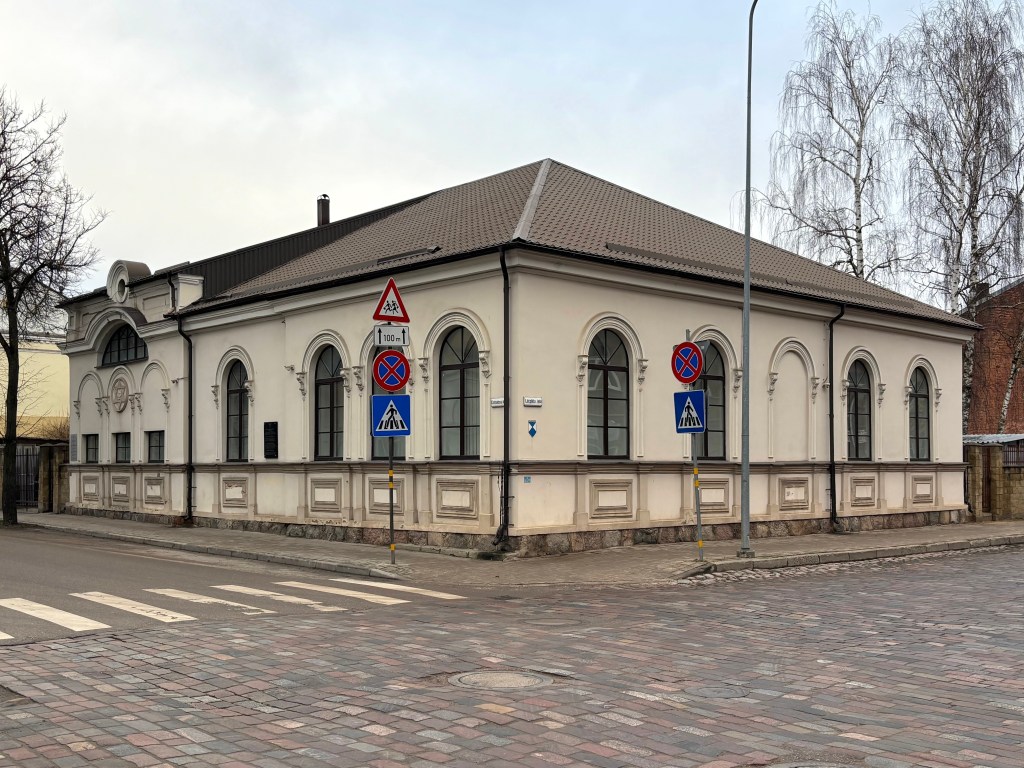
But there was one boundary that my understanding could never seem to cross. Whether it was cultural, existential, language-related, or a combination of factors, I’ll never know for certain. That is, how people really feel about the loss of their Jewish residents during the first half of the twentieth century. Jews, during that era, once comprised almost 60% of the local population. In fact, the city of Daugavpils boasted 55-synagogues of various sizes. There must have been at least one on every block. The main Street, Riga Street, was mostly comprised of Jewish-owned shops on both sides of its quarter-mile commercial stretch. But, that’s all a distant memory today and Jewish places of worship are now down to one solitary synagogue–sitting handsomely and proudly, as it does, on a quiet corner in the middle of the city.
The last remaining synagogue in Daugavpils
That somewhat tragic historical chasm aside, Daugavpils is a comfortable, almost seductive, place to live. The general kindness and support of the people there were not lost on me. Like the quiet trams that criss-cross the city, my comings and goings invariably went smoothly and without incident. Some of this social “seamlessness” was, no doubt, a reflection of my own approach and experience. Having previously spent extensive time living and teaching in South Korea and Hungary, and traveling through nearly 80-countries (but who’s counting?) has helped me avoid behaving like the “Ugly American.”
Final Reflections
The lion’s share of what made my time in Daugavpils so pleasurable and rewarding was, no doubt, due to the Latvians themselves–their kindness, consideration and pride–the latter being particularly unmistakable. Latvia is, in fact, a beautiful place, a country of hundreds of lakes and endless forests, of rich traditions and countless hopes, many of which. for Latvians, remain frustratingly unfulfilled.
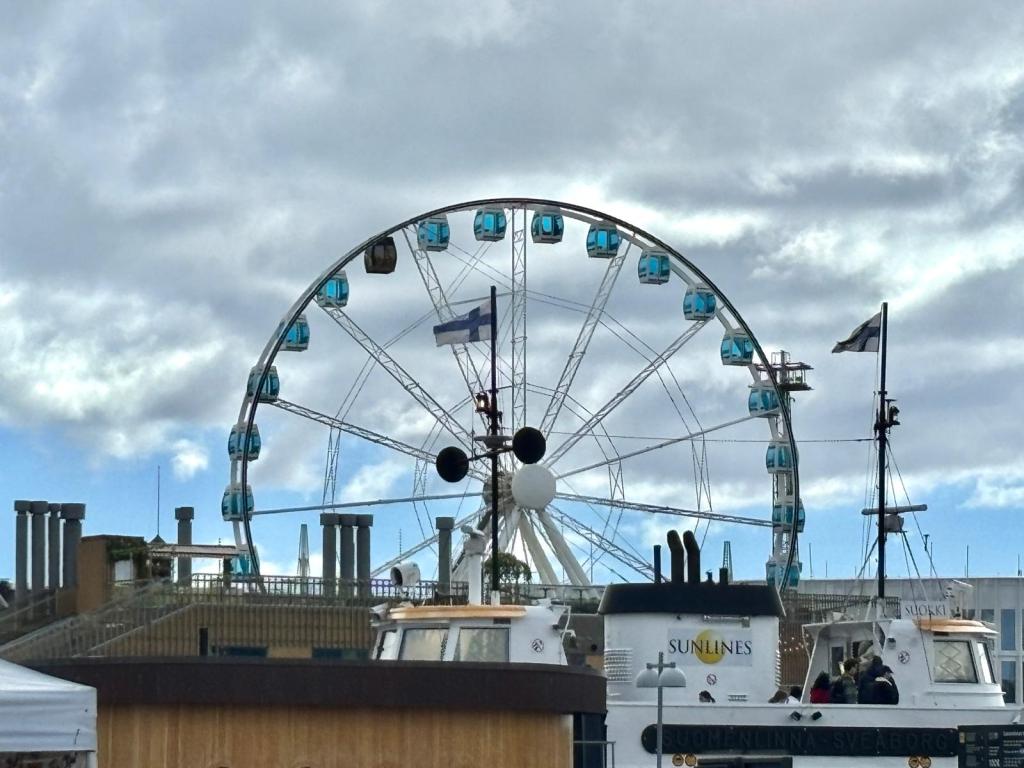
Helsinki’s Ferris Wheel at the harbor. The dark gondola seen here at 11 o’clock is a functioning sauna and is available for rent
Everyone is writing about Finland these days. There was the piece in The New York Times, The Happiest Country in the World Isn’t What You Think, by Byron Johnson and friends, challenging Finland’s place atop the happiness throne. Basically, these guys at Harvard think they’ve developed a better way to measure “happiness.” I also saw the article, Finland Says It Can Teach Tourists to Be Happy. Challenge Accepted, by Brits Lotking, who recently went to Finland to see “if she could bring happiness back to America with her.” You know, I sense a bit of sardonic skepticism, and a good ol’ dose of American arrogance in this taking measure of Finland’s 8-year run at being selected as the happiest country in the world. The U.N.’s World Happiness Report is released about this time every year and once again, it lists Finland as #1.
I’ve been using that report as a vehicle for teaching English for many years now. It’s a handy way to introduce a global study where you can compare and contrast countries. You can ask students to do some self-assessing: “On a 1-10 scale, how happy are you?” It also allows some running room for students to voice their own skepticism about the concept and how it gets measured in the report. I see skepticism as a good thing, a key component of critical thinking.
So, I had a modicum of skin in the game during our recent trip, our second, to Finland. I was going, of course, to see the sights of Helsinki, but my secondary mission was to ask around and see if this happiness thing had some truth to it–at least in the eyes of the locals. I did what I usually do, strike up conversations with nearly everyone, then see if there is a natural opening, and ask what they think about Finland being a happier place. I even pulled my walking tour guide aside and asked if he would talk about it offline for a minute or two. He smiled knowingly, and asked if I’d be willing to wait 45-minutes or so and he would get to it.
Sure enough, some time later, he stopped at a convenient spot along a sidewalk in a park a block or two from the harbor. He looked over the group and said, “Let’s talk about this happiness thing,” as if it was a huge elephant in the room that everyone was itching to address. “Whether you call it happiness, satisfaction, or just being pleased, it’s real,” he assured us. Now he had my attention. I had arrived at the top of the sacred mountain, and the old wise priest was talking it up.
Our Finnish Walking Tour guide walking us through the Helsinki Public Library. Finns being “happy” is a real thing, he said.
He started as if riffing, not in an arrogant way, but leaning plantiffly, as if making a case…
-Well, all our schools are public. There are no private schools. Our kids go to school 20-hours a week. Start their day at the reasonable time of 9AM, and we disdain competitive testing.
-When parents give birth to a new child, they get 3-years parental leave. First though, the government delivers a box to your home which contains about 50-items that parents of new borns can use to make their lives easier.
-If you lose your job, the government pulls out all the stops to help you regain employment. There are retraining programs, job assistance and of course, financial support, until you find your next job.
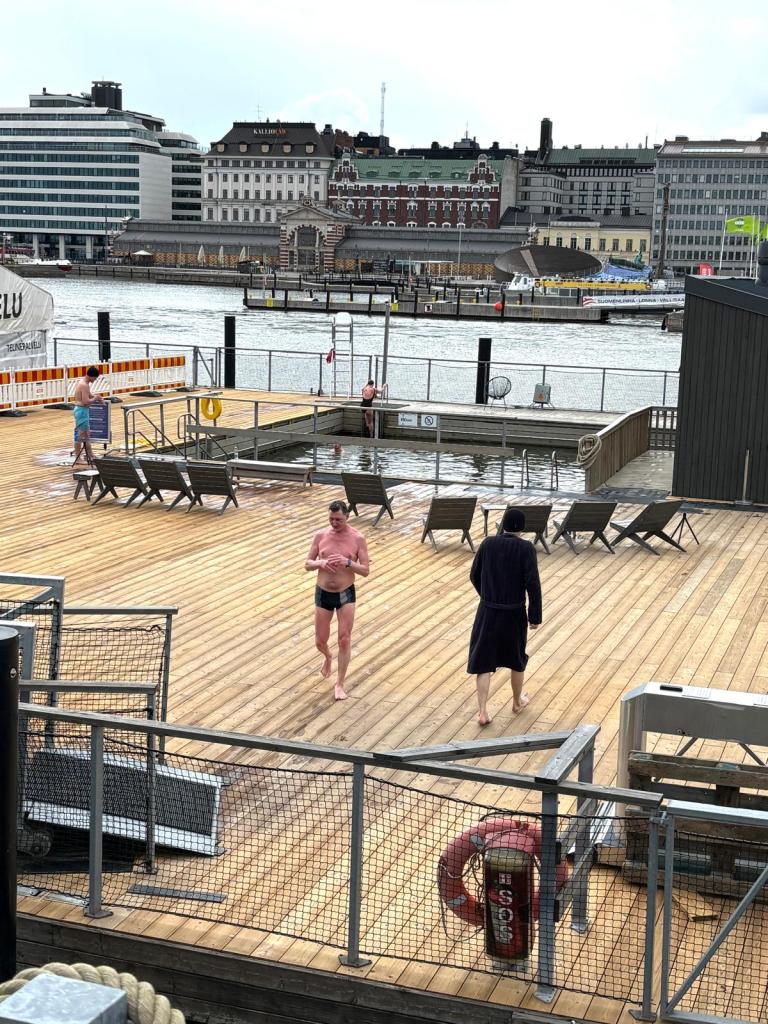
From the sauna (right), directly into the outdoor cold-water pool. The sauna is a long-standing cultural tradition in Finland. Some say it’s a significant factor in the country’s high happiness ratings.
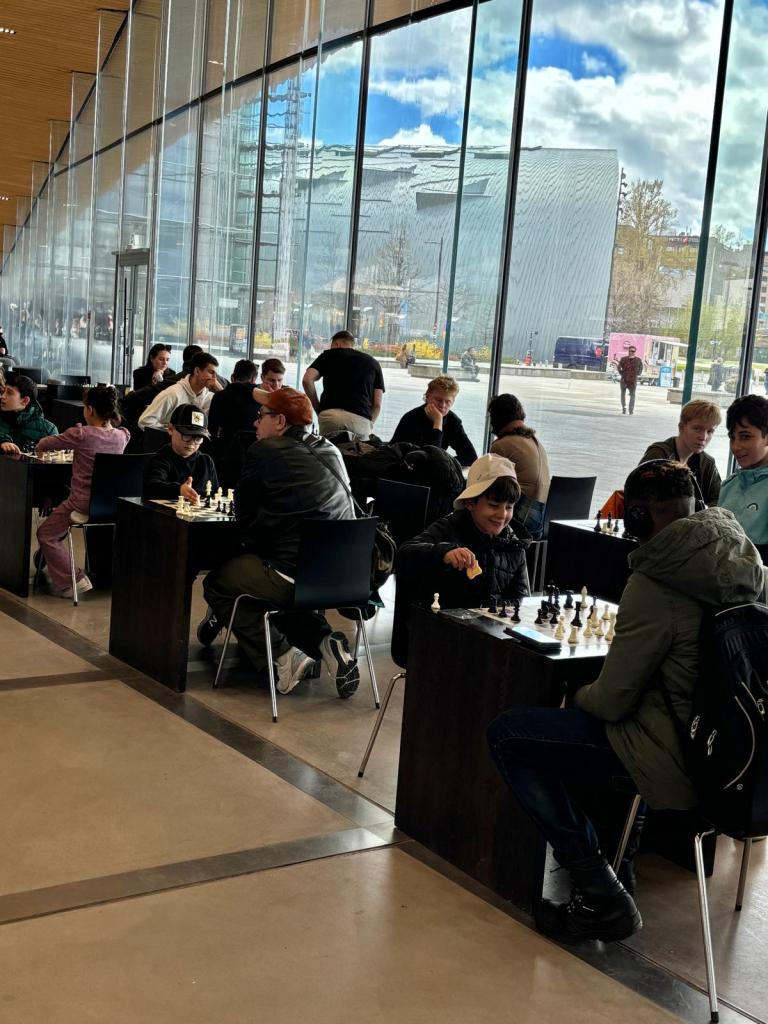
-He talked about schools, museums, and other institutions that support citizens, like libraries, and on that note, we immediately walked over to the new Helsinki Public Library that sits on a huge square across from the Parliament Building on one side and kiasma, the Finnish National Gallery, on the other. Frankly, I have never seen such a community-oriented facility in my life. I was standing in the glassed enclosed lobby looking around and wondered where I was. There were tables earmarked for chess playing right at the entrance and a sense of momentum and purpose moving around me. Each floor, in turn, boasted different services and activities for Helsinki citizens of any age. There were music rooms, cooking rooms, meetings rooms available free of charge. There were training facilities and printing facilities, places to watch films. There were several coffee shops and areas just to hang out, and yes, even books for loan. But you could also check-out tools and even artwork to hang in your home for a time. One can spend days there. But that’s the point, Finnish winters are long and dark.
Playing chess in the lobby of the Helsinki Public Library
Another reason to think Finns might be happier than the average country, has to do with their long standing cultural relationship to the sauna. It’s not “sawna,” like we would say back in Maine, it’s pronounced “sow-na,” carrying just a touch of elan as the word leaves the lips of a Finn. Saunas are that sacred ritual where people sit in wooden paneled dry heat rooms sweating their brains out. In Finland, that activity is almost always followed by some level of cold water dowsing whether in a tub, a lake, the harbor, or even via a cold shower. It’s the intense heat, then incredible cold, that makes it special, if not the existential ritual that some claim. But our tour guide insisted that the national pastime was perhaps the most important factor contributing to the Finish being the happiest people.
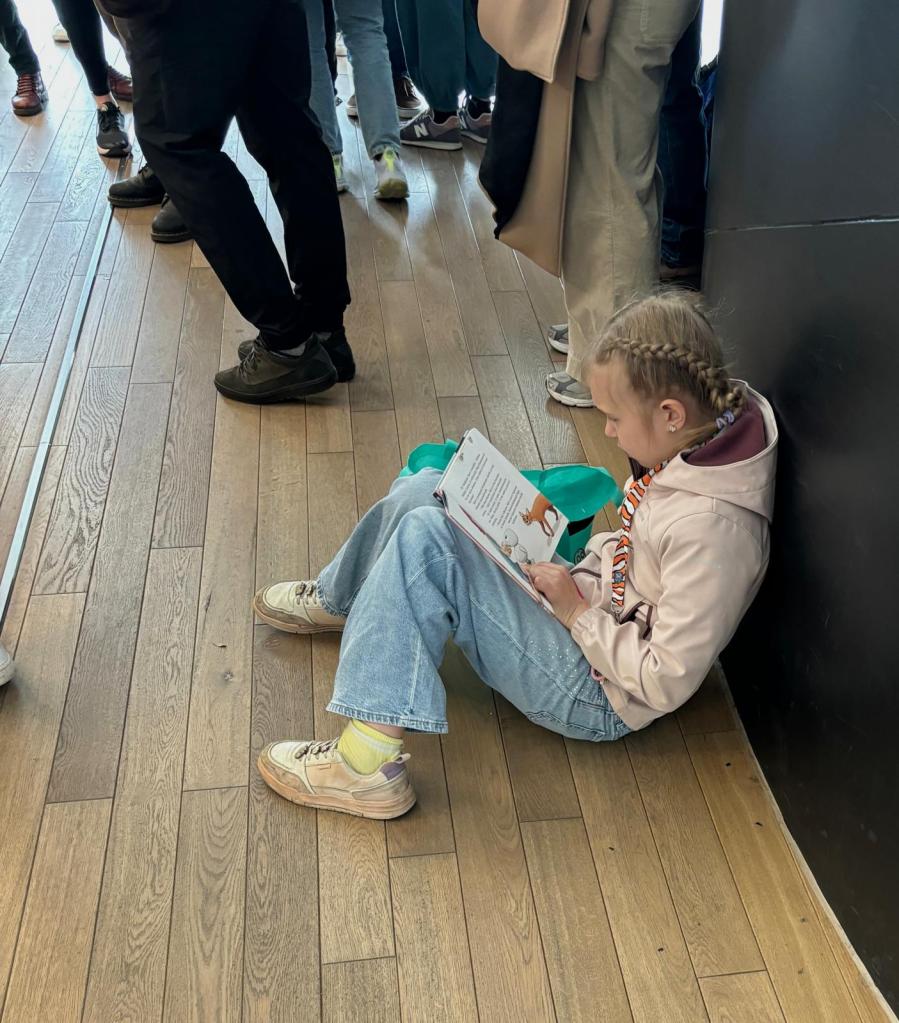
In spite of countless distractions, this young Finnish girl remained deeply immersed in her book
So, I left Finland satisfied, and frankly convinced. They are certainly not the most gregarious people I’ve met. Finns check-in on the quiet, slightly distant, side. But they say, once in that sauna, they have license to break out of their shells, and apparently they do. They won’t brag about it, and only discuss it seriously, if pushed a bit. But I for one, believe it to be true. The Finns are one happy lot. I saw why with my own eyes.
One of the things I have always loved about our home state of Maine is that it still is a place where a handshake binds a deal. When we closed on our home in 1985, no lawyers were present-just the four of us, the owners, Mr. and Mrs. Craigin, Marsha and me, and a bank employee. We shook hands in agreement, and the deal was as good as gold.
During a recent meeting with my “person of contact,” that is, my wonderful Latvian supervisor here at the university where I am teaching, I mentioned that nearly all the Latvians I’ve encountered during my first 5-months here, students, colleagues, nearly everyone, seem especially “earnest” to me. Ilze smiled as she heard my comment, and said proudly, in fact, that characteristic is a fundamental cultural feature here in Latvia and it’s called “Virs un Vards,” literally “a man and his word.” When a Latvian says they will do something, count on it. She said it was one of the most meaningful and descriptive expressions in Latvian culture.
Later, Ilze sent me this photo, the cover and name of an old children’s book here in Latvia, “Virs un Vards,” “A Man and His Word.”
“The food here is terrible, and the portions are so small.” Woody Allen
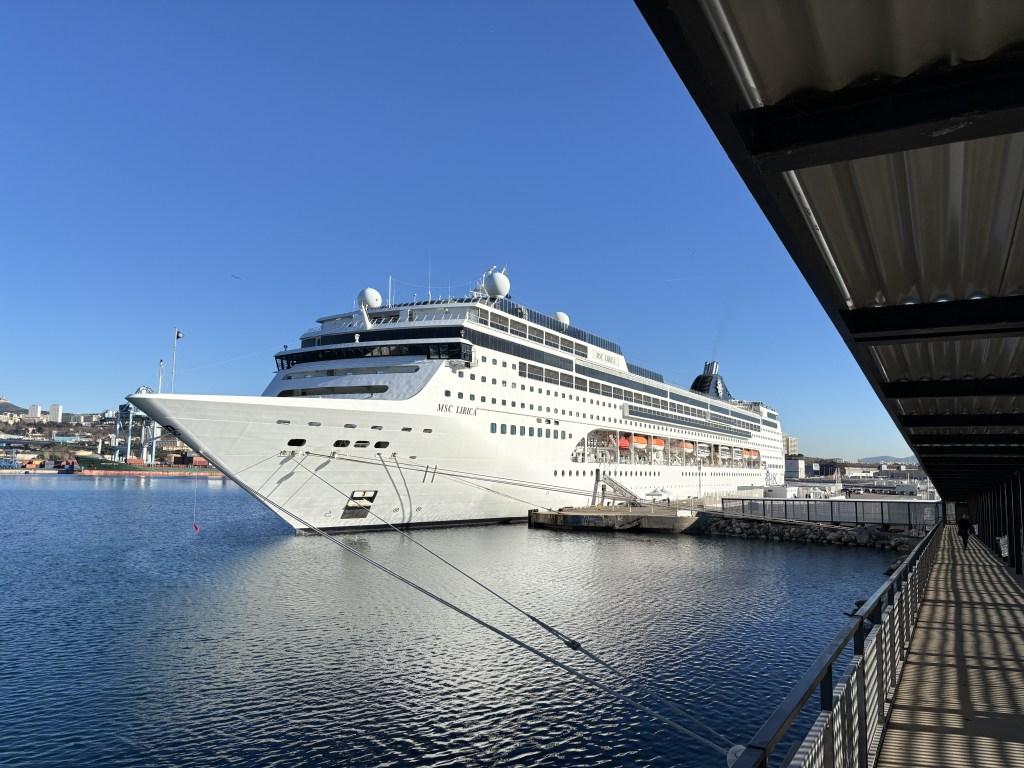
The MSC Line’s Cruise Ship Lirica
I know cruises personally. Not from a lengthy resume of cruise ship voyages, but because I live on an island, in a city, that “welcomes” dozens of them for parts of the year. The use of “welcomes” here is certainly a euphemism. Cruise ships, for most residents, are an annoyance. For starters, they bring crowds to the streets, long queues in shops, and increase congestion in all directions. In addition, there’s that conspicuous smoke that constantly emanates from the ships’ stacks and the ongoing controversy about the dumping of both gray and black water into nearby bays.
I lead bike tours during the summer months and many of my customers are cruise ship passengers who wisely choose to do something physical while in port. They seize the chance to visit local lighthouses that have historically protected the harbor. And let’s be honest, people embarking from cruise ships spend money at local shops, buying souvenirs and trinkets from resident artists and entrepreneurs, and services like bike tours.
So it was with complete ambivalence that I recently boarded a cruise ship in the Mediterranean as December ended and January welcomed in the New Year. Candidly, our stops were fascinating: the island of Majorca, then Valencia, Spain, the port of Cagliari in Sardinia, and finally several Ligurian Sea ports not far from Rome and Florence. Our journey both commenced and ended in the gritty, yet alluring seaport of Marseille, France.
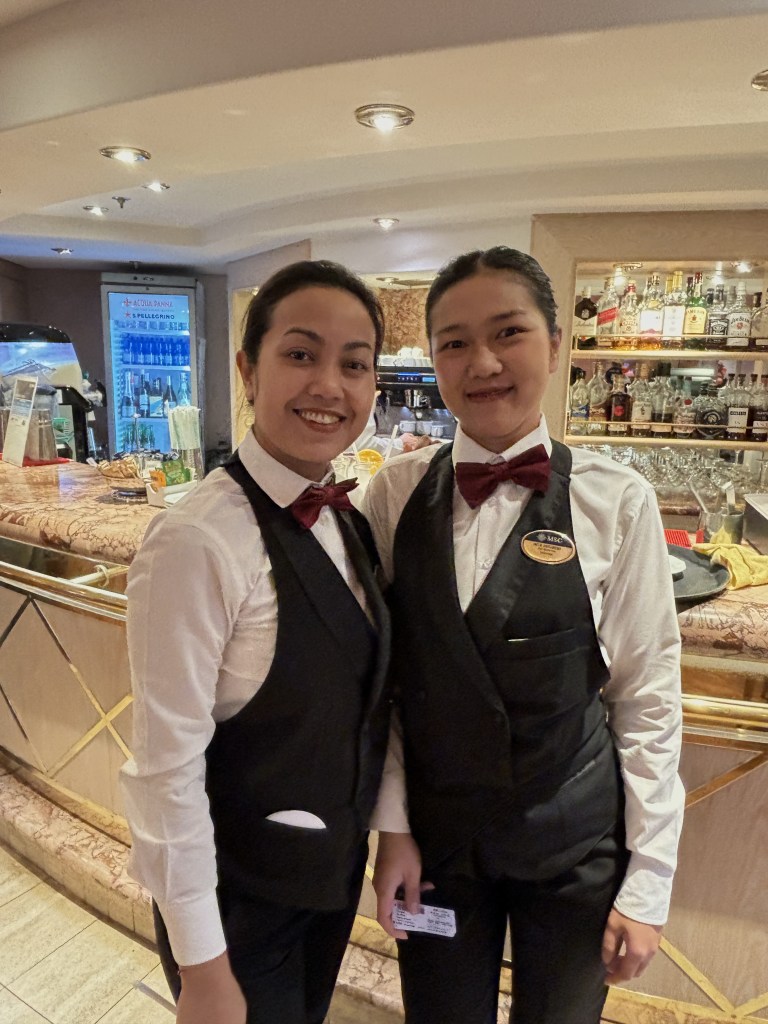
On one hand, the food aboard the Swiss-Italian owned MSC Line can best be described as “camp food” –recalling my days as a kid at summer camp. I found myself hoping for a delicious meal and yet, was constantly disappointed. Paraphrasing Woody Allen’s comedic line, “and such small portions.” On the other hand, the on-board customer-service was excellent and we took great pleasure interfacing with the international crew.
Two members of the on-board staff, sisters Agnes and Mita from Indonesia
I understand that Cunard’s Queen Mary has figured out how to delight its passengers when it comes to its culinary offerings. Royal Caribbean is also known to do a good job in this area. But when the conversation turns to what cruise ships do to local communities like Venice, Italy and Bar Harbor, Maine, naming just two, those residents care not at all about on-board food quality. They do care about the environmental degradation cruise ships create in their harbors, their skies, and on their streets. That should increasingly be everyone’s concern, including mine.
“I feel that it is healthier to look out at the world through a window than through a mirror. Otherwise, all you see is yourself and whatever is behind you.” Bill Withers
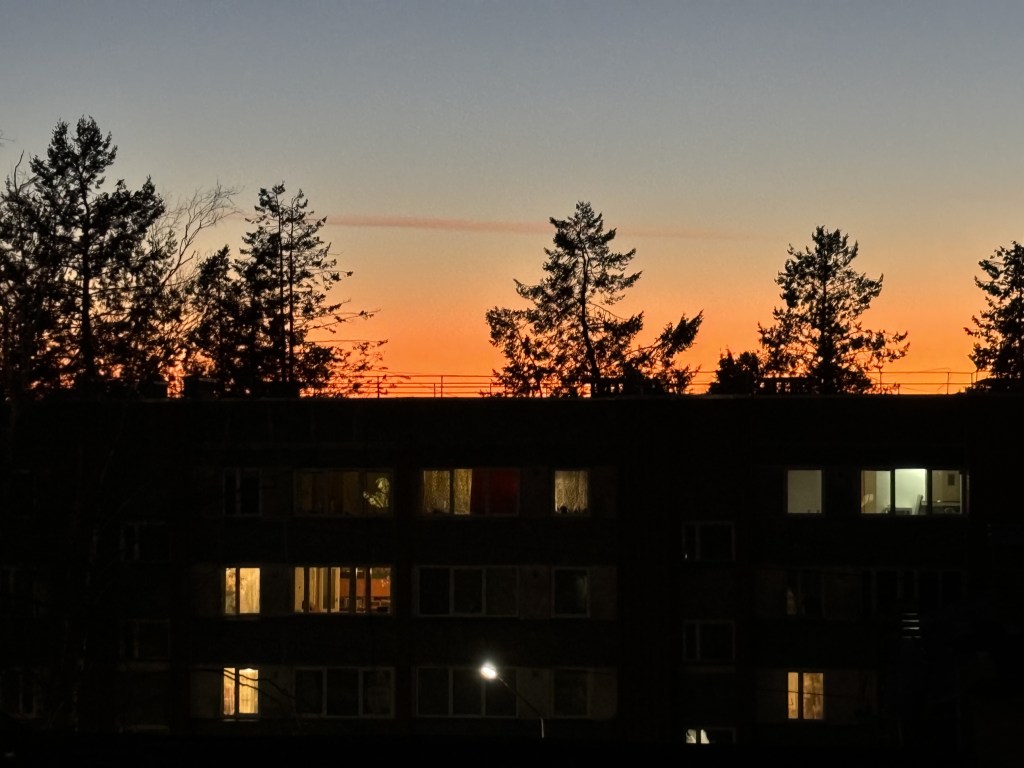
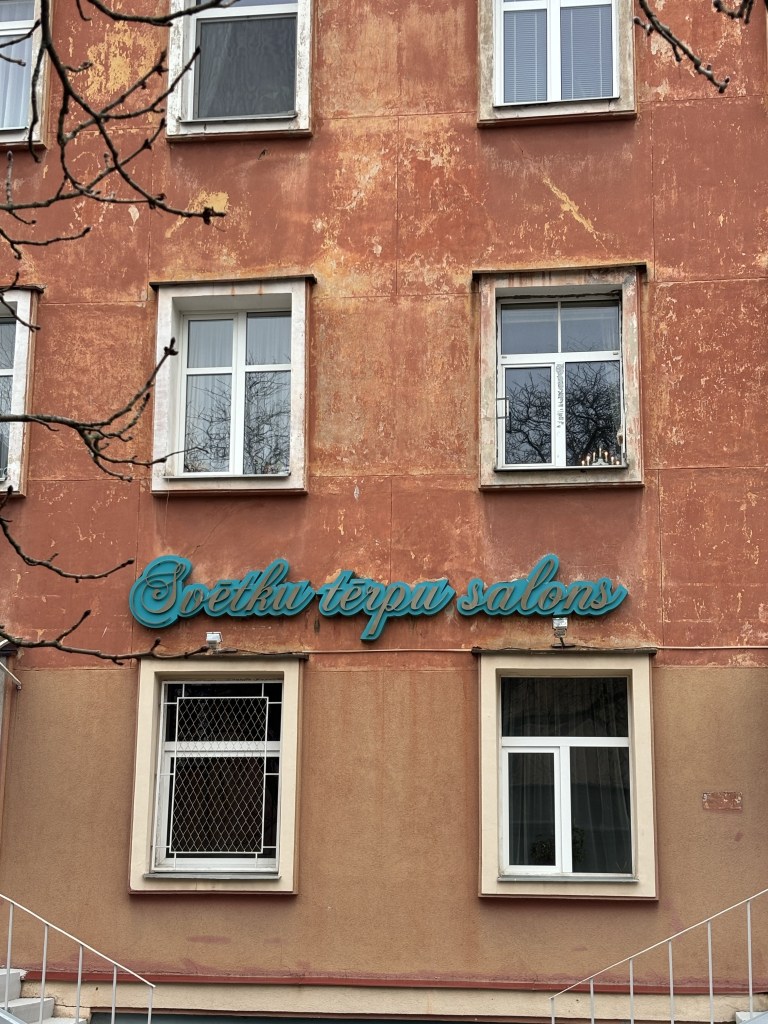
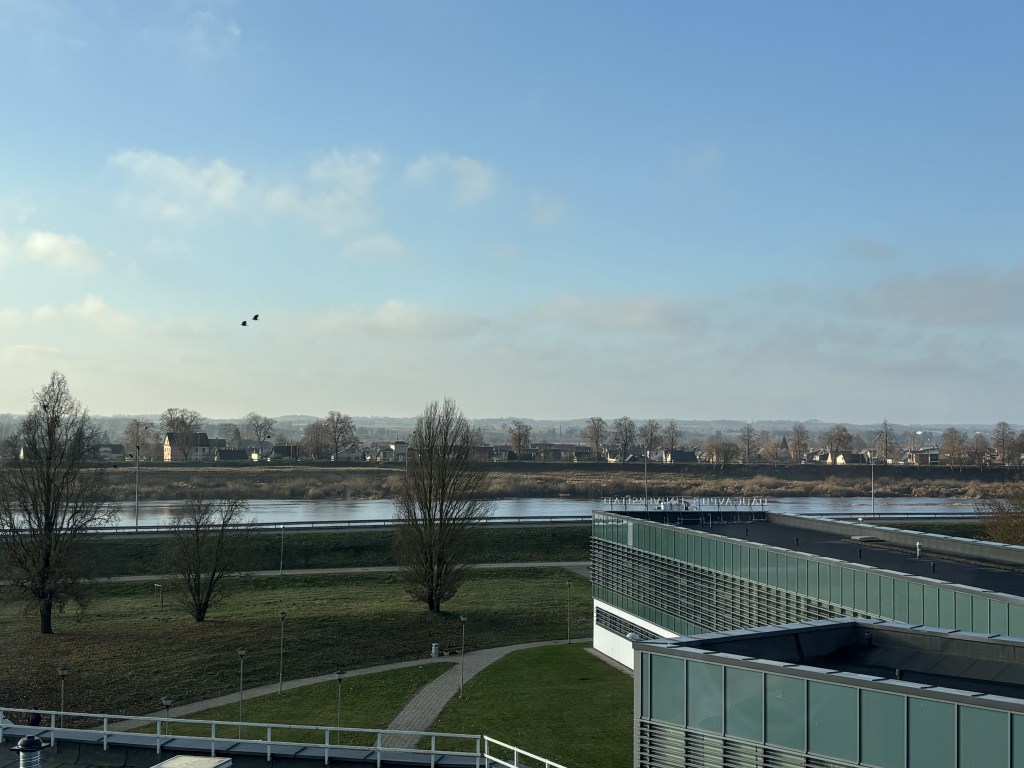
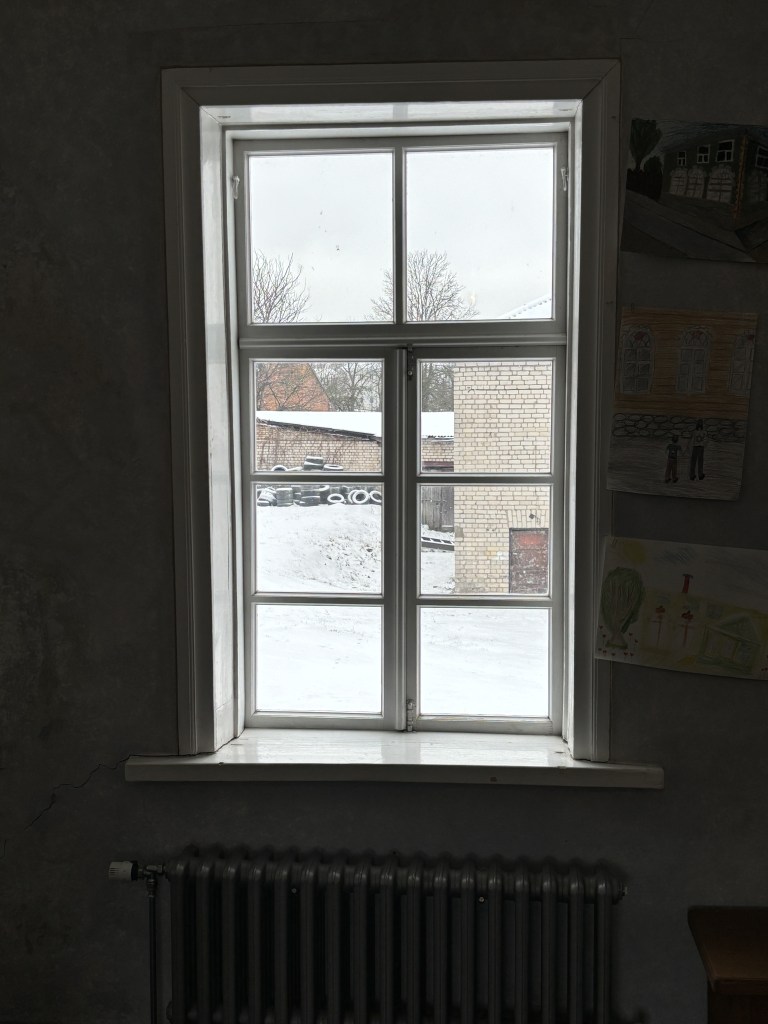
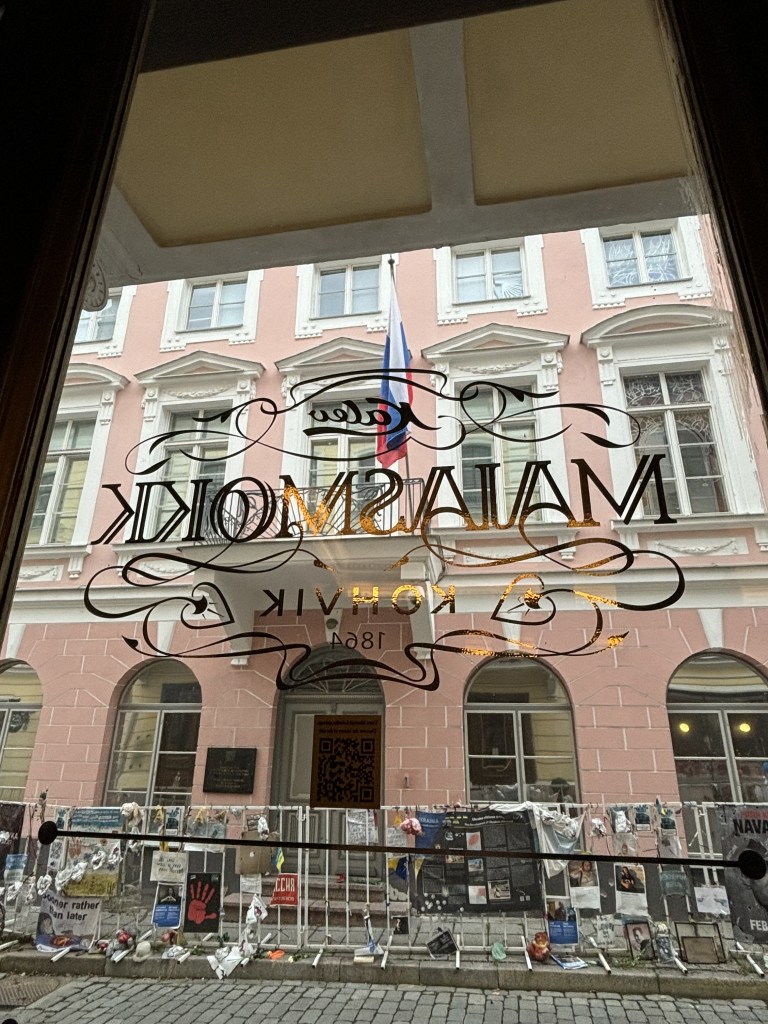
The windows of local residential flats as seen from a hallway near one of my classrooms (Daugavpils, Latvia)Side windows of a Stalin-era building along. November Street, one of our major thoroughfares here in Daugavpils, LatviaLooking north and west toward the Daugava River from my office in “The New Building,” at Daugavpils University. I hold lunchtime conversation classes here. (Daugavpils, Latvia)Looking out from a synagogue window. At the Green Synagogue (1845), one of the oldest wooden structures in the city of Rezekne, population 27,000. (Latvia)From the window of Tallinn’s oldest coffee shop, Cafe Maiasmokk (circa 1864). That’s the Russian Embassy across the street–note the protest paraphernalia. (Tallinn, Estonia)
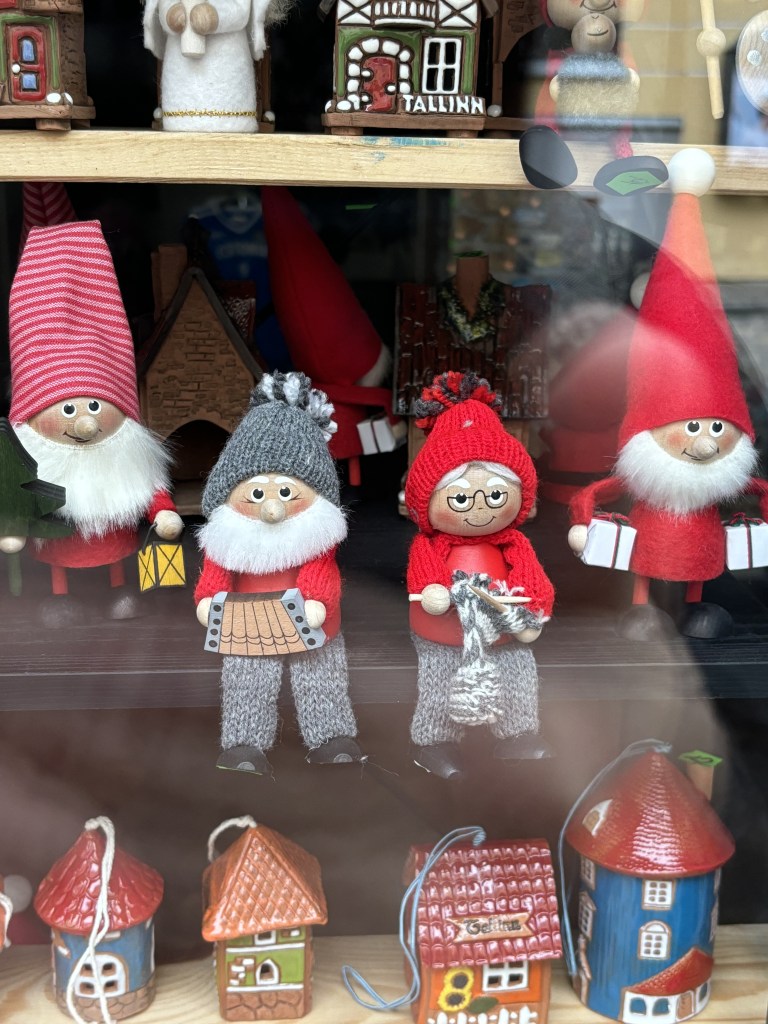
Christmas window of shop in the Old Town. (Tallinn, Estonia)
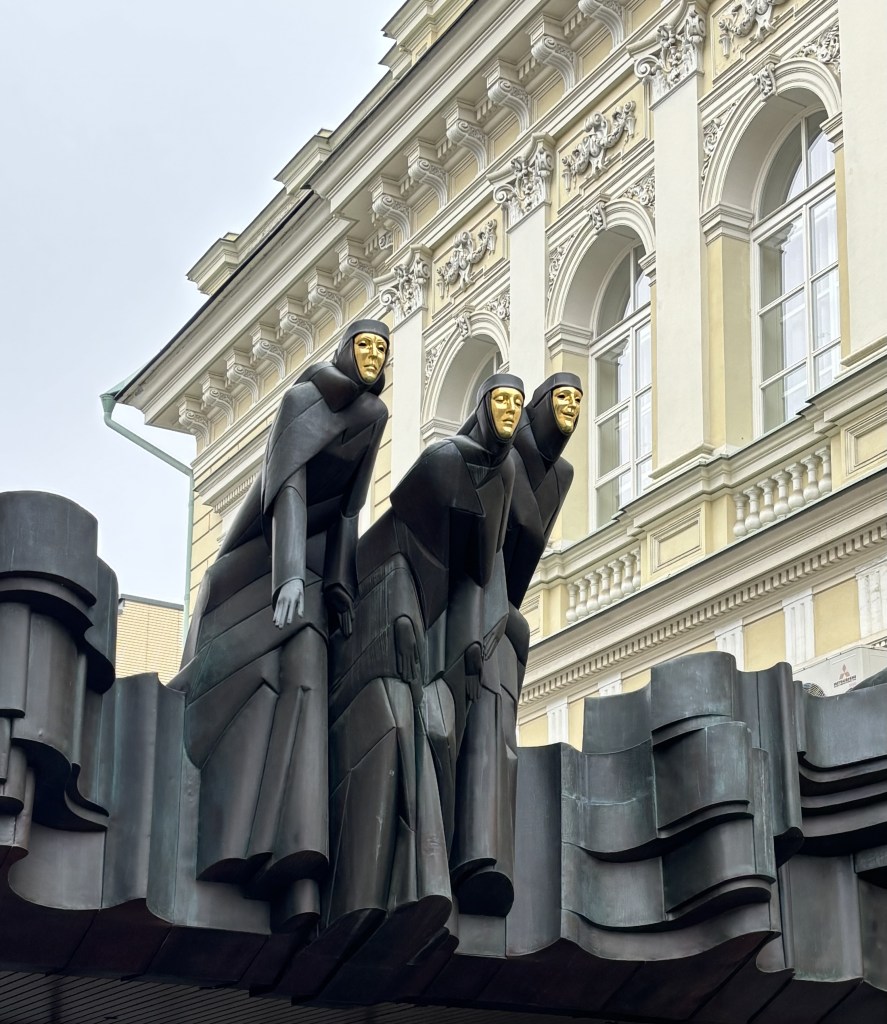
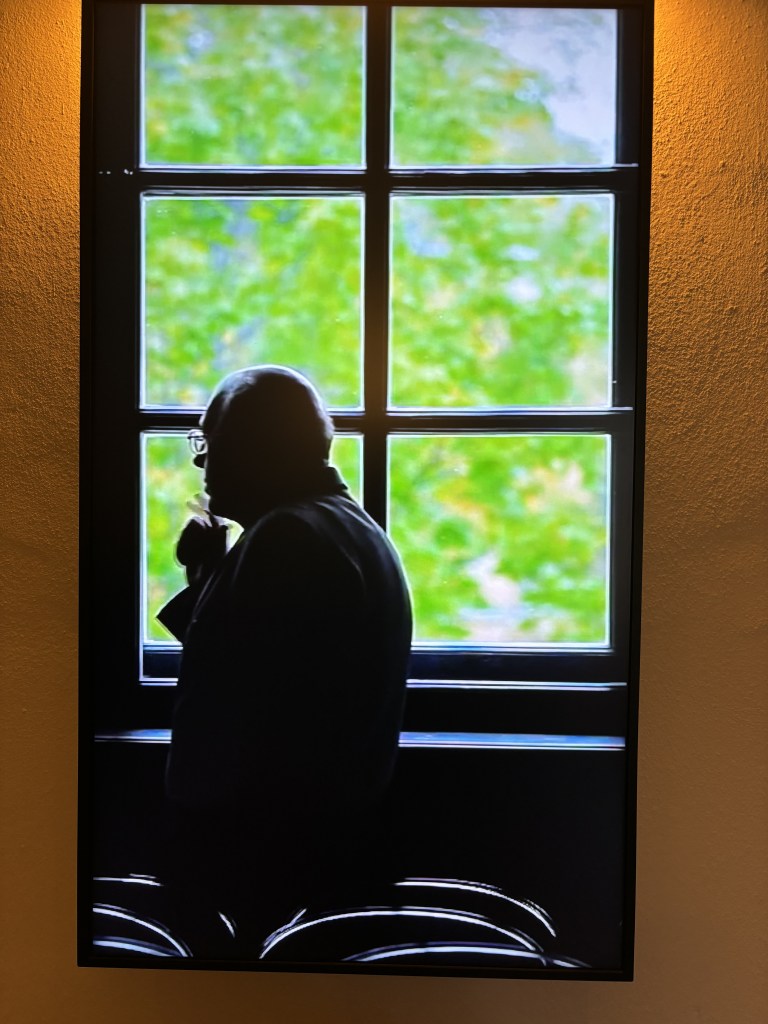
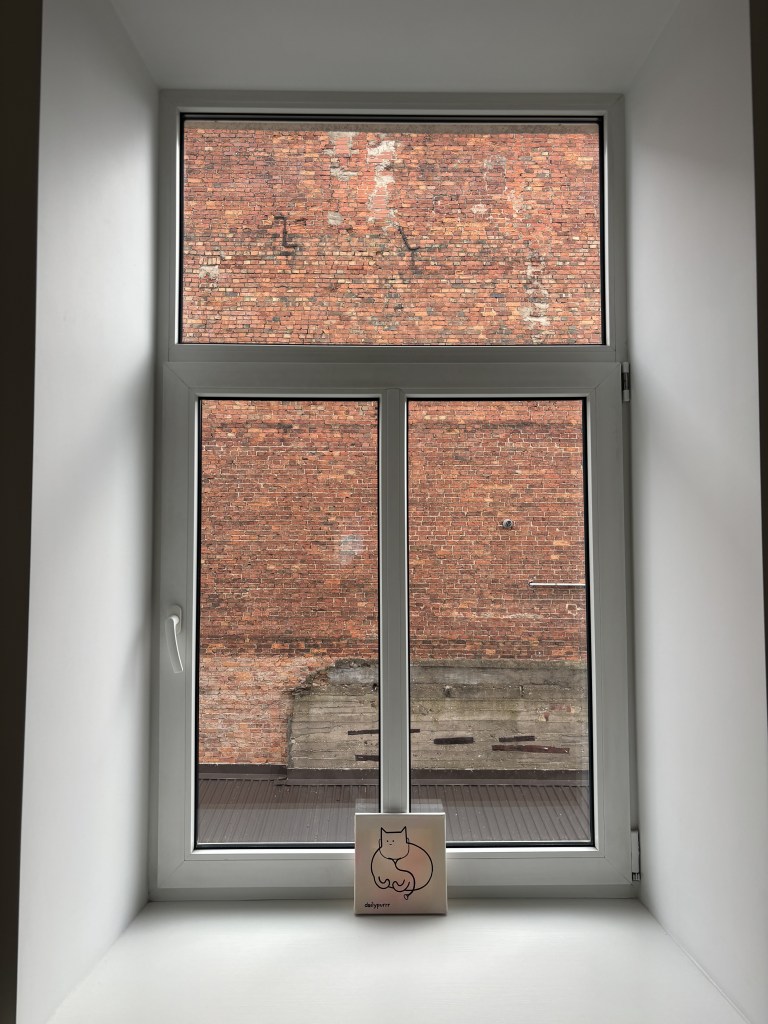
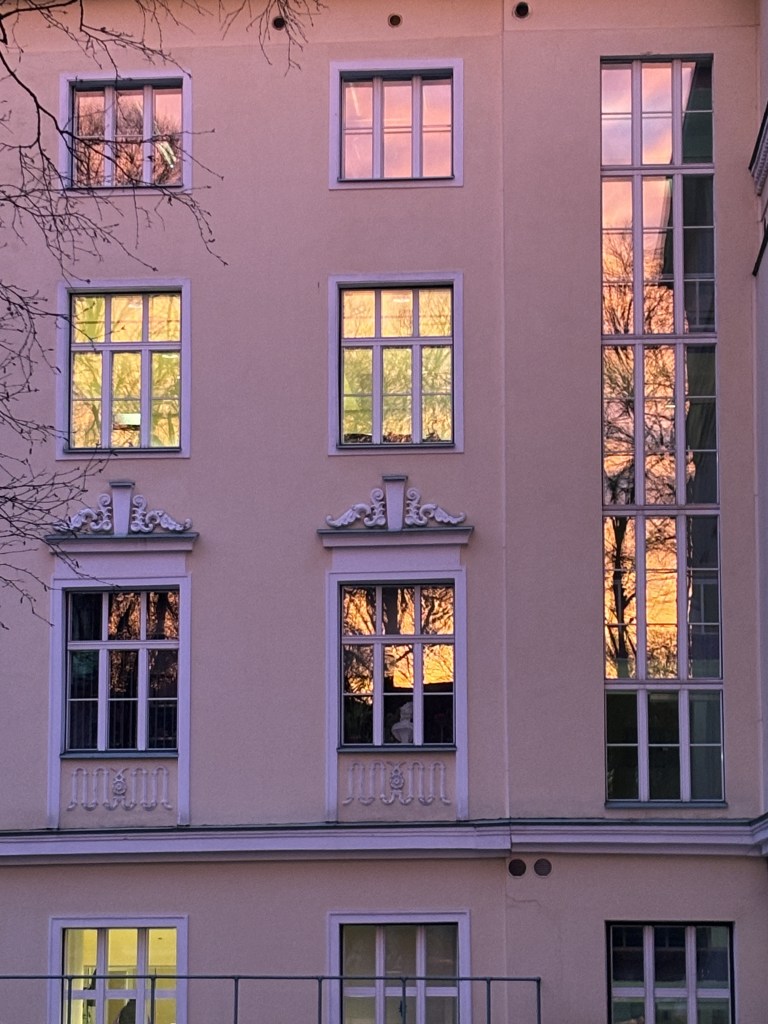
Windows overlooking nuns. Location of the Vilnius Theater. (Vilnius, Lithuania)Artist Mark Rothko, born in Daugavpils, Latvia, stands near a window, shortly before his death. There is a marvelous art museum in his name here in Daugavpils.View from the window of a recently renovated flat in Daugavpils, LatviaWindows reflecting a brilliant Tallinn sunset. (Tallinn, Estonia)
“Humility is the light of understanding.” John Bunyan
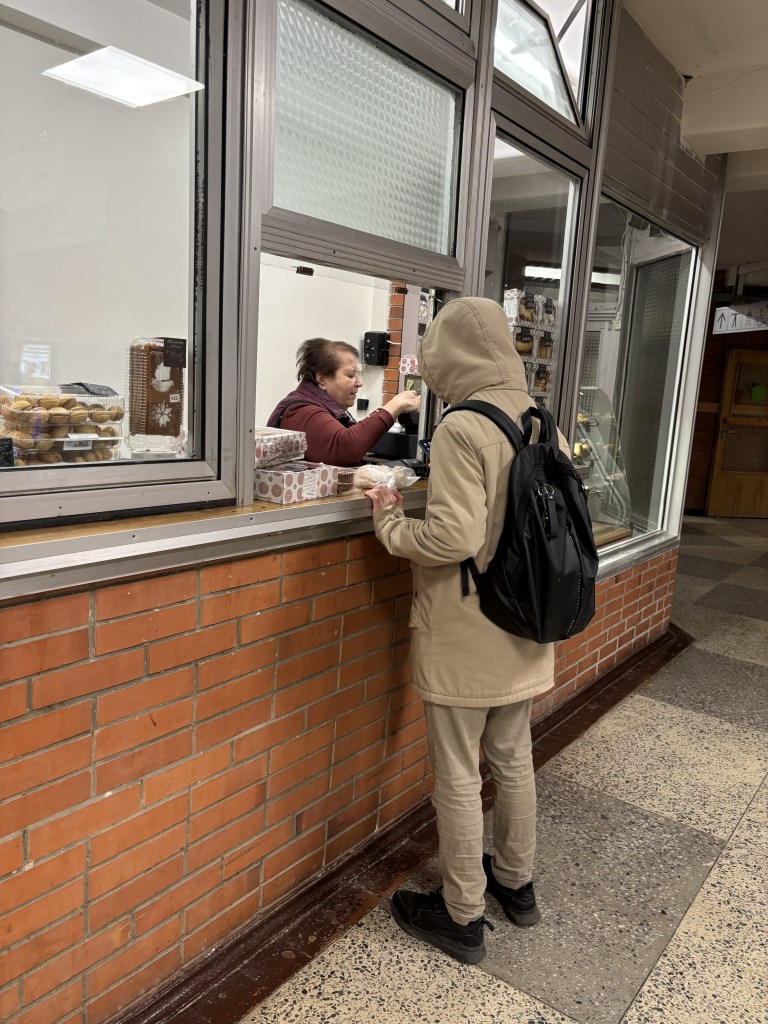
It’s a quiet dance. She listens to my request, dutifully leaves the window to make my coffee and to heat my Latvian snack in the microwave. I hear the timer ring in the distance and she returns to calculate my bill. I seek to embellish our brief time together as passengers on this twice-weekly routine, by asking how her day is going.
Brick by brick, exchange by exchange, I am building a social cottage here. A few people, like Lydia, help piece it all together. Her slight smile, her friendly voice, are the mortar that help hold it all together. I know I could easily leave it like that: comfortably anonymous and perfunctorily routine. But then, I’ll miss learning something more, about Latvia, about this place, about Lydia.
So I ask if I can speak to her sometime in the days ahead-an interview of sorts, I say. She agrees, and I wonder if she understands my request.
Lydia was born 62 years ago in the tiny hamlet of Faltopi about 30 kilometers southeast of Daugavpils. It is near the Latvian-Belarus border. She was an only child, she tells me, as was her husband of 42-years and their daughter, Inesa.
Inesa, though, changed all that, having 5-children. She moved to the UK, leaving the country, as a number of younger Latvians do, seeking opportunities and higher paying jobs elsewhere. When I learn that Inesa’s eldest daughter, Ustina, is in dental school, I say with some certainty, “Oh, you must be very proud.” A huge smile envelops Lydia’s face.
Lydia serving a student at the campus canteen where she works weekdays from 8:30 – 4:00.
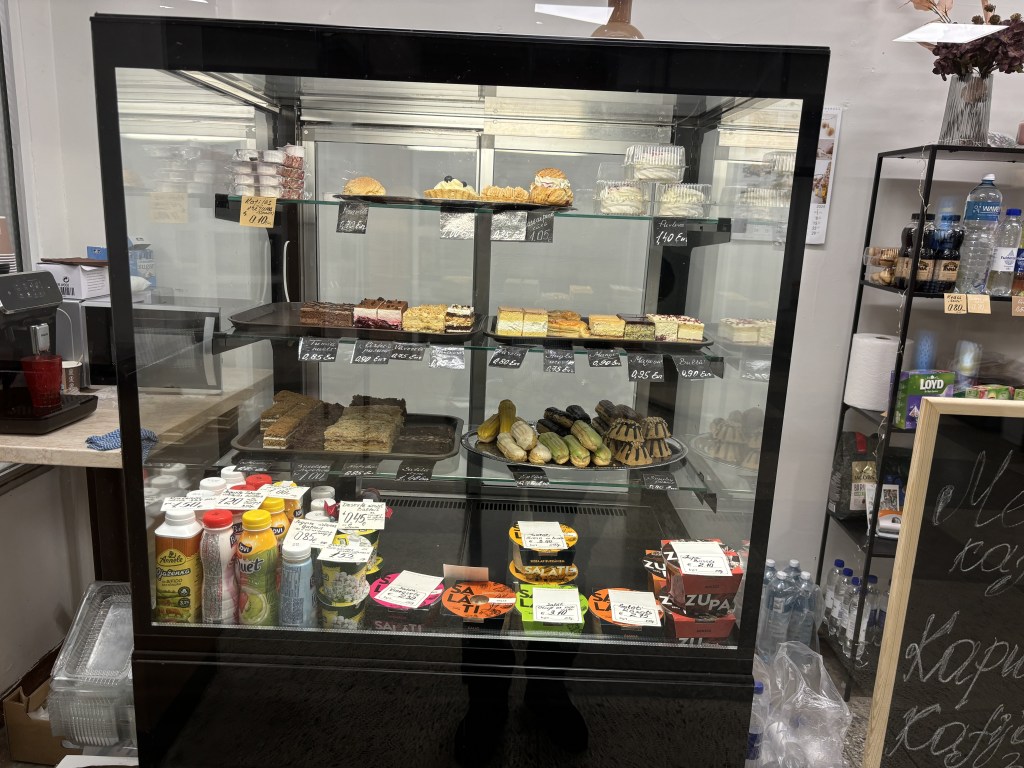
With her grandchildren living in England, Lydia likes to practice using her English-luckily for me. Latvians are highly literate (99%+) and well-educated. Lydia graduated from Riga Polytechnic University, majoring in building and architecture. It’s her interest, she says, in meeting and speaking with others, that brings her to this canteen window, a portal for brief exchanges of food, beverage and conversation.
This semester I visit Lydia’s building on Mondays and Wednesdays where I lead lunchtime English conversation classes. Knowing she’s here, that I can say hello, ask how she’s doing, adds something intangibly meaningful to my day. And Lydia, was my mom’s name.
Lydia and I share a history now, a place in time and space. She is not part of the official curriculum I offer my English students, and won’t be mentioned in a written report to the US. Embassy, or to program contacts in Washington, D.C. But meeting Lydia is exactly why I am here, teaching in Latvia.











 Short Talks Through a Wide World