Sinagoga

Does every question have an answer? “What is the boiling point of water?” Of course, the accepted answer is 212F/100C.
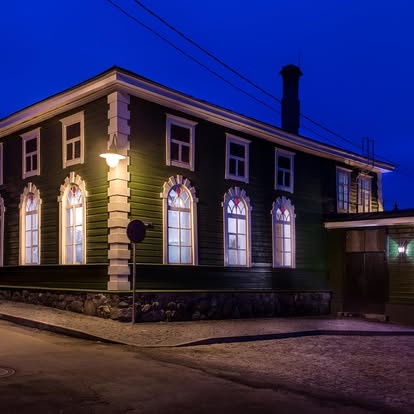
The Green Synagogue in Rezekne, Latvia

Why am I drawn almost magnetically to old synagogues in nearly every city I visit?

Since our recent journey to the Green Synagogue in remote Rezekne, Latvia, I have been pondering this question.

Well, as a Jew, feeling a need to visit synagogues would be a reasonable explanation. I am familiar with almost all the artifacts and rituals associated with a synagogue. Very little about them is “foreign” to me. Seeing a matzo oven on the ground floor of the Green Synagogue, while a pleasant surprise, is a familiar tradition. And yet, as I walked the Camino de Santiago the well-known pilgrimage across northern Spain, even being Jewish, I was often drawn to churches we passed along the way.
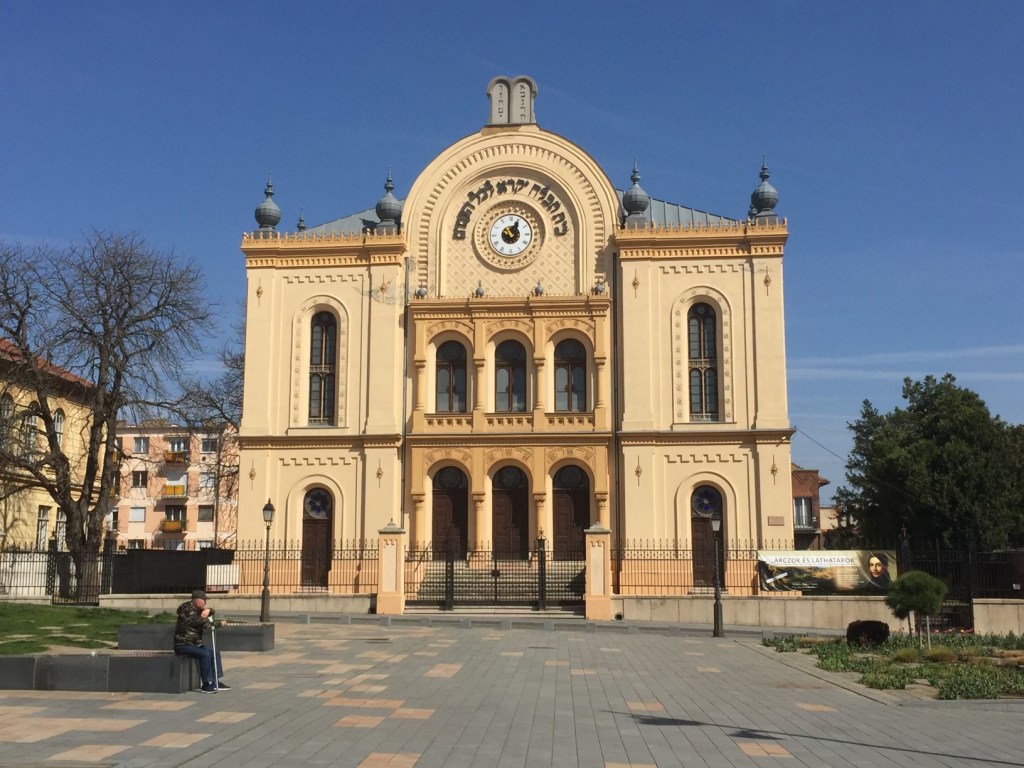
The Synagogue of Pecs, Hungary, consecrated in 1869.

Perhaps being a history buff makes as much sense as any explanation. I majored in history in college and remain fascinated with the connections old buildings, like synagogues, have with the country, cities, and cultures I find them in. The old synagogue in Pecs, Hungary, is part of that country’s dark history of suffocating the Hungarian Jews out of existence in a relatively short time during World War II. But it’s much more complex than solely the historical connections.

No, being a curious traveler is a much more reasonable explanation. Some of these old buildings have become world famous tourist destinations. The Ahrida Synagogue in the Fatih neighborhood in Istanbul, for example, was a stop on our tour in that Turkish city. It was built in 1430 as part of a then thriving Jewish community. My curiosity as a traveler was stopped in its tracks as I stood humbly in front of its ancient gate.
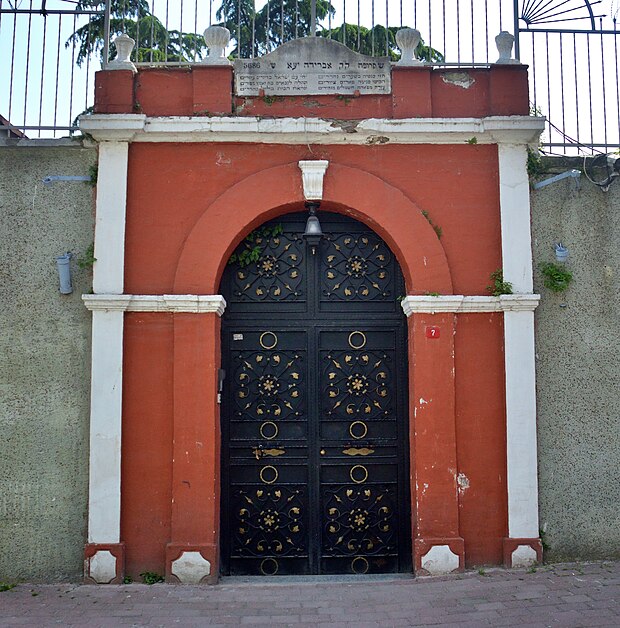
The Ahrida Synagogue (circa 1430) in the Fatih neighborhood of Istanbul.
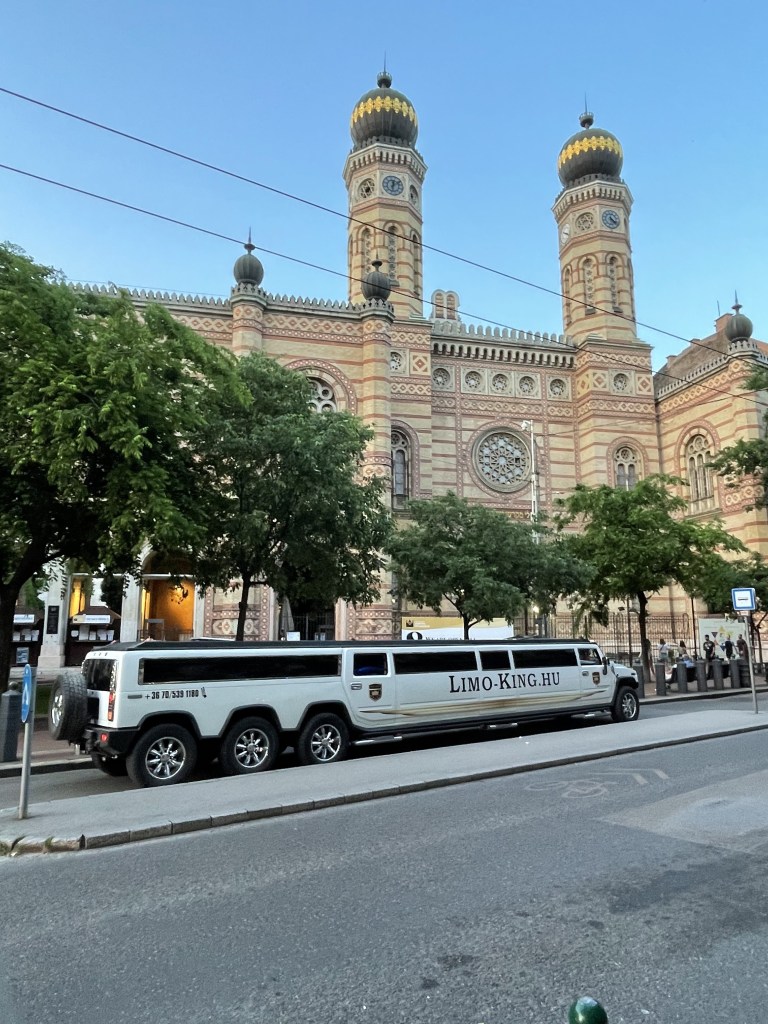
The Dohany Synagogue (1854) in Budapest is, understandably, on nearly every tourist’s itinerary

A traveler to Budapest can’t escape the overwhelming presence of the Dohany Synagogue in that amazing city so richly endowed with countless tourist destinations. It’s the world’s second-largest synagogue with an impressive seating capacity exceeding 3,000 people. Few travelers to Budapest miss stopping there.

I am drawn to synagogues for all these reasons and likely many more. But what I do know, is that I rarely connect to a place more intimately than I do through its synagogue. I feel part of their history–an intimate connection that often leaves me saddened when I depart.

Sad for what these old synagogues represent: once-vibrant communities that bloomed across most of Europe, now evaporated. Jewish people energized Budapest to the tune of 24% of its pre-World War II population. Vilnius, the capital of Lithuania, then nicknamed the “Jerusalem of the East,” once had 106 synagogues. Today, it has one. Cities and towns here in eastern Latvia had populations that were 50-60% Jewish. In the Rezekne of 1935, home of the Green Synagogue pictured above, 75% of all commercial businesses were owned by Jews.

So, why am I drawn to synagogues? Questions rarely have one simple answer. What is the boiling point of water? As we know, the boiling point of water is 100˚C and 212˚F, but alas, that’s only at sea level. Even for that one, there’s more than one answer…at different altitudes or pressures, the number is different. Answers to questions are always much more complicated than that.

Standard

Abandonment

“I am not so different in my history of abandonment from anyone else after all. We have all been split away from the earth, each other, ourselves.”

Susan Griffin

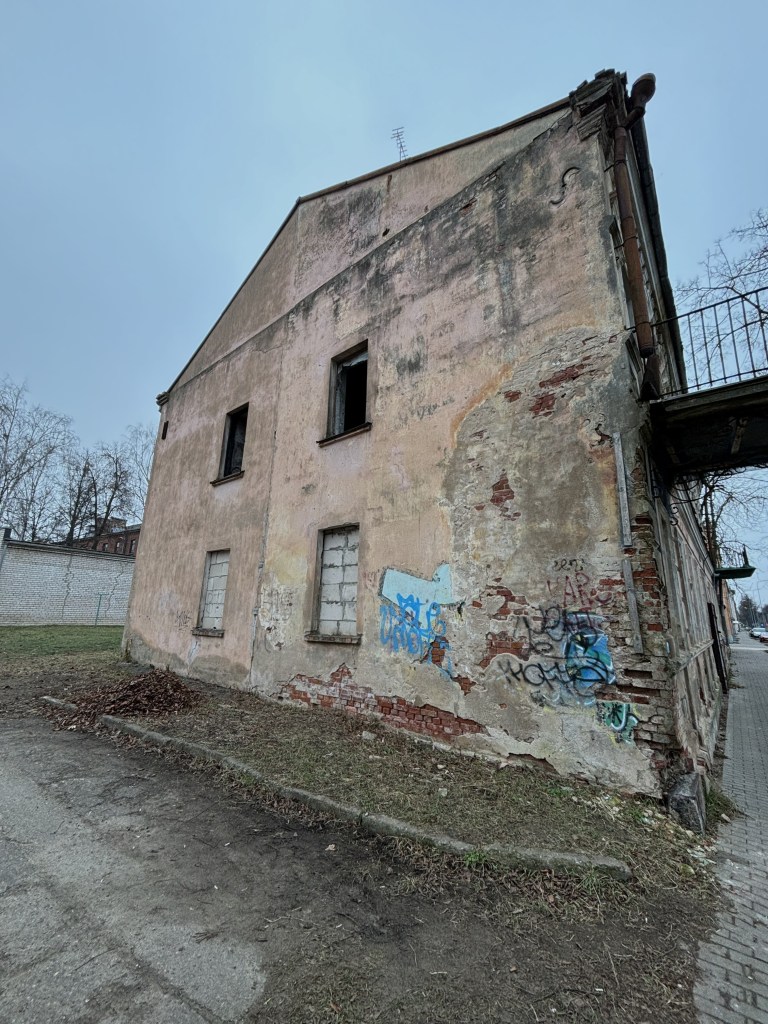
A once proud Polish military hospital stands empty on the grounds of an old fortress here in Daugavpils

Abandonment. It’s an unmistakeable and striking feature here in Daugavpils, Latvia. The city is dotted with a large number of unoccupied or abandoned buildings. In other places I know, Portland, Maine, or Budapest, Hungary, for example, these properties would occupy the dreams of developers. Not so here, with a continuously shrinking population and lower average incomes than in other parts of Latvia.

This building stands on November 18th Street-an address honoring Latvia’s Independence Day

Since the Russians departed in the early 1990’s, the factories have withered, and the belts, tightened. But hopefully, the once more vibrant and prosperous past here, is, as Shakespeare said in his play, The Tempest, prologue.

Even in their emptiness, even in their solitude, there is a kind of steadfast beauty and quiet promise of hope.

Flowers, perhaps a sign of hope, adorn this window ledge in an otherwise abandoned neighborhood

Standard

Something is Very Rotten in the state of Denmark

May be an image of 1 person and street
A quiet moment in Tallinn’s Old Town

What’s rotten of course is not something that’s occurring in Denmark, but rather the stench coming from my home, the United States. It’s the smell emanating from the rogue band of outlaws about to ride roughshod across America’s political, social and moral landscape. It’s justifiably setting off all sorts of alarms, creating new cottage industries, including countless articles on how to survive the coming apocalypse with titles like 10-Transformative Tips to Prepare for a Trump Presidency and Coping Tips for a Second Term.

For me, travel is the best elixir for all that ails about American politics. A stocking cap, my backpack and a wrinkled map is just about all I need. And the map, that’s optional. Somewhere I once read that a good cleanse of the soul could be had by just getting on a random tram and taking it to the end of the line. I’ve done that with good results many a time.

Alternatively, I love hopping a ferry to just about anywhere. My thick-treaded shoes can make a visit to a city park a memorable adventure. Sure, walking the 500-mile Camino de Santiago is guaranteed to help you leave Trump and his acolytes so far in the rear view mirror as to make them as small as their actual moral stature. But just to be clear, you don’t have to leave your seat to do some traveling. A gaze out the window tracing the flight of your local swallow works just fine.

Watching seagulls from aboard the ferry crossing Delaware Bay

Oh, and about Denmark…”‘Farewell, farewell,’ said the swallow, with a heavy heart, as he left the warm countries, to fly back into Denmark. There he had a nest over the window of a house in which dwelt the writer of fairy tales. The swallow sang ‘Tweet, tweet,’ and from his song came the whole story.” You don’t need a boat or plane ticket to get to Denmark. Just get a hold of a book from the author of that quote, Hans Christian Andersen, himself an amazing traveloguer.


Standard