
It sounds almost whimsical, if not straight-up naive. The U.S. State Department told us, in so many words, “As an English Language Fellow, living and teaching overseas, you’ll be engaging in ‘Soft Diplomacy’ on behalf of your country.”
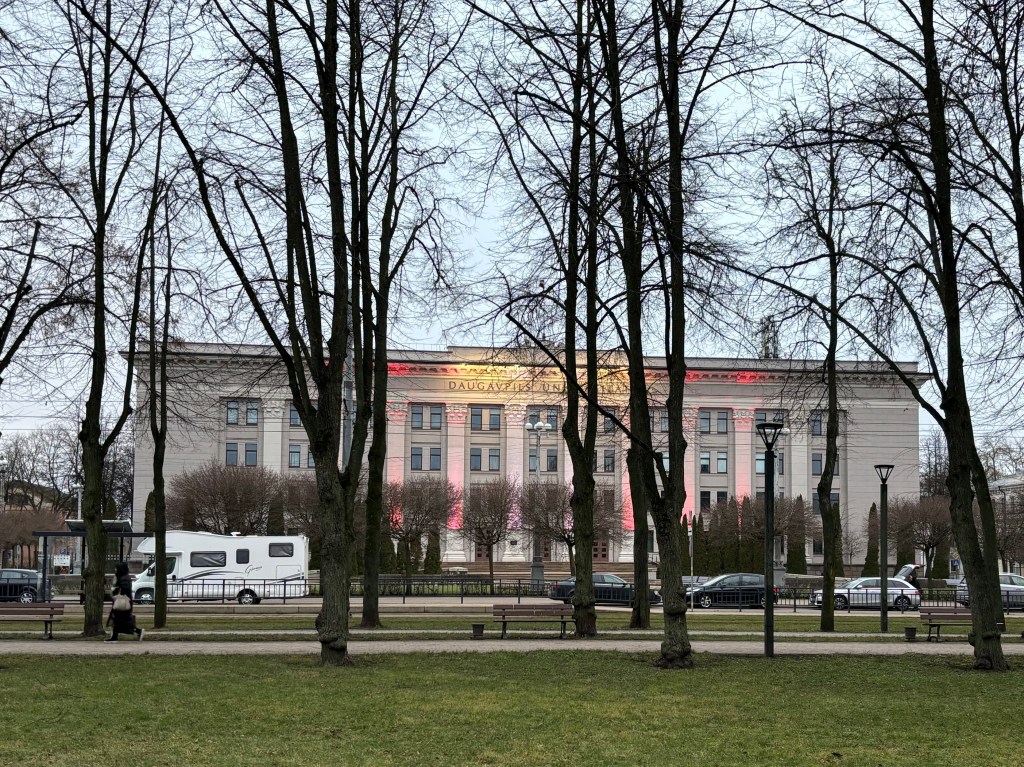
Yesterday, after a 10-month stint teaching at a university in a remote city, here in Latvia, I found myself walking through a park here in Riga at about dusk. I was in a reflective mood, leaving Latvia as I am, early tomorrow morning. Twilight, I find, is the time when taking photos is best–the light is perfect for clarity, for colors, and for capturing the “essence” of things. It feels like an apt metaphor for my year here–I was somehow able to capture and appreciate the essence of my relationships with students and colleagues. It was a year of relationships, rather than simply transactions. Latvians, I’ve come to learn, see themselves as a bit distant at first, slow to connect with others. But once they do, they really make those connections real.
The Economic Challenges Here
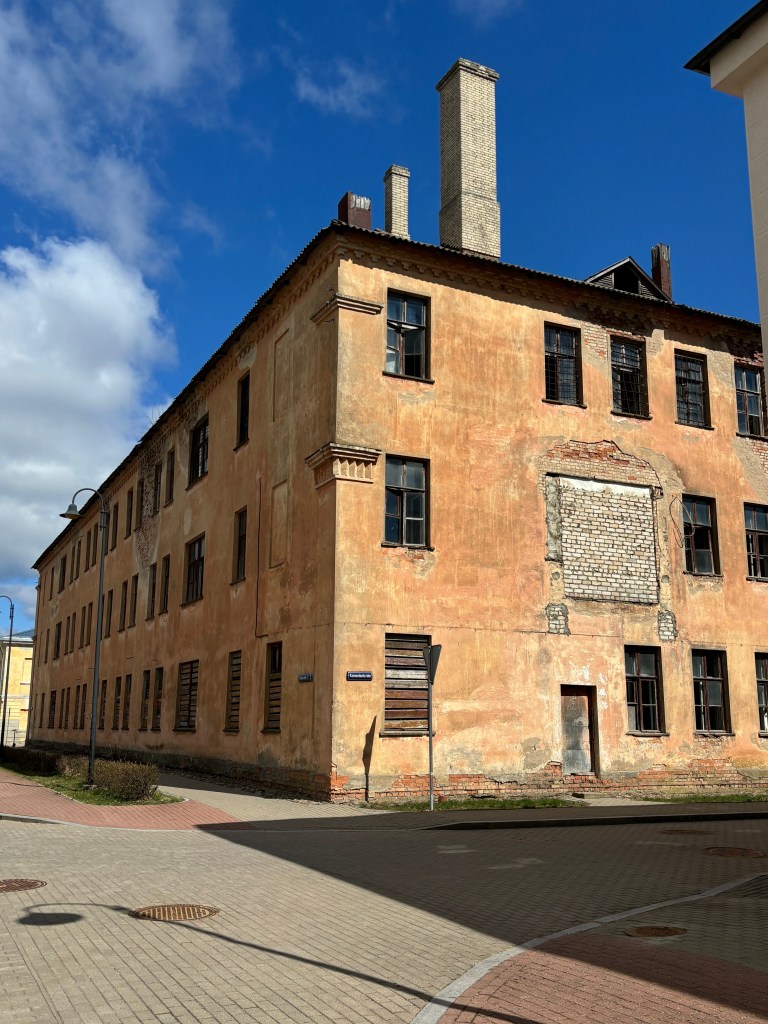
And, keeping it real, we should talk about the economy here. These days, Latvia’s economy seems stalled, taking a backseat to the other two Baltic States, Estonia and Lithuania. Yes, the capital, Riga, does feel upbeat and vibrant. But for the country overall, that’s a chimera. My home city here, Daugavpils, far to the east near the borders with both Belarus and Russia, is watching its population decline, and has been for years. The handsome city, while dignified and proud, is dotted with abandoned buildings. In 1993 when the Soviet Union withdrew, factories began closing. Many locals felt that the E.U. didn’t want the cheap competition that Latvian production offered, so rather than investing in a sustainable economy, they started sending Euros to largely pacify the locals. This did little to build a Latvian economy for the long run.
Meanwhile, Estonia, just to the north, historically more aligned with Finland and the rest of Scandinavia, saw their economy take off. Lithuania, bordering on Latvia’s south, is currently, by most accounts , experiencing an economic renaissance. It’s vibrant capital city, Vilnius, was named “Europe’s Green City for 2025,” recognizing its progress along environmental criteria such as: increased miles of bike and pedestrian paths, hotels that have met strict environmental standards, and park expansions. Lithuanian “youth,” the group of citizens 30-years old and younger, have been rated as the “happiest” youth cohort in the world for the 2nd straight year, according to the World Happiness Report published by the United Nations.
I’ve repeatedly queried my Latvian friends about these economic differences amongst Estonia, Lithuania and Latvia, natural bedfellows as they are. While their answers are nuanced, there is an unmistakable theme: in the end, the cultures and the people are quite different. While the Estonians have historically looked north toward Finland, and Lithuanians gazed west toward Germany and Poland, Latvia peered eastward toward Russia, and as a result, the culture has been largely influenced by that country. Well, what does that really mean? What are the consequences of having been more aligned with Russia and the Soviet Union all those years?
One answer came from one of my students this year–let’s call him Rich. Rich is a bit older and more experienced than my other undergraduate students who are mostly in their late teens and twenties. He had once lived in the Chicago area for 6-months. What struck him profoundly, he recalled, was what he observed taking place after snow storms. He noticed that municipal vehicles immediately came by to efficiently plow the snow from the streets, then shortly after the plowing, residents armed with shovels, diligently cleared their driveways and sidewalks. OK, I wondered, so what’s unusual about this? But Rich continued. You’d never see residents here grab their shovels and in civic-unison take care of removing snow from their homes and sidewalks. Instead, he said, they would be sitting around waiting, complaining and criticizing their government for lack of action. It was, he explained, more of a Russian-style approach to dealing with civic matters: watching, waiting for someone to come do something, and then complaining…
Not a few Latvians have criticized their own culture as the key obstacle to turning their economy around. The complaining and concomitant lack of action is one challenge, but so too is what they perceive as graft. E.U. funds, which come in massive amounts to support projects like train systems, highway modernization and other development initiatives, get siphoned into the pockets of politicians and cronies at every turn. This apparently is well-known by nearly everyone I spoke with. Moreover, many Latvians say, it is at epidemic levels in Latvia–far worse than in either Estonia and Lithuania where, they say, more of the money from the E.U. actually gets to the projects they were earmarked for.
Daugavpils, Latvia’s 2nd Largest City
You get a predictable reaction from many Latvians, most often one of subtle condescension, when you mention the city of Daugavpils. They seemingly judge the 80%, or so, of the area’s ethnic Russians, and Russian speakers, as “a problem.” In actuality, as bigotry often proves to be when “poked-at” a bit, the people of Daugavpils are almost always, in turn, welcoming, kind, curious and appreciative of having an American in their midst.
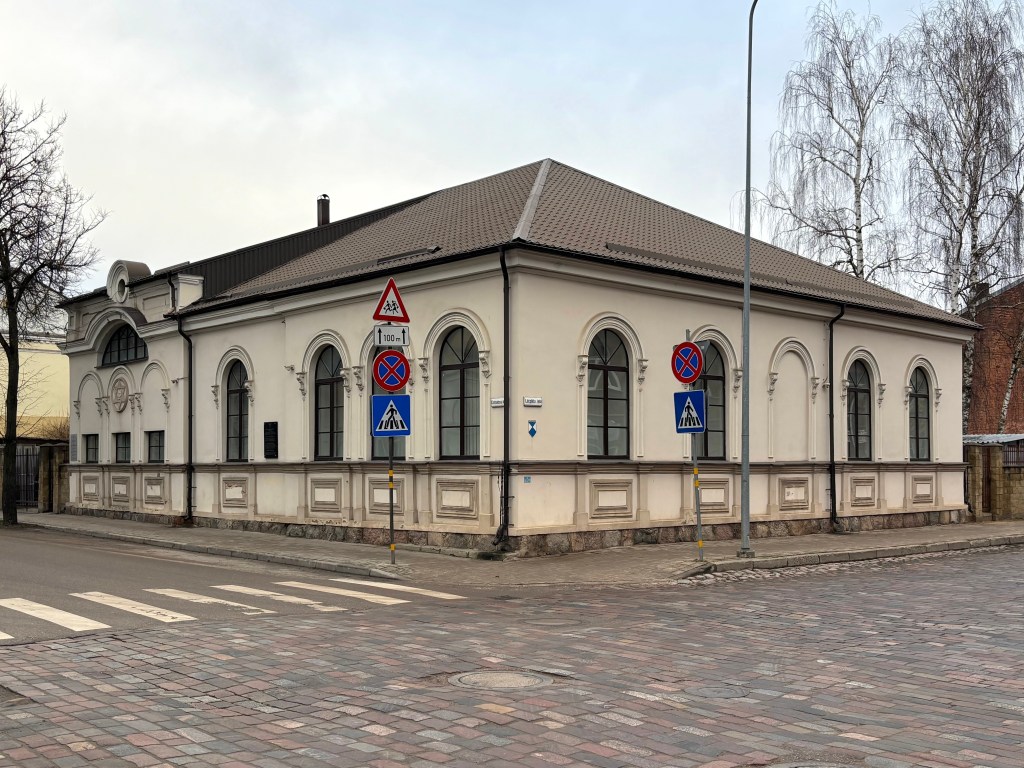
But there was one boundary that my understanding could never seem to cross. Whether it was cultural, existential, language-related, or a combination of factors, I’ll never know for certain. That is, how people really feel about the loss of their Jewish residents during the first half of the twentieth century. Jews, during that era, once comprised almost 60% of the local population. In fact, the city of Daugavpils boasted 55-synagogues of various sizes. There must have been at least one on every block. The main Street, Riga Street, was mostly comprised of Jewish-owned shops on both sides of its quarter-mile commercial stretch. But, that’s all a distant memory today and Jewish places of worship are now down to one solitary synagogue–sitting handsomely and proudly, as it does, on a quiet corner in the middle of the city.
That somewhat tragic historical chasm aside, Daugavpils is a comfortable, almost seductive, place to live. The general kindness and support of the people there were not lost on me. Like the quiet trams that criss-cross the city, my comings and goings invariably went smoothly and without incident. Some of this social “seamlessness” was, no doubt, a reflection of my own approach and experience. Having previously spent extensive time living and teaching in South Korea and Hungary, and traveling through nearly 80-countries (but who’s counting?) has helped me avoid behaving like the “Ugly American.”
Final Reflections
The lion’s share of what made my time in Daugavpils so pleasurable and rewarding was, no doubt, due to the Latvians themselves–their kindness, consideration and pride–the latter being particularly unmistakable. Latvia is, in fact, a beautiful place, a country of hundreds of lakes and endless forests, of rich traditions and countless hopes, many of which. for Latvians, remain frustratingly unfulfilled.

 Short Talks Through a Wide World